
Frequently Asked Questions
Find answers to common questions about our window blinds, shutters, and installation services.
Your Blinds Questions, Answered Honestly
Buying blinds can raise more questions than you might expect. How much should you spend? Which type is right for your windows? Is motorisation worth it? And how do you know you're choosing the right company?
We've been helping people choose blinds since 1887, so we've heard just about every question there is. This page brings together the questions customers ask us most often, with straightforward answers based on our experience.
Looking for a quick answer? Use the sections at the side to jump straight to your question.
Want to dig a little deeper? Our knowledge centre answers some questions in more depth
No jargon. No sales pitch. Just the answers we'd give if we were sitting in your home talking through your options.
Are roller blinds a good choice?
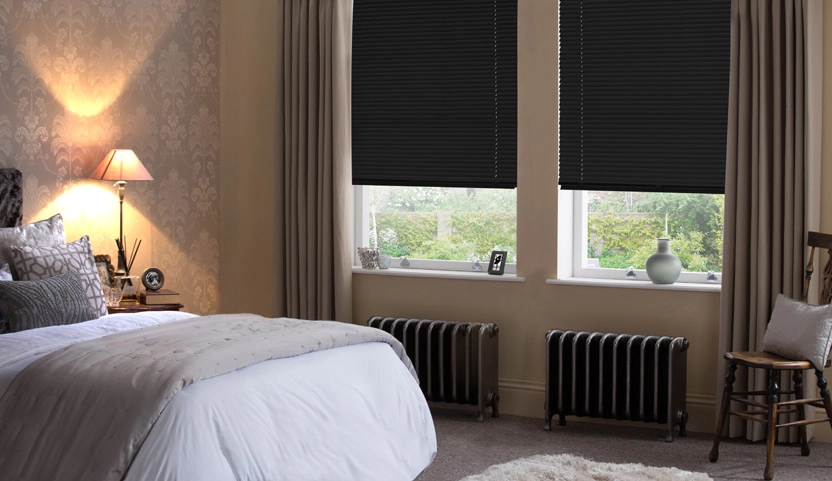
Roller blinds are one of the most versatile window coverings available. They're simple, stylish and suit almost every room, from kitchens and bathrooms to bedrooms and home offices. With a huge choice of fabrics, colours and blackout options, they're easy to tailor to your home and budget.
People often think roller blinds are the "basic" option, but modern designs can look just as striking as more expensive alternatives.
Roller Blinds can be the best option if you like a clean minimalist look and if you like to put things on your window sill.
Do roller blinds block out all light?
A roller blind with a Blackout fabric significantly reduces the amount of light entering a room, making them a good choice for bedrooms, nurseries and media rooms. However, no standard roller blind creates complete darkness because of the amount of light that can still enter around the edges.
If total blackout is your goal, cellular
blinds would be a better option.
Are roller blinds easy to clean?
Yes. Roller blinds are one of the easiest types of blinds to maintain. Most only need regular dusting and the occasional wipe with a damp cloth to keep them looking their best.
If more rigorous cleaning is need like kitchen and bathrooms then choosing roller blinds with a PVC waterproof fabric is a much better option. These are the same fabrics that we use in hospitals were cleaning is important and frequent.
If easy maintenance is high on your list, roller blinds are often one of the first products we'd recommend.
Are Roman blinds worth the extra cost?
If you're looking to add warmth and softness to a room, many homeowners feel Roman blinds are well worth the investment. Their fabric folds create a more luxurious look than a standard roller blind, making them especially popular in living rooms and bedrooms.
The best choice depends on what matters most to you. If style is the priority, Roman blinds are hard to beat.
Can Roman blinds be blackout?
Yes. All made to measure Roman blinds can be made with blackout lining, making them a popular choice for bedrooms while still offering the elegant appearance of a fabric blind.
Whilst not 100% Blackout they will darken the room more than a roller blind as the gaps on each side will be much smaller.
How your Roman Blind is made is also important when it comes to room darkening. The most common way of stitching a roman is continuous rows of stitching across the blind. Ideally your blinds need to be stab stitched. This method has a single stitch every so often across each panel of the blind. Less stitch holes means a better finish and better blackout.
Stab stitching will cost extra usually around 20%. As a company we never install a blind with the continuous stitching as our aim is always to installed the best blinds we can not the most blinds we can.
Roller or Roman blinds – which should I choose?
Both are excellent options, but they're designed for different purposes. Roller blinds offer clean, modern simplicity, while Roman blinds bring texture, warmth and a more traditional feel.
Roller Blinds are the better option based on price. Roman Blinds can be more than double the price of roller blinds.
Roman Blinds are better for room darkening as the gaps at the side and much smaller than the roller blinds.
Roller blinds are a better option if you have small windows and are worried about making the room darker. When rolled away a roller blind measures between 70mm -90mm. A Roman Blind when folded up measures between 240mm and 290mm.
If your window is less than a metre deep then the roman blind blocks a huge percentage of your window. If this is the case consider fitting the blind on the outside of the recess.
Rather than asking which is better, ask which suits the room and your lifestyle best.
What are cellular blinds?
Cellular blinds, sometimes called honeycomb blinds, are made from a unique fabric that forms small pockets of air. These pockets help improve insulation, making them a popular choice for homeowners who want greater comfort throughout the year.
Cellular have 3 operating styles. Cordless are operated by simply raising and lowering the blind using the bottom rail. Chain operation for large or hard to reach blinds and rechargeable motorised operated by remote control.
They're one of the few blind styles designed to help manage both heat loss in winter and solar gain in summer.
Are cellular blinds worth the money?
If energy efficiency and comfort are important to you, many homeowners find cellular blinds well worth the investment.
Their insulating design helps regulate room temperature while providing excellent light control and privacy. Although they cost more than some other blind styles, many customers choose them because of their long-term performance rather than simply their appearance.
Cellular Blinds are by far the best blinds if you need blackout blinds for your bedrooms.
Do cellular blinds help keep a room warm?
Yes. The honeycomb-shaped pockets trap air, creating an insulating barrier between the window and your room.
While no blind replaces good insulation, cellular blinds are widely regarded as one of the most energy-efficient window coverings available.
Comfort isn't just about heating your home it's about keeping the warmth where you want it.
An occasional small amount of condensation isn't necessarily a problem for the polyester fabrics we use. However, if your conservatory regularly suffers from heavier condensation and moisture could come into contact with the blinds, it's worth discussing this before choosing your fabric.
Not with us. Our waterproof cellular fabrics are the same price as our regular cellular fabrics, so choosing waterproof fabric because of condensation doesn't mean paying for an upgrade.
What blinds can you fit to a roof lantern?
Roof lanterns need blinds specifically designed for overhead glazing. Depending on the size and design of your roof lantern, options include roller, pleated and cellular systems, many of which can be operated manually by a detachable rod or by remote control.
Pleated Roof Lantern Blinds are usually made with tension guide wires to support the fabric. Cellular Roof Lantern Blinds can be made the same way but are also available as Clearview (no visible wires).
Because every roof lantern is different, professional measuring is particularly important to ensure a perfect fit.
Do roof lantern blinds reduce heat?
Yes. Roof lantern blinds can help reduce solar heat gain during warmer months while also improving insulation in cooler weather.
Many homeowners are surprised by how much heat enters through overhead glazing. Adding the right blinds can make the room noticeably more comfortable throughout the year.
When choosing the fabric for your roof lantern blind it is important to chose a fabric with a white black as this will help reflect as much of the heat as possible. Avoid fabrics with a dark back.
Can roof lantern blinds be motorised?
Yes. Motorised operation is one of the most popular choices for roof lantern blinds because it makes controlling high-level windows quick and convenient.
The motorised blinds can either be wired into an existing power supply if one is in place. If you have not got power in place then the blinds can be powered by a small solar panel.
Most blinds installed with solar charging will also have a recharging port (similar to your phone) as a back up should you need it (in all the years of installing these blinds I’ve never known anyone who has had to use it) .
For larger or difficult to reach roof lanterns remote-controlled is often the most practical solution.
Are awnings worth the investment?
If you enjoy spending time outdoors, many homeowners find an awning transforms how they use their garden or patio.
By providing welcome shade and helping reduce heat entering the home, an awning can make outdoor spaces more comfortable throughout the summer.
If your garden faces south then in my opinion an awning is worth the investment. If your garden faces a different direction then I recommend seeking professional advice.
The most common complaint received by the British Blind and Shutter Association about awnings is regarding the level of shade. These complaints are all to do with sun direction.
The real value isn't just in the product it's in creating a space you'll use more often.
Can awnings stay out in the rain?
Most quality awnings will cope with light showers, but they're primarily designed to provide shade rather than withstand prolonged or heavy rainfall.
Retracting the awning during strong winds or poor weather helps protect the fabric and extend its lifespan.
We'll always explain how to get the best from your awning before it's installed.
Do awnings help keep your home cooler?
Yes. By shading windows and patio doors before sunlight enters your home, awnings can help reduce solar heat gain and make adjoining rooms feel more comfortable during warm weather.
There are tests currently taking place at Loughborough University on 2 identical south facing houses, one with an awning and one without. So in the few months will have exact figures on how much cooler your home will be with an awning. Watch this space.
Many people think of awnings as purely an outdoor product, but they can also improve comfort indoors by limiting direct sunshine.
What's the difference between wooden and faux wood blinds?
Both offer the timeless look of wooden slats, but they're designed for different environments. Real wood blinds bring natural warmth and character, making them a popular choice for living rooms, dining rooms and bedrooms. Faux wood blinds are made from durable, moisture-resistant materials, making them ideal for kitchens and bathrooms.
Many customers initially choose real wood because they love the appearance, but once they understand where faux wood performs better, they often decide it's the more practical option.
Fauxwood Blinds are the more cost effective option and are usually around 10% cheaper than the real wood options.
Are faux wood blinds waterproof?
Yes. Faux wood blinds are designed to cope with moisture, making them an excellent choice for bathrooms, kitchens and utility rooms where humidity is higher.
Unlike natural wood, they won't absorb moisture or warp over time, while still giving you the appearance of traditional wooden blinds.
If you love the look of wood but need something more hard-wearing, faux wood is often the best of both worlds.
They are also a great option for children’s bedrooms as they are easier to keep clean and will not splinter.
Do wooden blinds warp over time?
Quality wooden blinds are made to last, but because they're a natural material, they aren't usually recommended for rooms with high levels of moisture, such as bathrooms.
That's why we'll often recommend faux wood instead in humid environments. Choosing the right material for the room is one of the simplest ways to make sure your blinds look great for years to come.
If you concerned about warping but love the ideal of natural wood then chose a 50mm slat. These slats have a bigger overlap when closed so it is else noticeable if there is a slight movement in the slat compared to either a 35mm or 25mm slat.
The best blind isn't always the one you like most it's the one that's right for the space.
Are wooden or faux wood blinds better?
Neither is better they simply suit different homes and different rooms.
If you're looking for natural beauty and warmth, real wood is hard to beat. If durability, moisture resistance and easy maintenance are your priorities, faux wood is often the better choice.
Fauxwood are a more cost effective option, usually around 10% cheaper than real wood.
We'll always explain the advantages of both, so you can choose based on how you live rather than what happens to be most popular.
Are wooden or faux wood blinds heavy?
Yes. Larger wooden venetians or Fauxwood blinds are heavy.
Wooden Venetian blinds are designed to be tilted to control the light and privacy and should only be raised and lowered to clean your windows.
If you like the idea of a lighter option then consider Bamboo Venetian Blinds. They will give you the same look and feels but are 40% lighter than real wood and 50% lighter the fauxwood.
What are Perfect Fit blinds?
Perfect Fit blinds are designed to fit directly onto uPVC windows and doors without drilling or screwing into the frame. They sit neatly within the window, creating a clean, integrated look that's especially popular for conservatories, patio doors and tilt-and-turn windows.
They are available in a number of options. Pleated, Cellular and Venetian Blinds can all be made as Perfect Fit.
People are often surprised by how discreet they look once installed. Because the blind moves with the window or door, they're also incredibly practical for everyday use.
Do Perfect Fit blinds damage uPVC windows?
No. Perfect Fit blinds are installed using a clever bracket system that fits between the glass and the window beading, so there's no need to drill into your uPVC frames.
That's one of the reasons they're such a popular choice for homeowners who want a neat finish without making permanent changes to their windows.
It's a smart solution that keeps both your windows and your options intact.
Are Perfect Fit blinds worth it?
For many homeowners, yes.
They're easy to operate, fit neatly against the window and are particularly useful on doors and windows that are opened regularly. Because they move with the window, you don't have to worry about the blind swinging or getting in the way.
They can be a more costly option compared to other blind styles as you will one blind per pane of glass. So for French Doors you would need 2 perfect fit blinds, whereas you could have a single vertical, roller or Allusion blind.
If you have modern uPVC windows, they're often one of the most practical options available.
Can Perfect Fit blinds be removed?
Yes. They are actually one of the easiest blinds to remove and refit. They can be removed if needed, making them a flexible option for homeowners who may wish to change their blinds in the future.
The blinds are fitted into a 4 sided frame that simply clips into the brackets so removing the blinds is just a case of unclipping the frame.
Although removal is straightforward, we'd always recommend following the manufacturer's guidance to avoid damaging the brackets or blind.
One of their biggest advantages is that they offer a secure fit without permanently altering your windows.
Are vertical blinds still in style?
Absolutely.
While many people associate vertical blinds with offices, modern fabrics, colours and textures have transformed them into a stylish option for homes too. They're particularly well suited to large windows, patio doors and conservatories.
Good design never really goes out of fashion it simply evolves. Today's vertical blinds are very different from the ones many people remember.
Are vertical blinds good for patio doors?
Yes. Vertical blinds remain one of the best solutions for patio doors because they offer excellent light control while still allowing easy access in and out of the garden.
The individual louvres can be tilted or drawn to one side, giving you plenty of flexibility throughout the day.
Can vertical blinds be repaired?
In many cases, yes.
Individual louvres, weights and chains can often be replaced if they've been damaged, meaning you may not need to replace the entire blind.
Customers are often pleasantly surprised to learn that a simple repair can restore their blinds to full working order.
Many smaller blind companies offer a louvres only service meaning if you change your colour scheme you can just replace the fabric rather than replacing the whole blind. It works out cheaper and it means we send less to landfill.
It's always worth asking before assuming you need something new.
Are vertical blinds easy to maintain?
Yes. Regular dusting and the occasional clean are usually all that's needed to keep vertical blinds looking their best.
Many modern fabrics are designed to be durable and easy to care for, making them a practical choice for busy homes.
If low maintenance is important to you, vertical blinds continue to be a strong option.
Are motorised blinds worth it?
For many homeowners, they're one of the upgrades they appreciate most.
Motorised blinds allow you to control your blinds at the touch of a button, making them ideal for large windows, roof lanterns or hard-to-reach areas. They're also popular with anyone looking for added convenience or smart home integration.
People often think they're a luxury until they start using them every day.
How do motorised blinds work?
Motorised blinds use a discreet battery-powered or mains-powered motor to raise and lower the blind without the need for manual operation.
The motors actually fit inside the blind so look no different to a regular blind.
Depending on the system you choose, they can be operated using a remote control, wall switch or smart home app.
The technology is designed to make everyday life simpler, not more complicated.
Do motorised blinds need wiring?
Not always.
Many modern motorised blinds are battery powered, making them suitable for existing homes without the need for additional wiring. Mains-powered systems are also available, particularly for new builds or larger installations.
The modern battery powered blinds have to batteries built into the blind, so no separate battery pack. They are rechargeable in exactly the same way as you charge your phone. Plug the cable in whilst charging and remove it once charged.
The best option depends on your home and how you plan to use the blinds.
Can motorised blinds be controlled with a smart home system?
Yes, many motorised blinds can be integrated with compatible smart home systems, allowing you to control them using an app, voice commands or automated schedules.
The available features depend on the motor and control system you choose, so we'll explain the options and help you find the setup that suits your home.
Smart technology should make life easier—and that's exactly what well-designed motorised blinds do.
How reliable are motorised roller blinds?
Motorised roller blinds are very reliable. There are 2 really important things you need to know when ordering your motorised roller blinds.
The first one is about trust. I know this sounds strange what has trust got to do with the reliability of your blinds? You need to have trust in the company you are choosing to install your blinds.
The reason you need the trust is all down to the motors. We have 5 different sized motors for our roller blinds. Each motor is a different size and has different power.
This is where the trust comes in. The motor we use in your blind will be based on 2 things, firstly the size of the blind (bigger blinds need a stronger motor) and secondly your fabric choice. If you have chosen a blackout fabric that is heavier than a standard fabric then you need a larger motor for smaller blinds to handle the extra weight.
The motor in your blind is not something you will ever see so you need to trust the company who is installing them that they will take the size of your blind and the fabric into account.
We are being asked to look at more and more roller blinds that have worked fine for a couple of years and have then started to fail.
The reason is that the motors don’t have enough power for the blind so the wear on the motor is much greater than it should be which means it works fine for a period then starts having issues.
There are a couple of reasons why companies use motors that are too small for the blinds. If you are dealing with a company who do not make their own blinds they will have no idea what size motor their supplier has fitted. The other reason is cost cutting, we pay £55 more for our most expensive motor compared to our cheapest motor .
So if you have 5 blinds on your bifold doors that could earn me an extra £275 profit.
The second most important thing is with rechargeable motors. How often you charge your blinds will have a huge impact on how low your motors last.
Ideally you need to recharge your blinds when the batteries have between 20% - 30% charge remaining.
Is is difficult to judge with most roller blind systems. Most blinds have a one way signal system. You press the button on the remote and the blind moves up or down.
We use and recommend the Louvolite system because it uses a 2 way signal. First signal is exactly the same as other makes. The second signal is a signal from the motor showing on the remote control exactly how much charge is left on each blind.
This means you are not guessing when to charge your blinds you know exactly and that means you will extend the life of your blinds.
How does a home measuring appointment work?
It's simply a chance for us to see your windows, understand what you're looking for and answer your questions.
We'll measure your windows accurately, talk through the different blind options, show you samples and explain the pros and cons of each. Before we leave, we'll provide a clear quotation with no obligation to go ahead.
Most people tell us afterwards it felt much more relaxed than they expected.
The timing of appointments can vary from company to company. Some will give you an all day or morning or afternoon slot and the estimator will contact on the day to let you know a time. Others like us know your time is important so we give you a 1 hour time slot for our estimator to arrive so you are not having to wait in in all
Do I have to make a decision on the day?
No.
In fact, we'd rather you didn't feel rushed.
Choosing blinds isn't something most people do very often, so it's worth taking the time to compare your options and make sure you're happy with your decision.
If you need a few days to think about it, that's absolutely fine.
Good advice shouldn't come with pressure.
This again will vary from company to company usually depending on whether commission is paid.
How long does a home visit take?
Most appointments take between 45 minutes and an hour, depending on how many windows you'd like us to measure and how many options you'd like to explore.
Some customers already know exactly what they want, while others prefer to compare fabrics, colours and blind styles before deciding.
We'll always work at your pace not ours.
Can I keep the quotation?
Absolutely.
Your quotation is yours to keep, compare and think about in your own time.
95% of our home visits are given a quotation while we are in their home, some companies send an email quotation over at a later date.
We understand that many customers like to gather a few quotations before making a decision, and we'd encourage you to choose the company you feel most comfortable with not simply the lowest price.
The right advice is often worth more than the cheapest quote.
Why don't you advertise fixed prices?
Because every window is different.
The type of blind, the different fabrics can all effect the price of your blinds.
People often ask us for a price over the phone or by email, which we are more than happy to do. We just need approximate window sizes and the blind style you are thinking of.
We'd rather provide an accurate quotation based on your home, our measurements and the blinds you actually want.
It saves confusion and helps you compare like for like.
Will you bring samples to my home?
Yes.
We think it's much easier to choose blinds when you can see the fabrics and colours in your own home rather than under showroom lighting or online.
Something that looks perfect in a catalogue can appear completely different once natural daylight comes into the room.
Seeing the options where they'll actually be installed usually makes the decision much easier.
Can you help me choose the right blinds?
Of course.
Some customers know exactly what they want, while others have no idea where to start and both are perfectly normal.
We'll explain the different options, answer your questions honestly and recommend blinds based on how you use each room, not simply what's popular.
Our job isn't to choose for you. It's to help you make a confident decision.
Do I need to measure my windows first?
No.
We'll take all the measurements during your home visit.
People sometimes worry about measuring incorrectly before contacting us, but that's exactly what we're here for.
Accurate measuring is one of the biggest advantages of choosing made-to-measure blinds, and it's not something you need to do yourself.
What areas do you cover?
We proudly serve homeowners across Leicester and Leicestershire, providing home measuring, expert advice and professional installation.
If you're not sure whether we cover your area, just get in touch and we'll be happy to let you know.
Sometimes the quickest way to find out is simply to ask.
Why choose a local blinds company?
For many people, it comes down to trust.
When you choose a local company, you're dealing with the same people from your first enquiry through to installation and aftercare. If you ever need advice or support in the future, you know exactly who to contact.
We've always believed that building long-term relationships is far more important than making a quick sale.
Choosing a small local company means you are one of a small number of customers whereas a national company you are one of many.
How long does it take to get made-to-measure blinds?
Most made-to-measure blinds are ready within a few weeks, although this can vary depending on the product you choose and the time of year.
Roller Blinds 2-3 weeks
Vertical Blinds 2 – 3 weeks
Perfect Fit Blinds 2 – 3 weeks
Shutters 10 – 12 weeks
Wood and Fauxwood Venetian Blinds 4 – 5 weeks
Roman Blinds 5 – 6 weeks
One thing people often don't realise is that every blind is made specifically for their windows, so unlike ready-made blinds, they're not sitting on a warehouse shelf waiting to be dispatched.
We'd always rather wait a little longer for a blind that's made properly than rush one that's not.
Will you fit my blinds?
Yes.
Once your blinds are ready, we'll arrange a convenient time to return and install them professionally.
Many customers tell us fitting is one of the biggest reasons they choose made-to-measure blinds. Knowing everything has been measured, supplied and fitted by the same company gives real peace of mind.
We will never use sub-contract fitters which is not always the case in our trade.
Our fitting teams are trained and employed by us and have all passed Enhanced DBS Checks.
Can I fit made-to-measure blinds myself?
In some cases, yes but this is not something we offer.
We are obsessed with knowing that your blind is Measured right, made properly and professionally installed.
If you're confident with DIY, fitting certain blinds isn't especially complicated. However, accurate measuring and installation make a huge difference to how your blinds look and operate.
We've occasionally been asked to refit blinds that were installed slightly out of level. It's usually an easy mistake to make but one that's frustrating once you've spotted it.
Sometimes having them professionally fitted is worth it for the peace of mind alone.
How long does it take to fit blinds?
A single blind installation will take less than an hour, with most installations being completed within a few hours, depending on the number of blinds and the type of products you've chosen.
We'll always let you know what to expect before installation day, and we'll work efficiently while treating your home with the same care we'd expect in our own.
People are often surprised by how quickly the transformation happens once the blinds go up.
Where are your blinds made?
Many of our blinds are made here in our Leicester factory using high-quality components and fabrics.
Most Roller, Vertical and Perfect Fit Blinds will be UK made.
Most Shutters installed in the UK are made in China.
Most wooden and faux wood Venetian blinds are made overseas and ‘trimmed to fit’ in the UK.
Where a blind is manufactured depends on the product you choose, but we're always happy to explain where it's made and why we've chosen that supplier.
All blinds we install whether they are made in our factory or supplied by our trusted suppliers will go through the same quality checks to ensure they all meet our high standards before the reach your home.
For us, it's never just about where something is made it's about whether we'd be happy installing it in our own homes.
How long should quality blinds last?
With the right product and a little care, quality blinds should last for many years.
How long they last depends on the type of blind, how often it's used and the environment it's installed in. A blind in a busy family kitchen will naturally experience more wear than one in a guest bedroom.
A well made Roller or Vertical blind should last 10 years plus.
A professionally installed Shutter 10 -15 at least.
Wooden and Fauxwood Venetian Blinds 5 – 7 years.
Buying quality isn't about avoiding wear altogether it's about enjoying years of reliable use.
What guarantee do your blinds come with?
Our blinds are supplied with a 2 year guarantee on all of our blinds and 5 years on our Shutters and Awnings for your peace of mind. We'll explain exactly what's covered when providing your quotation, so you know what to expect before placing your order.
People often focus on the guarantee length, but it's equally important to know who'll help if you ever need it.
A really important question BEFORE ordering your blinds is ‘What happens if I have an issue and the blind is out of guarantee?’
We are seeing more and more companies offering no repair service once the guarantee finishes, a new blind or nothing.
One huge advantage of us making our own blinds is that we know them inside and out and we carry all parts in stock even 20 years down the line.
A guarantee is only as good as the company standing behind it.
What happens if something goes wrong?
If there's ever a problem, just get in touch.
We'll always do our best to resolve the issue quickly and fairly, whether it's a product question, an adjustment or something covered under your guarantee.
One advantage of choosing a local company is knowing exactly who to call if you ever need help.
We believe aftercare is just as important as installation.
Can blinds be repaired?
Often, yes.
It depends on the type of blind and what's caused the problem, but many issues can be repaired without replacing the entire blind.
Customers are sometimes relieved to discover a small repair is all that's needed.
It's always worth asking before assuming a replacement is the only option.
We regularly replace just the fabric on roller blinds reusing the roller tube and brackets.
How do I look after my blinds?
Most blinds only need regular dusting and an occasional wipe with a damp cloth to keep them looking their best.
Different materials have different care requirements, and we'll always explain how to look after the blinds you've chosen.
A few minutes of simple maintenance every now and then can help keep your blinds looking great for years.
Which blinds are best for bedrooms?
Most people want three things from bedroom blinds: privacy, good light control and a style they'll enjoy waking up to every morning.
For privacy Shutters, Wooden Venetian blinds, Vertical Blinds and Day and Night blinds are great options that will give you a good level of privacy whilst still allowing light to enter your bedroom.
Blackout blinds are a popular choice, but they're often misunderstood. They reduce light significantly, although some light can still enter around the edges depending the type of blind you choose.
Roller Blinds with a blackout fabric is a cost effective option but it could never be described as a blackout blind due to the light gaps at the sides.
A better blackout option are Cellular (Honeycomb) Blinds that have much smaller light gaps at the sides and top.
The best option if blackout is really important is a Cellular Blind built into a 4 sided frame. The frame removes all light gaps from the side, top and bottom.
If you like the idea of shutters (not great for blackout) they can be installed with a cellular blackout blind fitted into the shutter frame for almost total blackout.
If getting a better night's sleep is your priority, tell us that first. It often influences the type of blind we'd recommend.
Which blinds are best for bathrooms?
Bathrooms need blinds that can cope with moisture without compromising on style.
Waterproof roller and vertical blinds, faux wood Venetians and Shutters and fabric venetian blinds are all popular options because they're practical, easy to clean and designed for humid environments.
People often focus on colour first, but we'd always recommend choosing a blind that's built for the room it's going into.
Blinds to avoid for your bathroom are Roman blinds (don’t work well with moisture) and Day and Night Blinds as the voile section can be fragile if it needs wiping down or cleaning.
A blind that lasts is always better value than one that simply looks good on day one.
Which blinds are best for kitchens?
Kitchens are one of the busiest rooms in the house, so practicality matters just as much as appearance.
Cooking, steam and everyday family life mean easy-to-clean blinds are usually the most popular choice. Roller blinds, faux wood Venetians and aluminium Venetians all work well depending on the look you're trying to achieve.
One thing customers often say afterwards is they hadn't considered how much easier some blinds are to keep clean until we showed them the different options.
Which blinds are best for living rooms?
Your living room is often where style takes centre stage.
Whether you prefer a modern, minimalist look or something softer and more traditional, the right blinds should complement how you use the room as well as how it looks.
Roman blinds, Rollers, Venetians Shutters and Allusion Blinds can all work beautifully it really depends on the feel you're trying to create.
If you spend most evenings in the room, comfort and light control are just as important as appearance.
Which blinds are best for bi-fold doors?
Bi-fold doors create beautiful spaces, when it comes to blinds there are 2 choices.
Blinds that fit close to the glass and move with the door, and blinds that sit in front of the door both have pros and cons.
Intu Micro Cellular blinds are a great choice if you are looking for blinds that fit to your door. No drilling. No screws, great for reducing glare and heat and good for winter insulation.
The downside with blinds fitted to the door is that when the doors are open you lose the ability for light and glare control.
Blinds that sit in front of your doors have many more options.
For a cost effective solution then Vertical Blinds are a great option.
Allusion Blinds work in the same way as a Vertical Blind but give a much softer look and feel (and make excellent flyscreens in the summer when your doors are open.
The downside with Vertical and Allusion Blinds is when the blinds are pulled to one side there is a fairly large stack of fabric on show.
For energy efficiency then cordless cellular blinds are the perfect solution. Good for heat and glare reduction (make sure you choose a fabric with a white back) and by far the best blinds for winter heat retention.
Motorised Roller blinds are another very popular option if you like the idea of controlling your blinds with the touch of a button.
All of these blind options can be used to reduce the heat and glare when your doors are open.
There isn't one solution that suits every home. The best choice depends on how often the doors are opened, how much privacy you need and whether you're looking for something discreet or more of a design feature.
One thing we've learnt is that the way you use the doors matters and the reasons you need the blinds
Which blinds are best for patio and french doors?
Patio doors often need a balance between privacy, easy access and light control.
Vertical blinds, Allusion Blinds and Perfect Fit blinds are all popular choices, depending on how you use the doors and how often they're opened.
Blinds to avoid for your patio and French doors are wooden or fauxwood Venetian Blinds as the are very heavy to raise and lower and the stack size when the blinds are pulled up may mean you need to duck underneath when using the doors.
Which blinds are best for bay windows?
Bay windows are one of the features people are most proud of, so it's important to choose blinds that enhance them rather than hide them.
Because every bay window is slightly different, there's rarely a one-size-fits-all solution. Shutters are perfect for bay windows as they are designed to mirror the shape of your bay so no gaps to spoil to look.
Perfect Fit blinds work really well as they look part of the bay itself, but can be expensive depending of the number of window panels in your bay.
Vertical Blinds can all work beautifully on a curved bay window as they can be made with a curved rail so the blind operates as one.
All other blind styles Wood and Fauxwood Venetians, Roller Blinds and Day and Night Blinds you will need a blind for each section of your bay window which will mean you have gaps between each blind and multiple control cords.
Which blinds are easiest to keep clean?
If easy maintenance is important to you, we'd usually recommend roller blinds with a PVC waterproof fabric.
Faux wood Venetians and Faux wood Shutters are also good options as they are also waterproof but they can be a little more awkward due to being made of separate slats..
Most only need regular dusting and the occasional wipe with a damp cloth.
People sometimes worry that all blinds are difficult to clean, but that's rarely the case when you choose the right product for the room.
If keeping maintenance to a minimum is high on your list, tell us from the start we'll factor that into our recommendations.
Which blinds are best for reducing glare?
If you work from home or spend a lot of time watching television, controlling glare can make a noticeable difference.
The best solution is more about the fabric than the style of blind.
There are Roller Blind, Vertical Blind, Pleated and Cellular blind fabrics that have a reflective coating designed to reduce glare but still allowing light to come through the fabric.
Many people assume they need blackout fabric which would also work well, but softer light-filtering fabrics often solve the problem without making the room feel dark.
Most of the time it's about reducing light rather than blocking it completely.
Which blinds are best if I have children or pets?
Safety and practicality usually become the priority.
There is now a good selection of blinds that have been designed with safety as its first priority.
Perfect Fit Blinds, Cellular Blinds, Wand operated Vertical Blinds, Shutters and motorised Roller Blinds are all cordless.
Parents often tell us they expected to compromise on style, but modern blinds offer plenty of attractive options that are practical too.
Your choice of material will also help. PVC Roller and Vertical fabric, Fauxwood Shutters are all waterproof, hard wearing and designed to be regularly cleaned.
The safest blind should also be one that's easy to live with.
An occasional small amount of condensation isn't necessarily a problem for the polyester fabrics we use. However, if your conservatory regularly suffers from heavier condensation and moisture could come into contact with the blinds, it's worth discussing this before choosing your fabric.
Should I buy blinds online or from a local company?
It depends on what you're looking for.
Buying online can work well if you know exactly what you need, you're happy measuring your own windows and you're confident fitting the blinds yourself.
Online prices will be cheaper because they are just supplying the blind and you are taking full responsibility for the measuring and fitting. Using a local company includes the measuring, the fitting and an on site guarantee.
Many companies quote free measuring and fitting but the reality is those costs are built into the prices they quote.
If you're unsure about measurements, styles or which blinds will work best, having someone visit your home can make the whole process much easier.
Neither option is right for everyone. The important thing is choosing the one that gives you confidence.
Is the cheapest quote always the best value?
Not necessarily.
When comparing quotations, it's worth looking beyond the final price. Measuring, fitting, product quality, guarantees and aftercare can all vary from one company to another.
One of the most common frustrations we hear with our trade is companies refusing to offer any kind of service after the guarantee period. Most willing to sell you a new blind rather than carry out minor repairs on your existing blind.
That just doesn’t sit well with us because it is not just about a sale, it’s about the ongoing relationship between us and our customers.
People are often surprised to discover that two similar-looking blinds can include very different levels of service.
A cheaper quote isn't always the better deal if it costs more to put right later.
What should I look for when choosing a blinds company?
Look for a company that's happy to answer your questions, explains your options clearly and gives you time to make your decision.
Reviews, guarantees and experience all matter, but so does how you're treated from the first conversation.
First impressions also count. Did they turn up in a company van or in the family car? Did they arrive wearing jeans and a t shirt or a company uniform? Do they have a business premises or work from a home address?
And the big question Did they ask for payment in full upfront? Reputable companies who are confident is their products and their installations will ask for a deposit (usually around 50%). If you are asked to pay in full up front please be careful and pay by credit card as this gives you some extra protection should things not go smoothly.
The blind trade has an Authority on UK Shading called the BBSA (British Blind and Shutter Association). This is a good place to start looking for reputable companies. The BBSA ensure all specialists have the relevant insurances, adhere to a strict code of practice and offer a dispute resolution service for your extra piece of mind.
If a company is more interested in making a sale than understanding what you need, it's worth asking yourself why.
You should feel informed and not pressured.
Is it worth paying for professional fitting?
For many homeowners, yes.
Professionally fitted blinds are measured accurately, installed correctly and adjusted so they operate as they should from day one.
We've met customers who fitted their own blinds successfully, and others who later wished they'd had them installed professionally.
If you're confident with DIY, fitting them yourself may be the right choice. If not, professional fitting can save time and frustration.
What questions should I ask before buying blinds?
It's worth asking about more than just the price.
Find out what's included in the quotation, how long the blinds will take to arrive, what guarantee is provided and whether fitting is included.
An important question to ask is about payments. Being asked to pay in full up front is a red flag. Most reputable companies who are confident in their product, their installations and their service will ask for a deposit usually around 50%.
Another important question is what happens after your guarantee finishes. A common frustration we hear is companies offering on repair service when your blinds are out of guarantee, but they willing to sell you a new blind. We feel that just isn’t right.
Don't be afraid to ask why one product costs more than another either. A good company should be happy to explain the differences without confusing you.
The more informed you are, the more confident you'll feel in your decision.
How do I know I'm choosing the right blinds?
Get multiple quotes.
Professional Blind companies will start every home visit by asking questions.
What style of blind do you have in mind?
What do you need the blind for? Is it privacy, making your bedroom darker, keeping your home cooler in the summer, or warmer in the winter?
Once they know exactly what you need the blind to do they should offer the perfect solution for your needs.
If you're still comparing options, that's completely normal.
Most people don't buy blinds very often, so there's no reason to expect you to know the differences between every style, fabric or operating system.
A good company should help you narrow down the choices rather than overwhelm you with them.
When the right option feels obvious instead of confusing, you're usually on the right track.
Are made-to-measure blinds really better than ready-made?
For many homes, yes but not every home.
Ready-made blinds can be a sensible option for temporary spaces, rental properties or if you're working to a tight budget.
Made-to-measure blinds are designed specifically for your windows, giving a better fit and a more finished look.
The right choice isn't always the most expensive one it's the one that suits your home and how you live.
What mistakes do people make when buying blinds?
The biggest mistake is choosing blinds based on price alone.
People also underestimate how important accurate measuring is or choose a blind because they like the look of it without thinking about how they'll use the room every day.
One thing we often say is this: you'll use your blinds far more than you'll think about the price you paid for them.
That's why choosing the right product matters.
What's your best advice before buying blinds?
Take your time.
Ask questions, compare your options, do your homework like checking reviews and don't feel pressured into making a decision before you're ready.
The right blinds should suit your home, your lifestyle and your budget not someone else's sales target.
If you leave an appointment feeling informed and confident, you've probably found the right company.
