Why We Spent £21,000 Improving Our Cellular Blinds
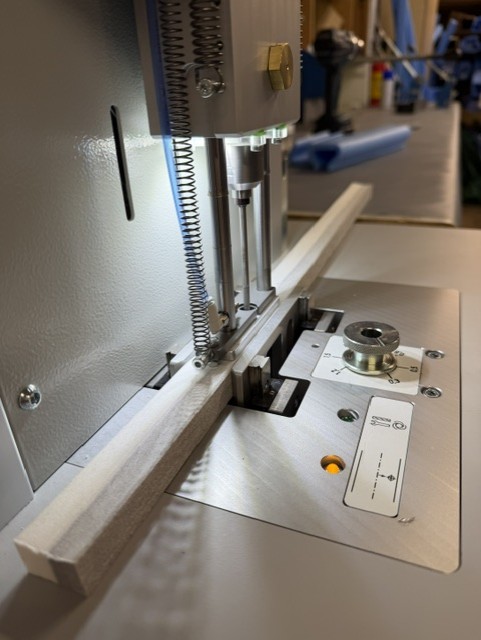
We've just spent £21,000 on a new machine at our Leicester factory.
And there's a very good chance that most of our customers will never see it.
It's a dedicated drilling machine for the cellular fabrics we use to manufacture blinds.
It doesn't make the finished blind look dramatically different.
It isn't something we bought because customers were complaining.
In fact, we've never had a complaint about the holes we've drilled in cellular fabrics.
So why would a relatively small blind company spend £21,000 changing something that already worked?
That's a question our factory manager and I thought about for more than 18 months.
Because £21,000 is a lot of money to spend drilling holes.
Especially when the old way wasn't broken.
But there's a sign on the wall of our Leicester factory that says:
“It is your job to always be asking: Is there a better way?”

Eventually, we realised there wasn't just a better way to do this.
There was a best way.
And we decided to invest in it.
How We Used to Drill Cellular Fabrics
Part of manufacturing a cellular blind involves drilling accurately positioned holes through the fabric.
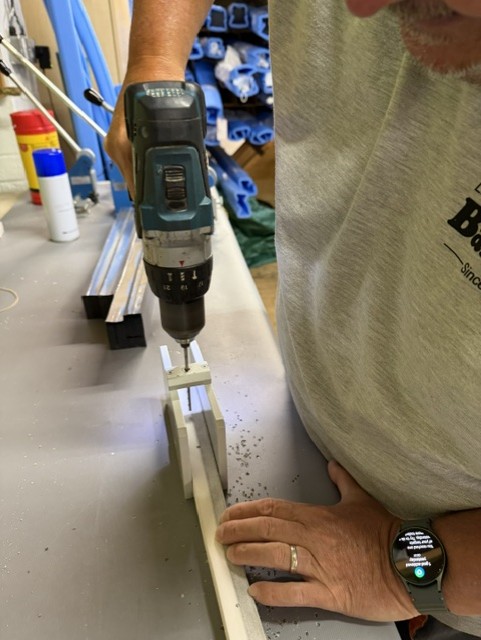
Until now, we've done this manually.
The fabric would be carefully positioned in a purpose-made jig and the holes drilled using a hand drill.
It's a tried-and-tested method and, done properly, produces an excellent result.
I want to make that clear because it would be very easy for us to tell this story by making the old method sound terrible so the new machine sounds more impressive.
That wouldn't be true.
The old method worked.
But it had limitations.
A hand drill is still being controlled by a human being.
Occasionally, it can wander.
We're talking millimetres, but with cellular fabric, millimetres matter.
Once you've drilled a hole in the wrong place, you can't fill it in and have another go.
And cellular fabric is expensive.
That meant we only trusted our most experienced member of staff to carry out the drilling.
Even then, occasionally, we still had waste.
Not much.
But enough to make us ask the question written on our factory wall:
Is there a better way?
What Changed?
The number of cellular blinds we manufacture has more than doubled over the last few years.
We're using them for windows, doors, Perfect Fit blinds and larger specialist applications, with customers increasingly interested in cellular fabrics for heat, glare, insulation and blackout.
And as production increased, something became increasingly obvious.
Drilling was becoming the bottleneck.
When you're producing relatively small quantities, having one highly experienced person carrying out a specialist process isn't necessarily a problem.
When the quantity more than doubles, it is.
We could have trained more people to use the hand drill.
We could have accepted that more waste was inevitable.
We could simply have carried on as we were.
Instead, our factory manager and I started looking at whether there was a better way.
And that's when the £21,000 question began.
Why Did It Take Us 18 Months to Make the Decision?
These drilling machines aren't typically bought by companies like ours.
They're more commonly used by much larger manufacturers supplying blinds to the trade.
Those businesses manufacture at significantly higher volumes than we do, which makes the calculation relatively straightforward.
If you're putting huge quantities of fabric through a machine, you can pay back the investment much faster.
We're different.
We manufacture blinds for our own customers and we only cover Leicestershire, so spending £21,000 on a machine dedicated to one part of one manufacturing process needed some serious thought.
For more than 18 months, our factory manager and I kept coming back to it.
Did we really need it?
Would the increase in production justify it?
Was the existing method actually causing enough of a problem?
And perhaps most importantly:
Would buying it genuinely allow us to make a better blind?
Eventually, the answer became yes.
Not because the old process had suddenly become bad.
Because we'd reached a point where the better process made sense.
What Does the New Machine Actually Change?
The obvious improvement is accuracy.
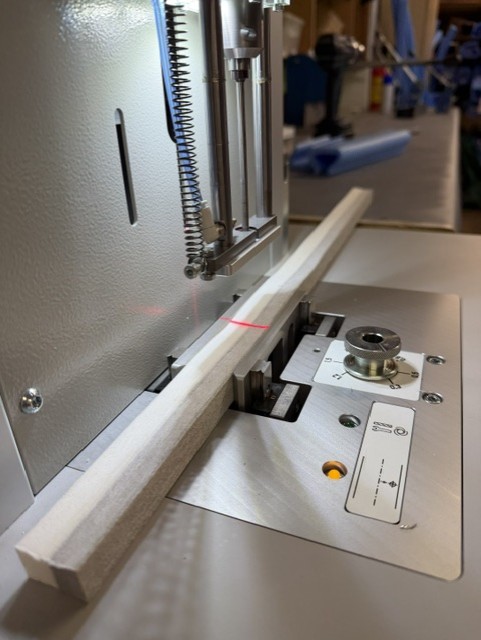
Instead of an operator positioning a hand drill through the fabric, the machine controls the drilling process.
That means greater consistency from one blind to the next and much less opportunity for the drill to wander.
But there's another benefit that's just as important to us.
Previously, drilling cellular fabric was a job we only wanted our most experienced member of staff doing.
Now, with the right training, every member of our manufacturing team can become skilled at drilling cellular fabric accurately and consistently.
That's a big change.
We're no longer relying on one person's hand, experience and availability for a critical part of the manufacturing process.
We've removed a bottleneck.
We've increased the amount we can manufacture.
And we've reduced the potential for expensive cellular fabric to end up as waste.
Does That Mean Our Old Cellular Blinds Were Inferior?
No.
And I think this is an important distinction.
We didn't spend £21,000 because customers were complaining.
They weren't.
We didn't buy it because the blinds we'd been producing weren't good enough.
They were.
We bought it because we'd found a better way to make them.
There's a temptation in business to justify every new investment by criticising whatever came before it.
I don't think that's necessary.
Manufacturing evolves.
Machinery improves.
Processes improve.
The quantities you're producing change.
What made perfect sense five years ago might not be the best way of doing something today.
The important thing is being willing to recognise when that point has arrived.
Why Should Someone Buying a Blind Care About Any of This?
You could quite reasonably be reading this and thinking:
"I'm buying a blind. Why on earth should I care how the holes are drilled?"
And individually, perhaps you shouldn't.
You'll probably never see this machine ( but if you wanted to see it we would love to show it off).
You won't stand next to it while your blind is being manufactured.
And when the finished blind is fitted in your home, you're certainly not going to look at it and think:
"I'm glad they used a £21,000 drilling machine for that."
But here's why I think it matters.
The quality of a finished product isn't determined by one big decision.
It's the result of hundreds of small ones.
How was the fabric cut?
How accurately was it drilled?
Which components were used?
Who assembled it?
What happens when something isn't quite right?
And when a better manufacturing method becomes available, does the company carry on doing things the way it always has?
Or does somebody ask:
Is there a better way?
The Advantage of Actually Making Blinds
The blinds industry has changed enormously during my time in it.
There are plenty of companies that measure and fit blinds but have the products themselves manufactured elsewhere.
There's nothing inherently wrong with that model.
We've simply chosen a different route.
We still manufacture many of the blinds we sell here in Leicester.
And one of the things I love about manufacturing ourselves is that these decisions are ours to make.
We can choose the machinery.
We can improve a process.
We can train our people differently.
We can look at something we've been doing successfully for years and still ask whether there's a better way of doing it.
Our Crush Cut roller blind table was another example.
That investment allowed us to improve the way we cut roller blind fabrics, creating accurate cuts and sealed edges rather than simply accepting the traditional method because that's how it had always been done.
This new cellular drilling machine comes from exactly the same philosophy.
We're Not Trying to Make the Most Blinds
Of course, the new machine will help us manufacture cellular blinds faster.
That's important.
When the quantity you're producing has more than doubled and one part of the process has become a bottleneck, speed matters.
But if speed had been the only benefit, I'm not convinced we'd have spent the money.
For us, the investment needed to achieve more than that.
It needed to give us:
- greater accuracy and consistency
- less reliance on one highly experienced operator
- the ability to train more of our team in the process
- increased production capacity
- less potential waste of expensive cellular fabric
It does all five.
And that's why, after thinking about it for more than 18 months, we finally placed the order.
There's still a sign hanging on the wall of our factory:
“It is your job to always be asking: Is there a better way?”
I don't want that to become one of those company slogans that gets stuck on a wall and then ignored.
It should challenge us.
Because our aim isn't to make the most blinds we possibly can.
It's to make the best blinds we can.
Sometimes that means questioning a process that isn't working.
But sometimes and I think this is much more interesting it means questioning a process that is working.
Our old way of drilling cellular fabrics worked.
This way is better.
And, for the blinds we're making today, we believe it's the best way we've found to do it.
That's why we spent £21,000 on a machine most of our customers will never see.

About Phil Coleman
Phil Coleman is the fifth generation of his family to run Barlow Blinds, a Leicester business that has been making blinds since 1887. With over 30 years of hands-on experience, Phil has played a leading role in shaping industry standards including being part of the team that wrote the only NVQ qualification for blind and shutter installers. He also serves on the Management Committee of the British Blind & Shutter Association (BBSA), helping to set best practice across the trade. Under his leadership, Barlow Blinds has remained true to its founding principle: “It’s not our job to find customers for our blinds, it’s our job to find the right blinds for our customers.”
Article Review & Accuracy
Reviewed by: Phil Coleman, Managing Director, Barlow Blinds
Last reviewed: August 2026
Our promise
If new evidence, products or British Standards change our advice, we'll update this article. If we make a mistake, we'll correct it.
This article forms part of the Barlow Blinds Knowledge Centre and is written or personally reviewed by Phil Coleman, drawing on more than 35 years' experience, guidance from the British Blind & Shutter Association (BBSA), British Standards where applicable, manufacturer technical information and real customer feedback.
Major updates to this article are shown at the top or bottom of the page.