Sometimes Doing the Right Thing Means Walking Away From a Sale
It's not very often that I get annoyed with a customer.
This week, I did.
Although, to be fair, I wasn't really annoyed with him.
I was annoyed because, according to what he told me, two other local blind companies had given him advice about something I take extremely seriously: child safety.
And what they'd apparently told him was completely different from what I was telling him.
I was in Syston quoting for three vertical blinds.
It had been a perfectly normal appointment.
We'd talked about which way the blinds should open, chosen the fabric and gone through the different options.
Then he said:
"I'm happy to sign a disclaimer so I can have longer control cords and don't have to have them secured to my walls."
I told him we couldn't do that.
It wasn't me being difficult. And it wasn't something a disclaimer could get around.
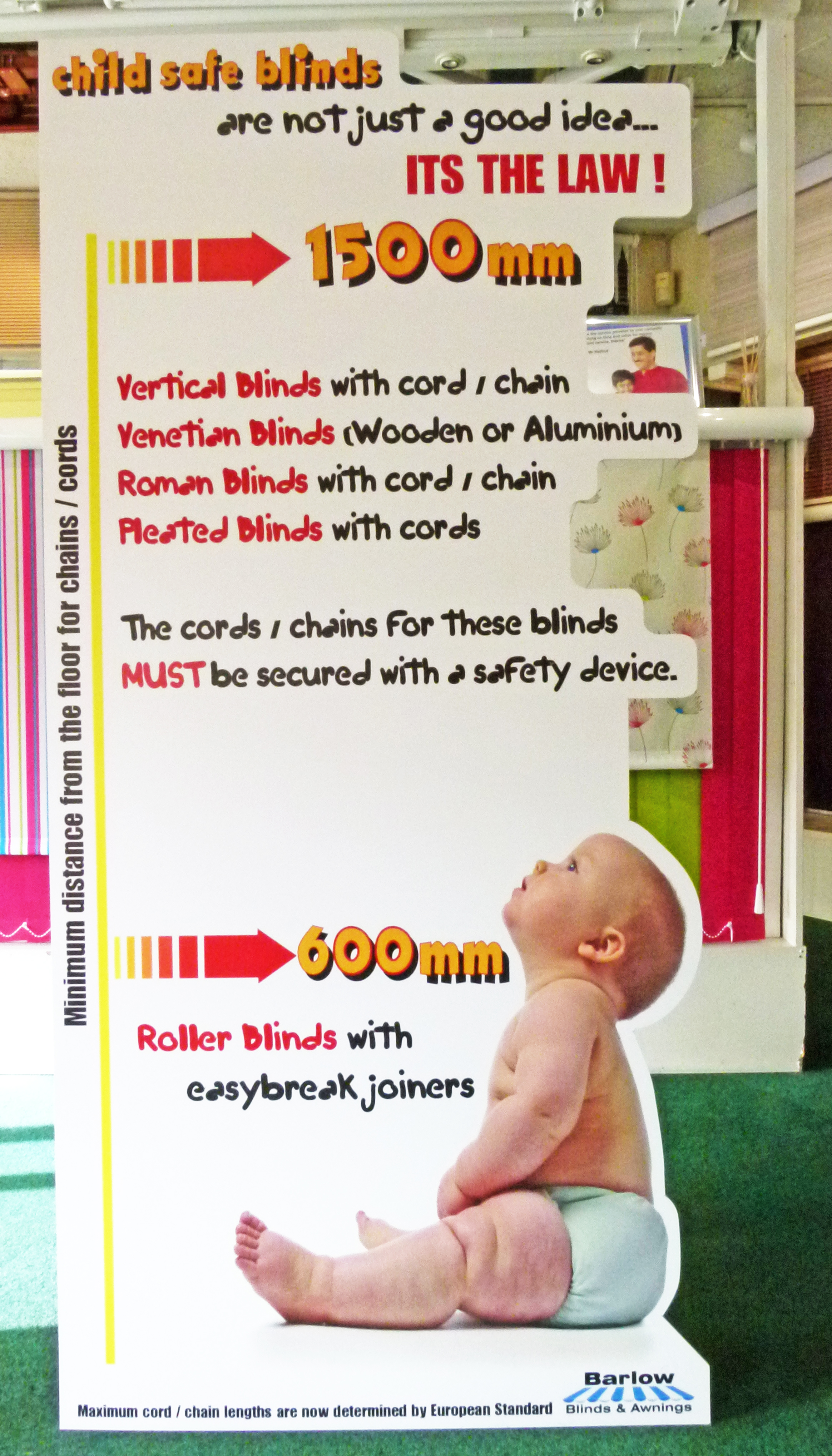
Where blinds use looped cords or chains, there are child-safety requirements governing how they should be installed, including the positioning and use of the appropriate safety devices.
You can't sign a piece of paper and suddenly make a non-compliant installation compliant.
He wasn't convinced.
"That's not what the other two companies have told me."
Apparently, both had said they could fit the blinds the way he wanted as long as he signed a disclaimer.
Then he said something that started to get under my skin.
"I believe them. You're just trying to force me to have something I don't want. How can two different companies say I can sign a disclaimer and you're the only one saying something different?"
I could understand why he was questioning me.
If you've had three companies into your home and two tell you one thing while the third tells you something completely different, who are you supposed to believe?
But I also knew there was a line I wasn't going to cross just to get the order.
Sometimes Two Companies Can Still Be Wrong
I told him I couldn't speak for the other two companies.
I hadn't been there for those conversations, so all I could go on was what he'd told me.
What I could tell him was what we would and wouldn't do.
We weren't going to fit the blinds in a way that didn't meet the child-safety requirements.
And a signed disclaimer wasn't going to change that.
Because think about what we're actually talking about here.
We're not arguing over whether a blind looks better opening to the left or the right.
We're talking about child safety.
Young children have died after becoming entangled in blind cords.
That's why these requirements exist.
So I wasn't prepared to sit there, agree to something I didn't believe was safe and then make myself feel better because the customer had signed a piece of paper.
Eventually, the conversation became a little heated.
And I said something along these lines:
"You've been quoted by two companies who, from what you're telling me, are prepared to fit the blinds the way you want them. We aren't. Sometimes being a professional company means being prepared to walk away from a sale."
And at that point, I knew there was a pretty good chance that was exactly what we were going to do.
Walk away.
"But There Aren't Any Children Living Here"
This is an argument we hear from time to time.
There might not be any young children living in the house today.
But grandchildren visit.
Friends bring their children around.
Families move.
And a blind can stay at a window for years.
That's the point.
We don't decide whether to install something safely based on whether we think a child is likely to be standing next to that particular window tomorrow afternoon.
We install it correctly in the first place.
That's our responsibility.
Don't Just Take My Word for It
There wasn't much point in me continuing to argue with him.
And actually, I didn't want him simply to take my word for it.
Why should he?
He had three people supposedly giving him conflicting information.
So I gave him a Make It Safe leaflet produced by the British Blind and Shutter Association.
To get more information on window blind safety from the BBSA click here
The BBSA has done a huge amount to promote blind cord safety in our industry, and the leaflet explains why these safety measures matter and how blinds can be made safer for children.
In other words:
Don't believe me because I'm the salesman standing in your house. Go and read it for yourself.
Then you can make up your own mind.
I finished the conversation by saying:
"I think we're clearly not the right company for you."
And I meant it.
I'd Rather Lose the £300
Look, we're a business.
Of course I wanted the order.
Three vertical blinds would have made us around £300 profit.
We have wages to pay, vans to run, machinery, premises and bills coming through the door just like every other business.
But there have to be lines you're prepared not to cross for a sale.
Child safety is one of ours.
If you ask us to fit something in a way that doesn't meet the relevant child-safety requirements, we're going to say no.
Even if another company says yes.
Even if you're willing to sign a disclaimer.
Even if saying no costs us the order.
That's not us trying to be awkward or force you into buying something you don't want.
It's part of the responsibility we take on when we fit blinds in someone's home.
So yes, I'd rather watch £300 walk out of the door.
I can earn another £300.
I'm not gambling with a child's safety to get it.
About Phil Coleman
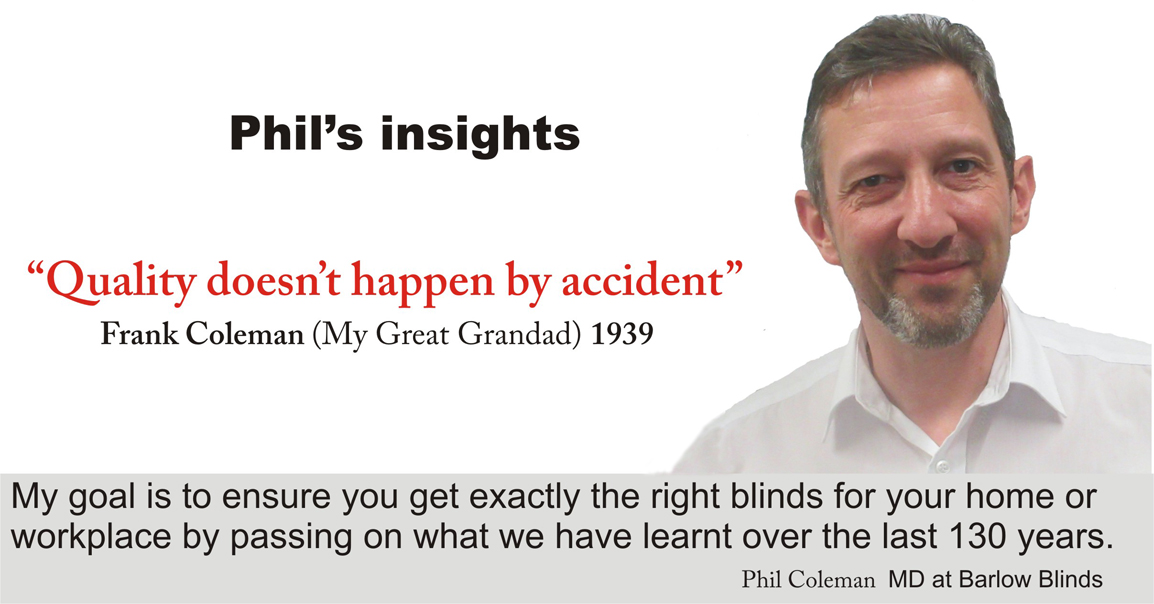
Phil Coleman is the fifth generation of his family to run Barlow Blinds, a Leicester business that has been making blinds since 1887. With over 30 years of hands-on experience, Phil has played a leading role in shaping industry standards including being part of the team that wrote the only NVQ qualification for blind and shutter installers. He also serves on the Management Committee of the British Blind & Shutter Association (BBSA), helping to set best practice across the trade. Under his leadership, Barlow Blinds has remained true to its founding principle: “It’s not our job to find customers for our blinds, it’s our job to find the right blinds for our customers.”
Article Review & Accuracy
Reviewed by: Phil Coleman, Managing Director, Barlow Blinds
Last reviewed: August 2026
Our promise
If new evidence, products or British Standards change our advice, we'll update this article. If we make a mistake, we'll correct it.
This article forms part of the Barlow Blinds Knowledge Centre and is written or personally reviewed by Phil Coleman, drawing on more than 35 years' experience, guidance from the British Blind & Shutter Association (BBSA), British Standards where applicable, manufacturer technical information and real customer feedback.
Major updates to this article are shown at the top or bottom of the page.