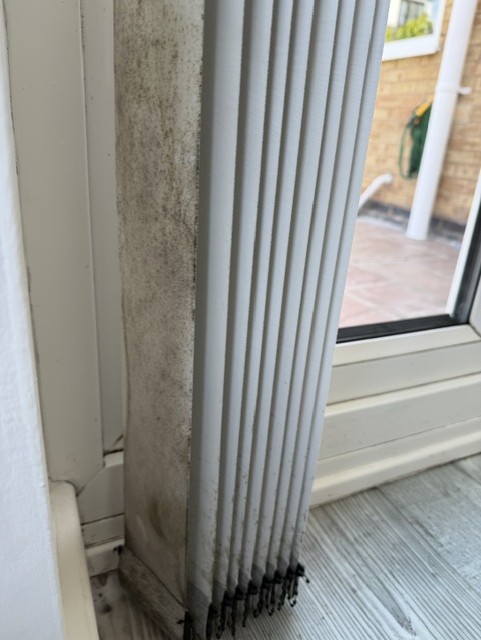
Why Some Blinds Go Mouldy After Just 2 Years
Blinds should not develop mould after only a few years. In most cases, mould growth is caused by condensation, moisture and selecting the wrong fabric for the environment. Choosing waterproof or moisture-resistant blinds for rooms prone to condensation can significantly improve durability and reduce maintenance.
Last week I visited a home in Narborough because the homeowners wanted to replace their vertical blinds.
At first, I genuinely couldn’t understand why.
From the front, they looked absolutely fine.
Clean.
Straight.
Still modern-looking.
Only around two years old.
Then the customer turned one of the louvres around and showed me the back of the fabric.
The backing had gone mouldy.
The issue wasn’t really the age of the blinds.
The issue was that the room and the moisture inside it had never properly been considered when the blinds were originally recommended.
And unfortunately, we see this happen far more often than most homeowners realise.
Not just in conservatories either.
Kitchens.
Bathrooms.
Utility rooms.
Poorly ventilated bedrooms.
Anywhere that regularly deals with condensation and changing temperatures.
Once you stopped looking at the blinds and started looking at the room itself, the signs were everywhere. Moisture around the windows. Condensation on the glass. Dampness collecting around the frames.
These are exactly the conditions blinds deal with every single day in many homes.
And honestly, I felt bad for them.
Because these blinds hadn’t “worn out.”
They’d simply been sold for the wrong environment in the first place.
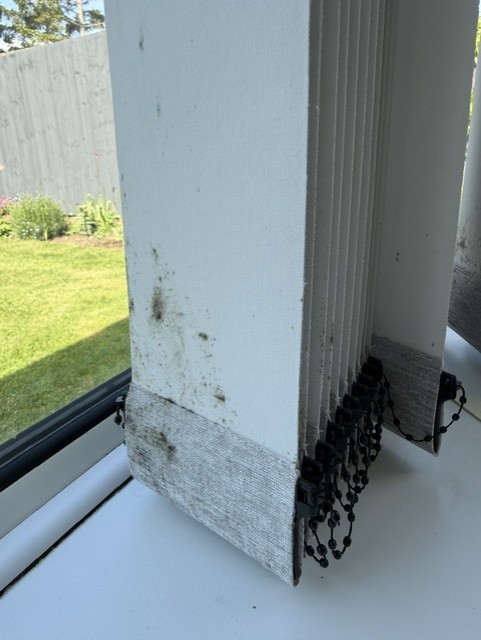
The Most Important Part of Buying Blinds Isn’t the Fabric
It’s understanding the room.
Because blinds do not live in showrooms or sample book.
They live in real homes with:
- condensation
- steam
- heat
- cold glass
- poor ventilation
- winter dampness
- and constant temperature swings
That means the nicest-looking fabric sample is not always the right choice long term.
And this is where many homeowners get unintentionally misled.
Some companies still sell blinds based mostly on what looks best in the sample book instead of what will actually survive in the room over time.
The Part That Frustrated Me Most
The homeowners contacted the original company after discovering the mould.
The response?
“They’re two years old, so they’re out of guarantee.”
That part genuinely frustrates me about this industry.
Because these were not cheap blinds.
And quality made-to-measure blinds should not be failing after two years.
Mistakes happen in every trade. Every company gets things wrong occasionally.
But when a product has clearly been recommended for the wrong environment, simply pointing at the guarantee period avoids the real issue completely.
The blinds were never suitable for that room in the first place.
And unfortunately, by the time homeowners discover that mistake, the mould has usually already arrived.
Moisture Is One of the Biggest Causes of Blind Problems
Rooms with regular condensation create a very different environment from the average living room.
Conservatories can behave like greenhouses in summer and cold, damp spaces in winter.
Bathrooms regularly deal with steam and trapped moisture.
Kitchens experience heat, humidity, and poor airflow around windows.
Over time, those conditions can damage certain blind fabrics and backing materials if the wrong products are installed.
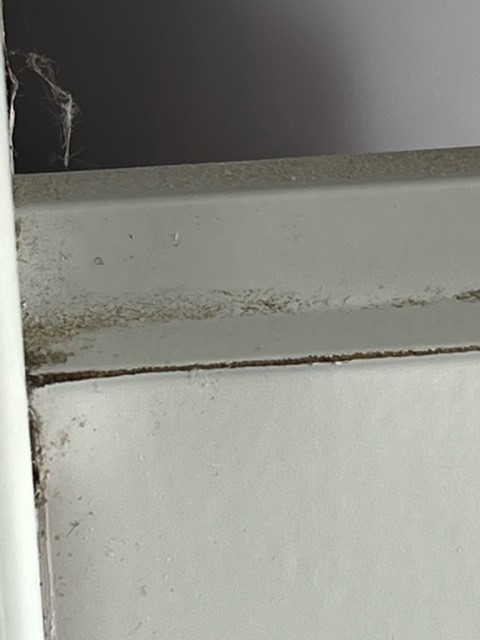
The good news is that most modern blind systems now have moisture-resistant or waterproof options available.
Including:
- Vertical blinds
- Roller blinds
- Venetian blinds
- Cellular blinds
- Perfect Fit blinds
- Shutters
The problem is many homeowners are never told the difference between standard and moisture-resistant fabrics until something goes wrong later.
Blind Type |
Moisture Resistance Best For |
Main Advantages |
Things To Consider |
Roller Blinds (Waterproof Fabrics) |
Excellent |
Conservatories, kitchens, bathrooms |
Simple look, easy to clean, large waterproof fabric range available |
Standard blackout rollers can still allow light gaps |
Vertical Blinds (Waterproof Fabrics) |
Excellent |
Conservatories and large windows |
Good light control, ideal for wide windows and doors, replacement louvres available |
Standard fabric verticals may suffer in high-condensation rooms |
Fauxwood Venetian Blinds |
Excellent |
Conservatories, kitchens, bathrooms |
Waterproof, durable, easy to wipe clean, looks similar to real wood |
Heavier than aluminium or fabric blinds on very large windows |
Vela Fabric Venetian Blinds |
Excellent |
Conservatories, lounges, kitchens |
Privacy without making the room too dark, waterproof, anti-static, lightweight |
Softer filtered light rather than full blackout |
Cellular / Honeycomb Blinds |
Very Good |
Conservatories, roof glazing, hot or cold rooms |
Helps with insulation, glare reduction, available cordless or motorised |
Some fabrics are moisture resistant rather than fully waterproof |
Perfect Fit Cellular Blinds |
Good |
Conservatories, doors, tilt-and-turn windows |
Neat fitted appearance, no drilling into frames, helps reduce heat gain and heat loss |
Limited by window system compatibility |
INTU Blinds |
Moderate |
Conservatories and glazed doors |
Fits neatly within the bead, no hanging cords, ideal for doors |
Product suitability depends on window bead depth |
Aluminium Venetian Blinds |
Excellent |
Kitchens, bathrooms, utility rooms |
Fully waterproof, lightweight, modern appearance |
Less soft-looking than fabric-based products |
Roman Blinds |
Poor |
Lounges and bedrooms |
Softer furnishing look, decorative fabrics |
Generally not ideal for heavy condensation environments |
Wooden Venetian Blinds |
Poor |
Dry rooms only |
Natural wood appearance and warmth |
Real wood and condensation rarely work well together |
Shutters (Waterproof Options Available) |
Very Good |
Conservatories, bathrooms, bay windows |
Excellent privacy and light control, long lifespan |
Material choice is critical in high-moisture rooms |
External Blinds & Awnings |
Excellent |
South-facing conservatories and garden rooms |
Stops heat before it reaches the glass, huge difference to summer comfort |
Higher initial investment than internal blinds |
This Is Why Advice Matters More Than Price
Most blind conversations revolve around:
- colour
- style
- price
Very few revolve around:
- condensation
- ventilation
- moisture resistance
- long-term durability
But those details are often the difference between blinds lasting 2 years or 10+ years.
And that’s why the cheapest quote can sometimes become the most expensive decision.
Because buying blinds twice is never cheaper.
The Honest Conversations We Sometimes Have
There are plenty of times during home visits where we actively steer customers away from certain fabrics or products.
Not because they look bad.
Not because they’re expensive.
But because we already know what will happen to them in that particular room over time.
That’s not upselling.
That’s protecting someone from making an expensive mistake.
Because our job isn’t simply to sell blinds.
My Grandad had a saying “It is not our job to find customers for our blinds. It is our job to find the right blinds for our customers”
That was true in the 1950s and is just as true today.
What Should You Ask Before Buying Blinds for Moisture-Prone Rooms?
If a room regularly deals with condensation, steam, or temperature swings, ask these questions before ordering blinds:
- Is the fabric waterproof?
- Is the backing moisture resistant?
- Is this blind suitable for conservatories, kitchens, or bathrooms?
- What happens if mould develops later?
- Can the fabric be replaced without replacing the whole blind?
- Will this blind cope with regular condensation?
- Is there a better option for heat control and ventilation?
Those questions matter far more than simply picking a colour sample.
The Bigger Problem in the Blinds Industry
One of the biggest hidden issues in the blinds industry is that many products are still sold based on appearance first and suitability second.
And homeowners usually don’t discover the difference until years later when the problems begin.
The wrong blinds rarely fail in the showroom.
They fail two winters later when the condensation arrives.
FAQs
Can blinds go mouldy?
Yes especially in rooms with regular condensation or poor ventilation.
If the wrong fabric or backing is used in conservatories, kitchens, bathrooms, or other moisture-prone spaces, mould can develop over time behind the fabric.
Are there waterproof blinds available?
Yes.
Many modern blind fabrics are specifically designed for rooms with higher moisture levels, including conservatories, kitchens, and bathrooms.
The important thing is making sure the fabric is genuinely suitable for those environments rather than simply choosing based on appearance.
Why do some rooms create condensation problems?
Rooms with changing temperatures, steam, or poor ventilation often develop condensation when warm air meets colder glass surfaces.
Over time, that moisture can affect blinds, window frames, and surrounding materials if unsuitable products are installed.
What blinds work best in rooms with condensation?
It depends on the room and ventilation, but moisture-resistant vertical blinds, roller blinds, faux wood Venetians and Shutters, and cellular blinds are often good options.
The key is choosing blinds designed to cope with moisture and temperature changes long term.
Can mouldy blind fabrics be replaced?
In many cases, yes.
Some blind systems allow replacement fabrics or louvres to be fitted without replacing the full mechanism or track.
That’s why it’s worth asking about replacement options before purchasing.
Should made-to-measure blinds only last two years?
No.
Quality made-to-measure blinds should normally last far longer when the correct products are specified for the room environment.
Premature problems are often caused by unsuitable fabric choices rather than the blinds simply being “old.”
Can blinds help reduce condensation?
Some blinds can help regulate room temperature and reduce cold surfaces around windows, which may help minimise condensation.
But ventilation and overall room conditions still play an important role too.

About Phil Coleman
Phil Coleman is the fifth generation of his family to run Barlow Blinds, a Leicester business that has been making blinds since 1887. With over 30 years of hands-on experience, Phil has played a leading role in shaping industry standards including being part of the team that wrote the only NVQ qualification for blind and shutter installers. He also serves on the Management Committee of the British Blind & Shutter Association (BBSA), helping to set best practice across the trade. Under his leadership, Barlow Blinds has remained true to its founding principle: “It’s not our job to find customers for our blinds, it’s our job to find the right blinds for our customers.”