Why Do Professionally Installed Blinds Sometimes Fail?
Almost every day, we receive a call from someone with a blind that has failed.
Sometimes the blind is simply old and has reached the end of its life.
Sometimes it's been damaged accidentally.
And sometimes, if we're being fair, the blind has been misused.
But the ones that frustrate me most are the blinds that really shouldn't have failed at all.
The blind itself is perfectly good.
The fabric is suitable.
The mechanism works.
The problem goes all the way back to one decision made on the day it was installed.
And the homeowner would have had absolutely no reason to know anything was wrong.
A Bathroom Blind in Blaby
This week I visited a home in Blaby to measure for several new blinds and replace an existing roller blind in the bathroom.
As soon as I walked into the bathroom, I had a pretty good idea what had happened.
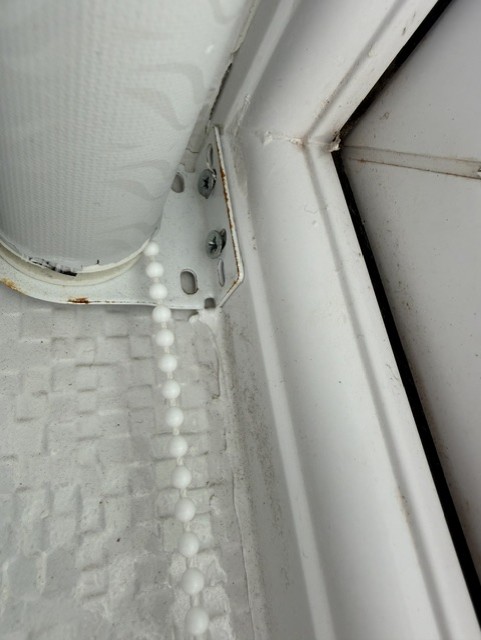
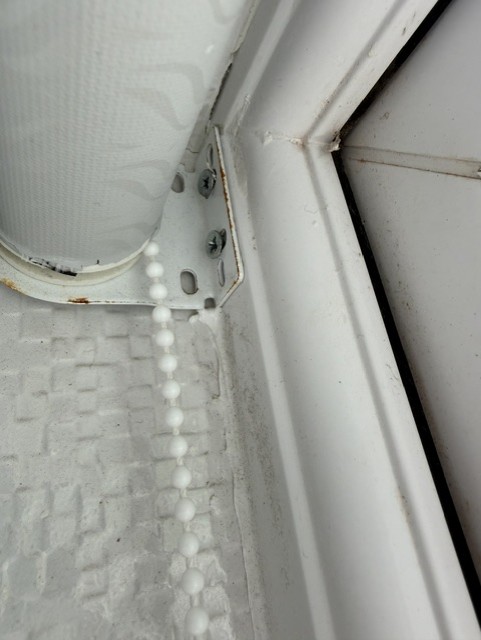
The blind had been professionally supplied and fitted, but the brackets had been screwed directly into the uPVC window frame.
Now, I can understand why.
It's probably the quickest and easiest place to fit the blind.
No drilling through tiles.
Very little mess.
And you're finished much more quickly.
But fitting blinds shouldn't be about finding the quickest and easiest place to put the brackets.
It should be about putting them in the right place.
And there's a difference.
Why We Wouldn't Have Fitted It There
In this particular bathroom, we would have fitted the blind further forward inside the window recess.
There was just one complication.
Tiles.
That means carefully drilling through the tiles before drilling into the wall behind them.
It's slower.
It's more difficult.
And you certainly don't want to get it wrong.
Nobody enjoys drilling into somebody else's bathroom tiles.
But that's part of professionally installing a blind.
Sometimes the correct installation is the more difficult installation.
The easiest fixing point and the correct fixing point aren't always the same thing.
What's Wrong With Screwing Blinds Into Window Frames?
There are several reasons why we try to avoid drilling into uPVC window frames when there's a suitable alternative.
Firstly, if your windows are relatively new, drilling into the frames may affect the manufacturer's guarantee. It's always worth checking the terms of your particular window warranty before allowing anyone to drill into them.
Secondly, frame fitting can create problems with window handles.
A roller blind needs enough clearance to operate without the fabric, bottom bar or mechanism catching the handle.
And that's where this particular installation became interesting.
Because whoever fitted the blind had clearly thought about the handle.
They'd solved that problem.
Unfortunately, in doing so, they'd created another one.
The Blind Cleared the Handle But Created Another Problem
To give the blind enough clearance from the window handle, the roller had been made so that the fabric came off the front of the roller tube rather than down the back.
This is often called rolling off the front.
And initially, it probably seemed like a perfectly good solution.
The fabric cleared the handle.
The blind went up and down.
Everything looked neat.
If you were the homeowner standing there on the day it was installed, you'd have had no reason whatsoever to think there was a problem.
But there was.
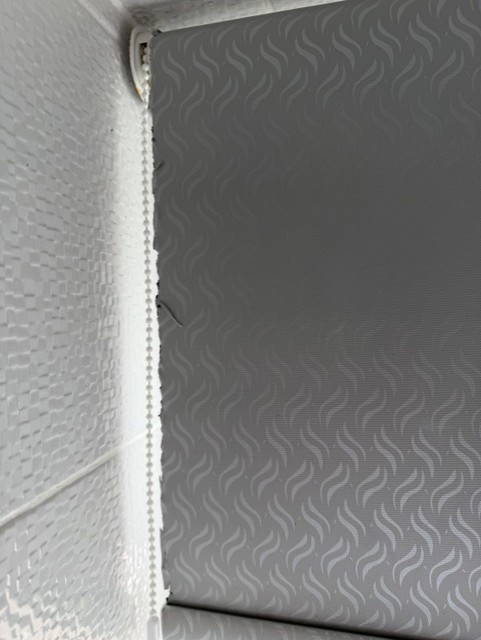
By rolling the fabric off the front, the fabric now sat in front of the operating chain.
This makes operating the of the blind more difficult.
And over time, the chain and the fabric started coming into contact with each other.
A Small Installation Decision That Slowly Damaged the Blind
If the operating chain sits close to the fabric, you have to be careful about the angle at which you pull it.
Pull it perfectly straight and everything may be fine.
But let's be realistic.
Nobody operates their bathroom blind with military precision every morning.
You grab the chain and pull it.
Sometimes perfectly straight.
Sometimes at a slight angle.
And if the chain is close enough to the fabric, that slight angle can cause it to rub against the edge.
Once or twice?
Probably no problem at all.
But think about how many times a bathroom blind gets opened and closed over several years.
Hundreds.
Potentially thousands.
That tiny amount of repeated contact gradually starts wearing away at the edge of the fabric.
And that's exactly what had happened here.
The blind had effectively been damaged by its own operating chain.
There was nothing fundamentally wrong with the roller blind.
There was nothing wrong with the waterproof fabric.
And the homeowner hadn't done anything unreasonable.
The problem started with where the blind had been fitted.
The Problem Was Invisible on Installation Day
This, for me, is the important part.
Most people judge a newly fitted blind by what they can see.
Is it straight?
Does it fit?
Does it look neat?
Does it go up and down?
If the answer to all four is yes, you'd naturally assume it's been fitted correctly.
And that's what makes failures like this so frustrating.
On the day this blind was installed, I’m sure it looked absolutely fine.
The homeowner couldn't reasonably have known that the position of the brackets, the window handle, the direction of the roll and the operating chain would eventually combine to damage the fabric.
But that's exactly the sort of thing a professional fitter should be thinking about.
You're not really paying somebody just to put a blind up.
You're paying them to spot the problems you shouldn't be expected to spot yourself.
How Long Should a Bathroom Roller Blind Last?
A good-quality roller blind with a suitable waterproof fabric should comfortably give you 10–15 years of service in a bathroom when it's correctly manufactured, installed and looked after.
Obviously, no blind comes with a guaranteed lifespan.
How frequently it's operated, condensation levels, ventilation and how it's treated will all make a difference.
But we'd certainly expect considerably more than a few years from a properly specified bathroom roller blind.
That's why premature failures like this are so frustrating.
The homeowner ends up paying to replace something that potentially didn't need to fail in the first place.
And often, the cause isn't the blind.
It's a small decision made when it was installed.
Professional Fitting Isn't Just About Making a Blind Look Straight
A lot of what makes a good blind installation good is almost invisible.
It's the questions being asked before the first hole is drilled.
Where should the brackets go?
What's behind the plaster or tiles?
Is there a solid fixing?
Will the blind clear the handles?
Which way should the fabric roll?
Will the chain operate freely?
Could anything rub against the fabric?
And perhaps most importantly:
Is the decision I make today likely to create a problem five or ten years from now?
That's where experience matters.
Because you're not really paying a professional fitter for their ability to put two screws into a wall.
You're paying for all the decisions that come before those two screws go in.
Sometimes the Harder Installation Is the Better Installation
Nobody particularly enjoys drilling through bathroom tiles.
There's always a risk of damaging one, so it requires the correct drill bits, the right equipment and, most importantly, patience.
It would undoubtedly be quicker to put a couple of screws into the window frame.
But quicker isn't necessarily better.
At Barlow Blinds, we're installing a blind that we hope we'll still be looking after many years from now.
And that changes how you approach the job.
We're not interested in finding the quickest place to put the brackets.
We're interested in finding the right place.
Because professional fitting isn't really about making sure your blind works properly on the day it's installed.
It's about doing everything you reasonably can to make sure it still works properly years later.
A well-made blind deserves to be well fitted too.
And sometimes doing the job properly takes a little longer.
Frequently Asked Questions
Can you screw blind brackets into uPVC window frames?
Technically, yes. However, we generally try to avoid drilling into uPVC frames when there's a suitable alternative fixing position. Apart from potentially affecting some window guarantees, positioning a blind on the frame can bring it closer to handles and create other clearance issues.
Does drilling into a window frame invalidate the guarantee?
It can affect some manufacturers' warranties, so always check the terms of your particular window guarantee before allowing blinds or other products to be screwed into the frame.
Is it safe to drill through bathroom tiles for blinds?
Yes, provided the correct equipment and technique are used. Drilling through tiles requires more care and takes longer than simply fixing into a window frame, but most of the time it's the correct position for the blind.
What is a reverse roll roller blind?
A reverse roll means the fabric comes down from the front of the roller tube rather than the back. This can provide additional clearance from window handles, but the position of the fabric in relation to the operating chain and other parts of the blind needs to be carefully considered.
How long should a bathroom roller blind last?
A well-made roller blind using a suitable waterproof fabric should typically provide around 10–15 years of service when correctly installed, operated and maintained. Usage, ventilation, condensation and general treatment will all affect its lifespan.
About Phil Coleman
Phil Coleman is the fifth generation of his family to run Barlow Blinds, a Leicester business that has been making blinds since 1887. With over 30 years of hands-on experience, Phil has played a leading role in shaping industry standards including being part of the team that wrote the only NVQ qualification for blind and shutter installers. He also serves on the Management Committee of the British Blind & Shutter Association (BBSA), helping to set best practice across the trade. Under his leadership, Barlow Blinds has remained true to its founding principle: “It’s not our job to find customers for our blinds, it’s our job to find the right blinds for our customers.”
Article Review & Accuracy
Reviewed by: Phil Coleman, Managing Director, Barlow Blinds
Last reviewed: AUGUST 2026
Our promise
If new evidence, products or British Standards change our advice, we'll update this article. If we make a mistake, we'll correct it.
This article forms part of the Barlow Blinds Knowledge Centre and is written or personally reviewed by Phil Coleman, drawing on more than 35 years' experience, guidance from the British Blind & Shutter Association (BBSA), British Standards where applicable, manufacturer technical information and real customer feedback.
Major updates to this article are shown at the top or bottom of the page.