Who Shouldn't Buy a Motorised Roof Lantern Blind?
It might seem slightly strange for a blind company to write an article telling people not to buy one of its more expensive blinds.
But after more than 35 years of measuring and fitting blinds, I've talked enough customers through these decisions to know that the most expensive option isn't always the right one.
And there are definitely customers who shouldn't buy a motorised roof lantern blind.
We fit quite a lot of cellular blinds to roof lanterns and rooflights, particularly after a hot summer when people discover just how much heat and glare can come through a large area of glass.
They can be a fantastic solution.
But they aren't automatically the right solution.
Sometimes a much cheaper blind will do exactly the same job you need it to do.
And occasionally, I'll tell a customer I don't think they need a blind at all.
So before you spend the money, here's what I'd think about.
If You're Only Interested in Reducing Heat and Glare
This is probably the biggest reason not to automatically choose motorised.
We recently went out to see two customers in Asfordby. By coincidence, both had almost identical south-facing rooflights and both were having pretty much the same problem.
When the afternoon sun came around, their new garden rooms became uncomfortable because of the heat and glare coming through the glass.
We could offer them two very different blinds.
A manually operated cellular roof blind was £221.
A remote-controlled, solar-charging Clearview cellular blind was £947.
That's a £726 difference.
It would be very easy for us to say, "The £947 blind is the better one."
But that's not really the question.
The question is: What are you actually trying to fix?
Both blinds use the same type of cellular fabric. So if your main concern is controlling heat and glare, spending another £726 doesn't suddenly give you £726-worth of extra heat protection.
What does the extra money buy?
Convenience. Remote operation. Solar charging. A cleaner Clearview appearance. No pole.
Those things can absolutely be worth paying for.
But if you simply want something you can close when the sun comes out and you're perfectly happy operating it with a pole, you may not need to spend £947.
And we'd rather you understood that before ordering.
If You're Going to Close It in May and Open It Again in September
I'm exaggerating slightly, but we see versions of this all the time.
The weather gets hot. The customer closes their manually operated roof blind.
And there it stays.
There's absolutely nothing wrong with that.
But think about what that means when you're deciding whether to pay extra for motorisation.
The sophisticated systems really come into their own when you're regularly opening and closing the blind. You might close it when the afternoon sun starts hitting the room, then open it again in the evening when you want the natural light back.
If you're doing that every day, pressing a button on a remote control is genuinely useful.
If you're going to operate the blind half a dozen times a year, it's worth asking yourself how much that convenience is actually worth to you.
The really important thing to consider if you are planning on keeping your blind closed for long periods is the fabric. Choosing a fabric that cuts out the heat and glare but still lets light through would be the perfect option. These fabrics are called light filtering.
Buy for the way you really live in the room, not for the specification sheet.
If You Think "Motorised" Means Better Heat Protection
This is one of the easiest misunderstandings to clear up.
The motor moves the blind. The fabric does the important work when it comes to heat and glare.
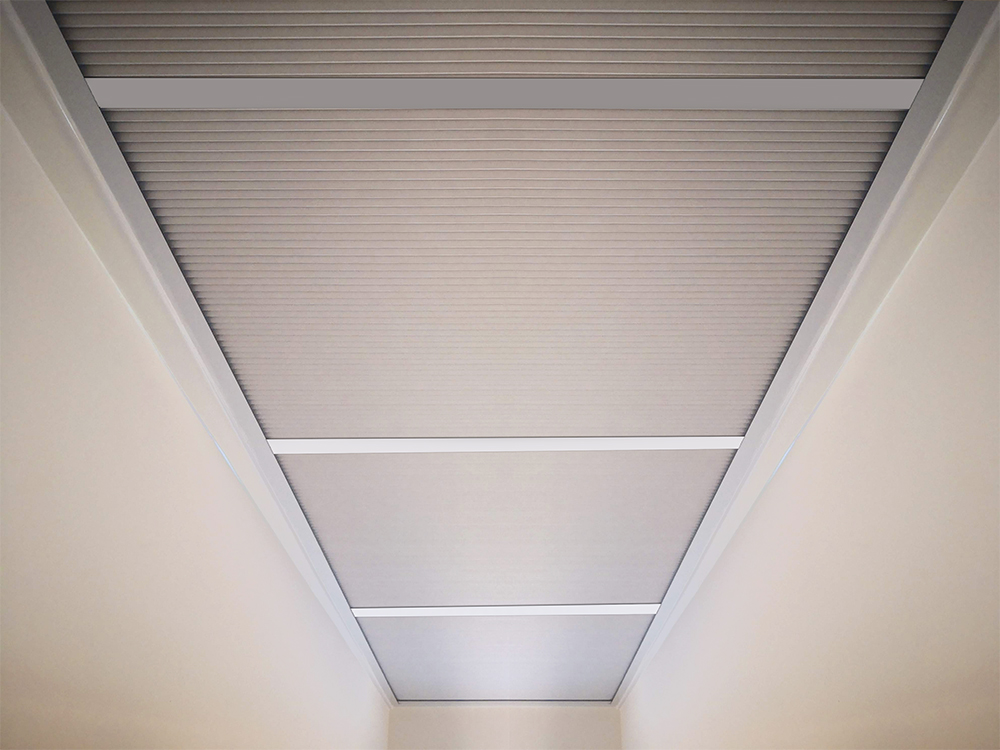
For roof lanterns, we generally recommend cellular fabrics because of their honeycomb construction.
The cells create insulating pockets of air, while the white backing helps reflect solar energy back towards the glass.
Motorisation makes that fabric easier and more convenient to use.
It doesn't magically turn it into a better-performing fabric.
That's why, when we're advising someone, I prefer to separate two questions:
First: Which blind and fabric will solve the problem?
Second: How do you want to operate it?
They're related questions, but they're not the same question.
If You're Expecting the Blind to Turn a Hot Garden Room Into a Fridge
A good cellular roof blind can make a very noticeable difference.
We've had customers tell us the improvement was considerably better than they expected.
But I wouldn't tell somebody that fitting one will suddenly make a hot room cold.
There's an important difference between reducing solar heat gain and cooling an entire room.
Imagine you've got a large south-facing garden room with a roof lantern above you, bifold doors along one wall and several other windows.
The sun isn't only coming through the roof.
Covering the roof lantern can deal with one major source of solar heat gain, but it can't stop sunlight entering through every other piece of glass in the room.
That's why, when we visit, we look at the whole room.
If I think something other than the roof lantern is contributing significantly to the problem, I'd rather have that conversation before you buy a blind than afterwards.
If You Never Intend to Open It Again
Here's a question we occasionally ask that can catch people by surprise:
Do you actually need a blind?
A customer might tell us they want permanent protection from the sun and have absolutely no interest in ever opening the roof back up.
At that point, it's worth having a wider conversation.
Because one of the biggest advantages of a roof lantern blind is choice.
Close it when the afternoon sun becomes uncomfortable.
Open it when you want that lovely natural light flooding back into the room.
That's what you're paying for.
If you know you'll never use that flexibility, I wouldn't automatically point you towards an expensive motorised system.
I'd want to understand what you're trying to achieve first and make sure you're not paying for functionality you'll never use.
We do have many customers who leave their roof blinds closed all year round. Cellular fabrics not only work well in the summer but also are great at keeping the heat in during the winter.
If You Need the Room to Be Completely Black at 5am
This is another area where I'd rather disappoint you before you buy than afterwards.
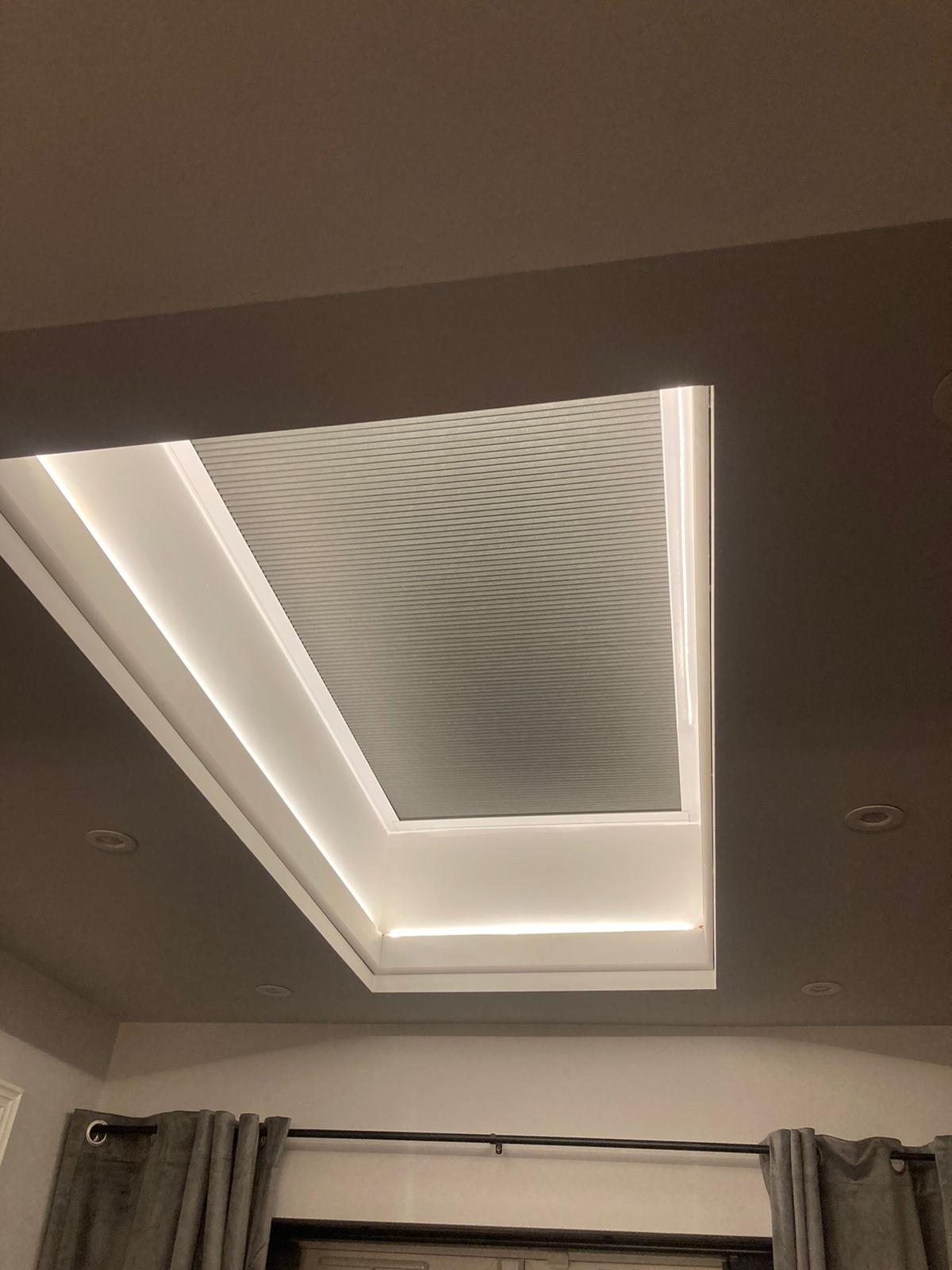
We offer blackout cellular fabrics, and they can dramatically reduce the amount of light coming through a rooflight or roof lantern.
But blackout fabric and a completely blackout room are not necessarily the same thing.
Depending on the blind system and the shape of the opening, some light may still find its way around gaps and edges.
So tell us why you want blackout.
If you're trying to reduce glare on a television or substantially darken a living room, that's one requirement.
If there's a rooflight above your bed and you need the room completely dark at 5am on a June morning, that's a very different expectation.
Those details matter.
We'd much rather explain what a particular system can and can't achieve than sell you something based on an expectation it can't meet.
If You're Choosing Motorised Because You Want "The Best One"
We've heard this more than once:
"We'll have the best one."
My response is usually: What do you mean by best?
Because "best" changes depending on who's standing underneath the roof lantern.
For one customer, best might be a Clearview system with no visible guide wires, solar charging and remote control. They use the room every day, open and close the blind regularly and don't want to mess around with a pole.
For them, spending more can make perfect sense.
For somebody else, best might be the £221 manual blind instead of the £947 motorised one, because what they really need is heat and glare protection and both options use the same type of cellular fabric.
That customer hasn't settled for an inferior solution.
They've simply avoided paying for features they don't need.
That's a very different thing.
So, Who Should Buy a Motorised Roof Lantern Blind?
After everything I've said above, I don't want to give the impression that I'm against motorised blinds.
Far from it.
For the right customer, they're brilliant.
Motorisation tends to make sense when:
- The roof blind is difficult to reach
- You're going to open and close it regularly
- You want a clean Clearview appearance without visible guide wires
- You don't want to operate the blind with a pole
- Convenience matters to you
- You want solar charging so there's no need to run electrical cables to the roof lantern
If you're closing the blind when the afternoon sun arrives and opening it again later in the day, remote operation stops being a gimmick. It becomes genuinely useful.
And there's another practical point I've learned over the years:
A blind that's easy to operate is much more likely to get used when it's actually needed.
In that situation, paying more for motorisation can be money well spent.
The Question I'd Ask Before Selling You One
When I'm standing in someone's home looking up at a roof lantern, I'm not really interested in starting the conversation with:
"Which blind would you like?"
I'd rather ask:
"What problem are you trying to solve?"
Heat?
Glare?
Blackout?
Too much daylight at certain times of day?
Or perhaps you simply want more control over the room.
Once we know the answer, choosing the blind becomes much easier.
Sometimes the right answer will be a fully motorised, solar-charging cellular blind.
Sometimes it'll be the much cheaper manually operated version.
And occasionally, we may tell you that a blind isn't the answer at all.
After more than 35 years doing this, that's probably the biggest thing I've learned:
Don't buy the most expensive blind because somebody tells you it's the best.
Buy the blind that solves your problem and suits the way you're actually going to use your room.
If that's the £947 motorised system, great.
If it's the £221 manual blind, that's great too.
Our job should be to help you understand the difference.
Frequently Asked Questions
Are motorised roof lantern blinds worth the extra money?
They certainly can be. If you'll open and close the blind regularly, the rooflight is difficult to reach, or you simply value the convenience of remote operation, motorisation can be well worth paying for. If you're likely to close the blind for most of the summer and leave it there, a manual system may offer much better value.
Do motorised roof blinds reduce more heat than manual blinds?
Not necessarily. If both blinds use the same cellular fabric, it's primarily the fabric providing the heat and glare control. The motor changes how conveniently you can operate the blind, not the fundamental performance of the fabric.
Can roof lantern blinds be solar powered?
Yes. We offer solar-charging motorised roof blinds. They can be particularly useful when getting a mains electrical supply to the roof lantern would be difficult or disruptive.
What are Clearview roof lantern blinds?
Our Clearview systems run within channels rather than relying on the visible guide wires used on simpler systems. That gives the blind a cleaner appearance when fitted.
Are cellular blinds good for hot roof lanterns?
They're one of our preferred options. The honeycomb construction creates insulating pockets of air, while the reflective backing helps control solar heat gain. How much difference a blind makes to the overall room will also depend on other factors, including other areas of glass.
Can I have a cheaper manual roof lantern blind?
Often, yes.
Depending on the size and design of your rooflight, a manually operated cellular blind can be a very cost-effective alternative to motorisation.
And if that's all you need, we'll tell you.
About Phil Coleman
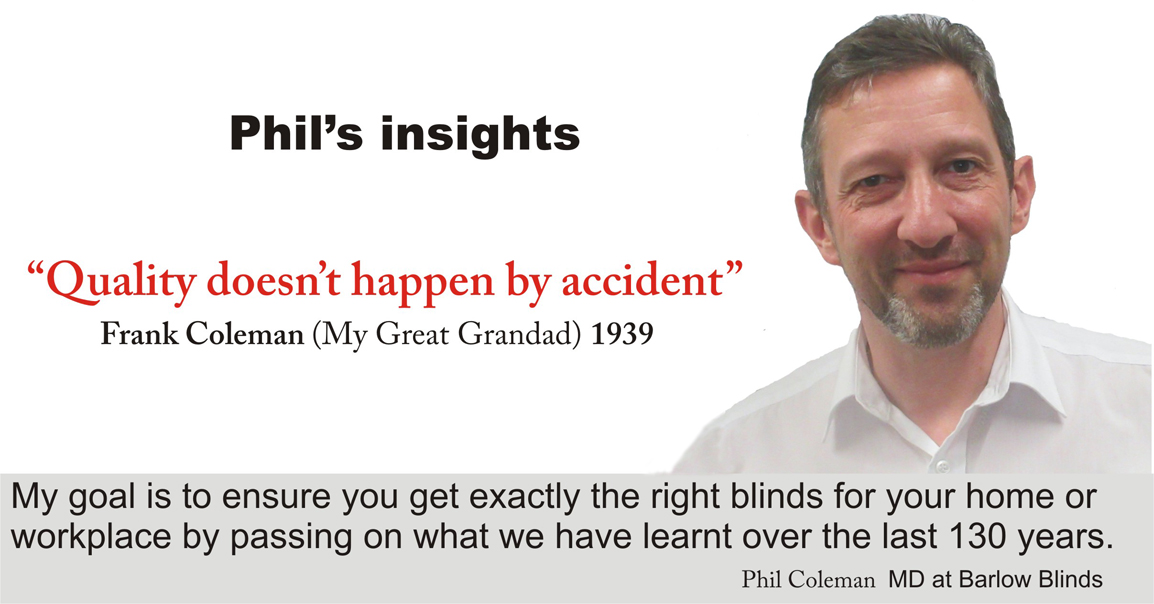
Phil Coleman is the fifth generation of his family to run Barlow Blinds, a Leicester business that has been making blinds since 1887. With over 30 years of hands-on experience, Phil has played a leading role in shaping industry standards including being part of the team that wrote the only NVQ qualification for blind and shutter installers. He also serves on the Management Committee of the British Blind & Shutter Association (BBSA), helping to set best practice across the trade. Under his leadership, Barlow Blinds has remained true to its founding principle: “It’s not our job to find customers for our blinds, it’s our job to find the right blinds for our customers.”
Article Review & Accuracy
Reviewed by: Phil Coleman, Managing Director, Barlow Blinds
Last reviewed: August 2026
Our promise
If new evidence, products or British Standards change our advice, we'll update this article. If we make a mistake, we'll correct it.
This article forms part of the Barlow Blinds Knowledge Centre and is written or personally reviewed by Phil Coleman, drawing on more than 35 years' experience, guidance from the British Blind & Shutter Association (BBSA), British Standards where applicable, manufacturer technical information and real customer feedback.
Major updates to this article are shown at the top or bottom of the page.