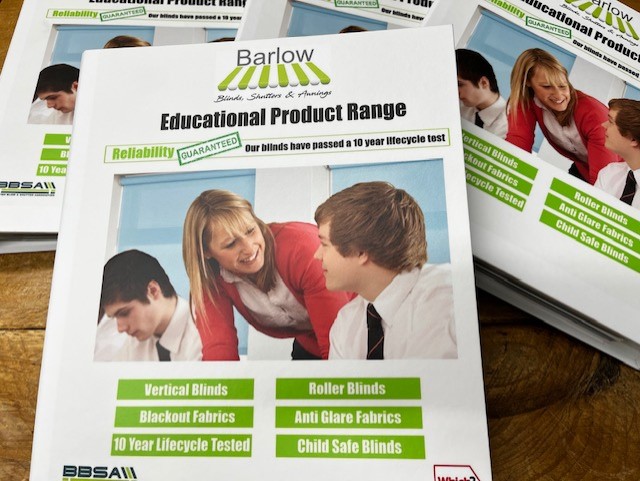
School Blinds in August? It Felt Like I'd Gone Back 30 Years
When I first started in the blind trade more than 30 years ago, you could almost guarantee what August would look like.
Schools.
Lots of them.
The summer holidays were when schools got things done. Old blinds came down, damaged ones were replaced, classrooms were tidied up and everything was made ready for September.
For years, August was one of our busiest times for school work.
Then, gradually, that changed.
Budgets got tighter. Priorities shifted. Instead of refurbishing whole schools during the summer holidays, we started seeing much smaller jobs spread throughout the year.
One blind here. A classroom there.
Repair something if we could. Replace it when we couldn't.
We never stopped working in schools, but that traditional August rush largely disappeared.
Until this summer.
And this time, the reason for the rush was completely different.
Suddenly, Schools Weren't Talking About Old Blinds
After an exceptionally hot summer, I started getting a very different question when I visited schools.
It wasn't:
"Can you replace these old blinds?"
It was:
"What can we do to help keep these classrooms cooler?"
That's a significant change.
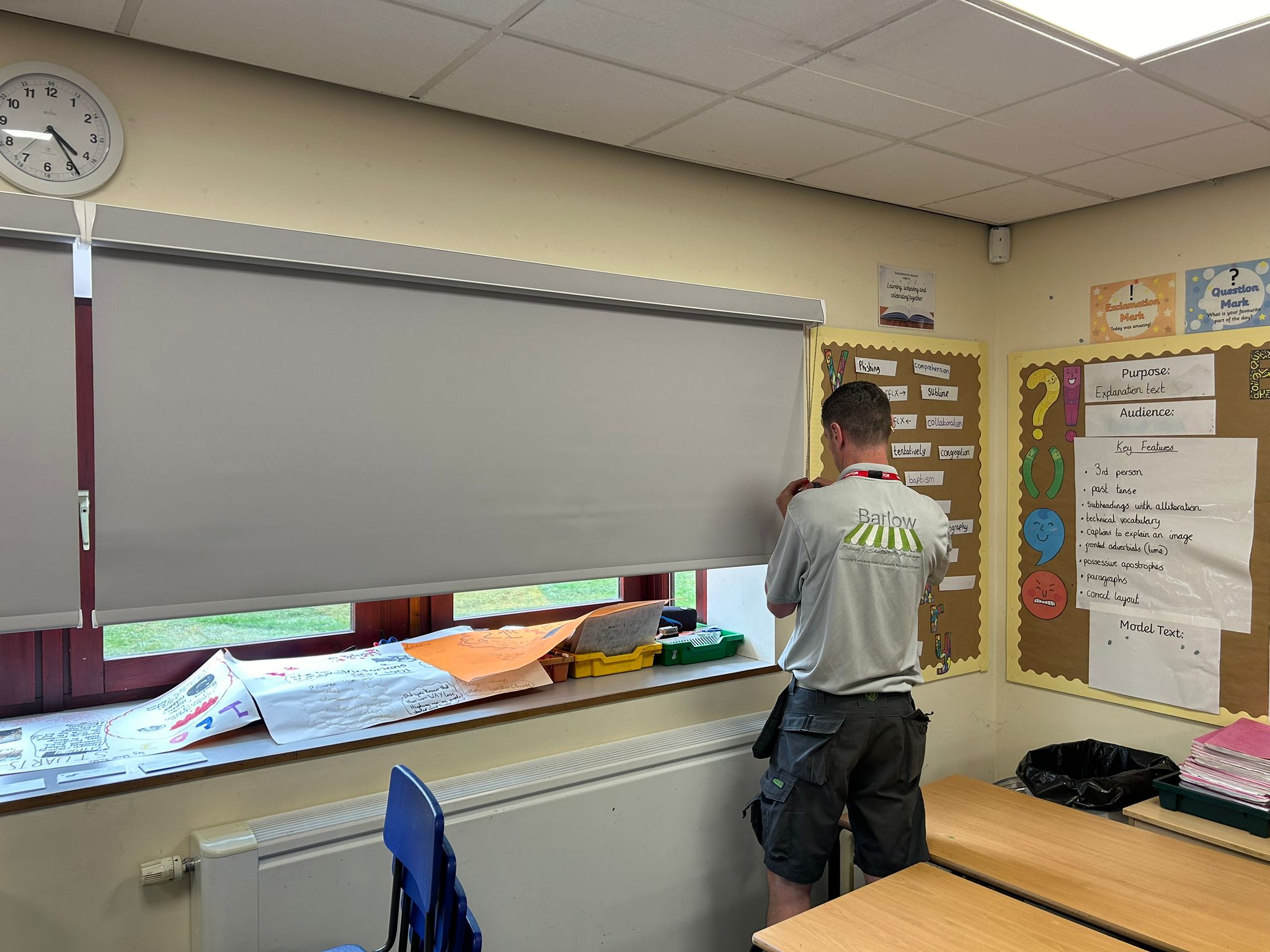
Normally, I might visit two or three schools in a month to measure for blinds.
This summer, I measured eight schools in one week.
And these weren't little jobs.
- Rendell Primary School in Loughborough – 78 roller blinds
- Roundhill Academy in Syston – 56 roller blinds
- Ashby School – 27 roller blinds
- Ashfield Academy in Leicester – 14 roller blinds and 8 Perfect Fit blinds
After more than 30 years doing this, it suddenly felt strangely familiar.
August was school month again.
But there was another thing that surprised me.
The speed at which schools were making decisions.
Anyone who has supplied schools will know that purchase orders don't normally arrive at lightning speed.
You quote.
You wait.
Someone needs to approve it.
Sometimes someone else needs to approve it after them.
A few weeks can disappear quite easily.
This summer, we had some purchase orders arrive the same day.
When that starts happening with schools, you know the problem has moved pretty high up the priority list.
"Which School Blind Fabric Will Actually Help Keep the Classroom Cooler?"
Normally, colour is a big part of choosing blinds for a school.
Schools have their own colour schemes, and understandably they want new blinds to work with the classrooms they're going into.
But this summer, colour was often followed by another question:
"Which one is actually going to help with the heat?"
The good news is that schools don't suddenly have to put white blinds everywhere.
Some roller blind fabrics can have the colour you want facing into the classroom while the reverse side, the side facing the glass is white.
And that white backing matters.
The principle is pretty simple.
You want a lighter, more reflective surface facing the window rather than a dark surface absorbing more of that incoming solar energy.
Rendell Primary was a good example.
They wanted taupe.
It suited their classrooms and was the colour they wanted to see when they looked at the blinds.
No problem.
We could give them taupe facing into the classroom and white facing the window.
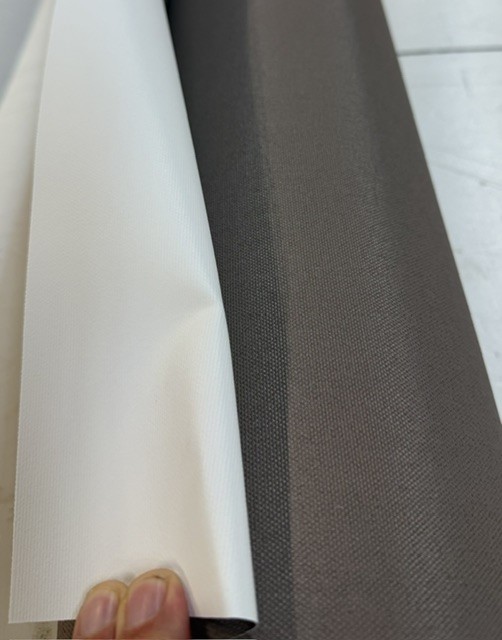
So they didn't have to choose between the appearance they wanted and a fabric better suited to what they were actually trying to achieve.
Interestingly, we were the only company quoting for that particular project that recommended the white-backed option.
I'm not saying that to give ourselves a pat on the back.
I'm saying it because, for me, that's what quoting for blinds should involve.
The question shouldn't simply be:
"Which colour do you like?"
It should be:
"What problem are you trying to solve?"
Because once we know that, we can recommend the blind and fabric that gives you the best chance of solving it.
Let's Be Clear: Blinds Aren't Air Conditioning
This is also where I think we need to be realistic.
A roller blind isn't going to turn an overheating classroom into an air-conditioned room.
And I wouldn't tell a school otherwise.
If your only objective is stopping solar heat before it reaches the glass, external shading can be more effective because it tackles more of that solar energy before it enters the building.
But there are other considerations.
External shading can mean considerably more cost, planning and installation.
For a school looking for a relatively quick and cost-effective improvement, the right internal blinds can still make a useful difference by controlling direct sunlight and reducing solar gain through the windows.
And heat isn't the only issue.
Teachers have another problem that comes with strong sunlight:
glare.
Whiteboards.
Interactive screens.
Laptops.
Tablets.
Anyone who has tried looking at a screen with the sun pouring through a classroom window knows how frustrating that can be.
So although blinds aren't a magic cure for an overheating building, the right ones can help tackle several very real classroom problems at once.
Getting the Orders Was the Nice Part
Then came the slightly stressful bit.
We had the orders.
Now we had to manufacture hundreds of blinds.
And fit them.
Before the children came back.
No pressure, then.
This is one of those occasions when being a manufacturer rather than simply a retailer makes a genuine difference.
We manufacture our roller blinds ourselves in our Leicester factory.
That meant we had control.
We weren't placing orders for hundreds of blinds with another manufacturer and then waiting, hoping they'd arrive on time and that everything would be right when they did.
Our own team was making them.
If something needed changing, we could change it.
If one school's order needed prioritising because of an installation date, we could prioritise it.
And if I wanted to know exactly where an order was, I didn't need to make a phone call to a supplier.
I could walk into the factory and find out.
Did that make the whole thing stress-free?
Absolutely not.
There was more than a little stress involved.
But at least it was stress we had some control over.
And when you've got several schools all needing their blinds before the same September deadline, that control matters.
For a Few Weeks, I Was Back at the Start of My Career
There was something strangely nostalgic about this August.
For a few weeks, it genuinely felt a little like I'd gone back to the beginning of my career.
School corridors without children in them.
Classrooms being prepared for September.
Old blinds coming down.
New blinds going up.
A deadline that couldn't really move because, ready or not, the children were coming back.
But the reason behind the work has changed.
Thirty years ago, a lot of the summer work was simply about replacing blinds that were old, damaged or worn out and getting classrooms ready for another school year.
This summer, schools were asking a much more specific question:
"What can we do now to make these classrooms more comfortable when the next spell of hot weather arrives?"
I don't think that conversation is going away.
And if schools are going to use already stretched budgets trying to tackle overheating, I think we owe it to them to have a better conversation than simply asking what colour blinds they'd like.
What are the windows like?
Where does the sun hit?
What's happening in the room?
Is heat the main problem?
Is glare part of it?
What fabric is being recommended—and why?
Sometimes the answer might be blinds.
Sometimes there may be other options worth considering.
But if blinds are part of the solution, schools should be fitting the right blinds, with the right fabrics, for the problem they're actually trying to solve.
Because sometimes a seemingly small detail can make a difference.
Even something as simple as which side of the fabric is white.
FAQs about blinds for hot classrooms
Do white blinds keep classrooms cooler?
Not necessarily. What's particularly useful is having a light or white surface facing the window. Some roller blind fabrics allow you to choose a colour that suits the classroom on one side, with a white backing facing the glass to help reflect more incoming solar energy.
Can internal blinds stop a classroom from overheating?
They can help, but they aren't air conditioning and shouldn't be presented as a complete solution to overheating. The right blind and fabric can help control direct sunlight and solar gain through the windows, while also reducing glare. External shading can be more effective at stopping solar energy before it passes through the glass, although it will usually involve different cost and installation considerations.
Which type of blind is best for reducing heat in a classroom?
There's no single blind that's automatically best for every school. We'd look at the windows, the direction and amount of sunlight, how the classroom is used and whether heat, glare—or both are causing the problem before recommending a blind and fabric.
Will heat-reducing blinds make classrooms too dark?
They don't necessarily have to. Fabric choice matters. The aim should be to find the right balance between controlling sunlight and glare while maintaining an appropriate level of natural light for the classroom.
Can school blinds be manufactured and fitted during the summer holidays?
Yes, and the summer holidays can be an ideal opportunity because classrooms are easier to access. However, larger projects need planning. As we discovered this August, lots of schools can be working towards exactly the same September deadline.
If heat or glare is becoming a problem in your classrooms, we're happy to look at the windows and talk through what blinds can and can't realistically do.
About Phil Coleman
Phil Coleman is the fifth generation of his family to run Barlow Blinds, a Leicester business that has been making blinds since 1887. With over 30 years of hands-on experience, Phil has played a leading role in shaping industry standards including being part of the team that wrote the only NVQ qualification for blind and shutter installers. He also serves on the Management Committee of the British Blind & Shutter Association (BBSA), helping to set best practice across the trade. Under his leadership, Barlow Blinds has remained true to its founding principle: “It’s not our job to find customers for our blinds, it’s our job to find the right blinds for our customers.”
Article Review & Accuracy
Reviewed by: Phil Coleman, Managing Director, Barlow Blinds
Last reviewed: August 2026
Our promise
If new evidence, products or British Standards change our advice, we'll update this article. If we make a mistake, we'll correct it.
This article forms part of the Barlow Blinds Knowledge Centre and is written or personally reviewed by Phil Coleman, drawing on more than 35 years' experience, guidance from the British Blind & Shutter Association (BBSA), British Standards where applicable, manufacturer technical information and real customer feedback.
Major updates to this article are shown at the top or bottom of the page.