Why Roller Blind Tube Size Matters More Than You Might Think
Six roller blinds. Four-metre drops. And two problems that might have been avoided with the right components.
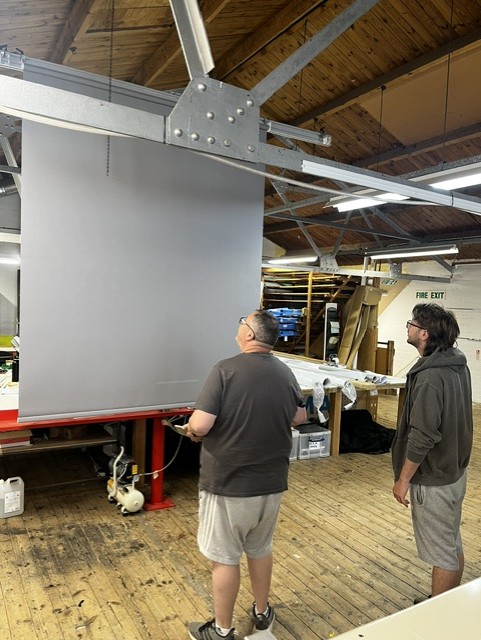
I visited De Montfort University in Leicester this week to investigate a problem they were having with six roller blinds.
Now, there's nothing particularly unusual about a roller blind being less than a metre wide.
But these blinds had a drop of around four metres.
That's a lot of fabric hanging from a relatively narrow roller tube.
And it was causing problems.
Some of the blinds weren't rolling up straight. The fabric was gradually moving sideways, catching on the brackets and starting to fray.
Others had a different problem.
Lower them about halfway and the weight of the remaining fabric was enough to make them start unrolling on their own.
Not exactly what you want from a roller blind.
What interested me was that both problems could potentially be improved by changing the components used to manufacture the blinds.
And it highlights something most people buying roller blinds probably never think about.
Two roller blinds can look almost identical, but what's going on inside them can make a considerable difference to how well they work.
Why Does Roller Blind Tube Size Matter?
The diameter of a roller blind tube matters because the tube and operating mechanism need to be suitable for the width, drop and weight of the blind.
A larger tube needs fewer revolutions to raise or lower the same amount of fabric. It may also accommodate a different, heavier-duty operating mechanism.
But a bigger tube isn't automatically better.
The correct choice depends on the complete blind specification, including the fabric weight, bottom rail and operating system.
And the blinds I inspected at De Montfort University were a good example of why those details matter.
Why Do Roller Blinds Roll Up Crooked?
A roller blind should roll neatly around its tube when you raise it.
Sounds simple enough.
But when you're dealing with four metres of fabric, even a small amount of sideways movement can become a problem.
The fabric gradually moves towards one end of the tube until it starts catching on the brackets.
That's what was happening at the university.
And once the fabric starts rubbing against the brackets, the edges can become damaged.
In this case, they were already starting to fray.
So what could be done about it?
There are a couple of options I'd consider.
Option 1: Fit Side Guide Wires
Side guide wires attach to the bottom bar and help guide the blind as it moves up and down.
They can provide a more positive way of controlling the blind's movement.
That could help in this situation.
But there's a downside.
They're visible.
And depending on where the blinds are installed, they aren't always the most attractive solution.
For some installations, that won't matter.
For others, appearance is just as important as functionality.
So it's something worth considering before deciding they're the answer.
Option 2: Use a Heavier Bottom Rail
This is another option I'd look at.
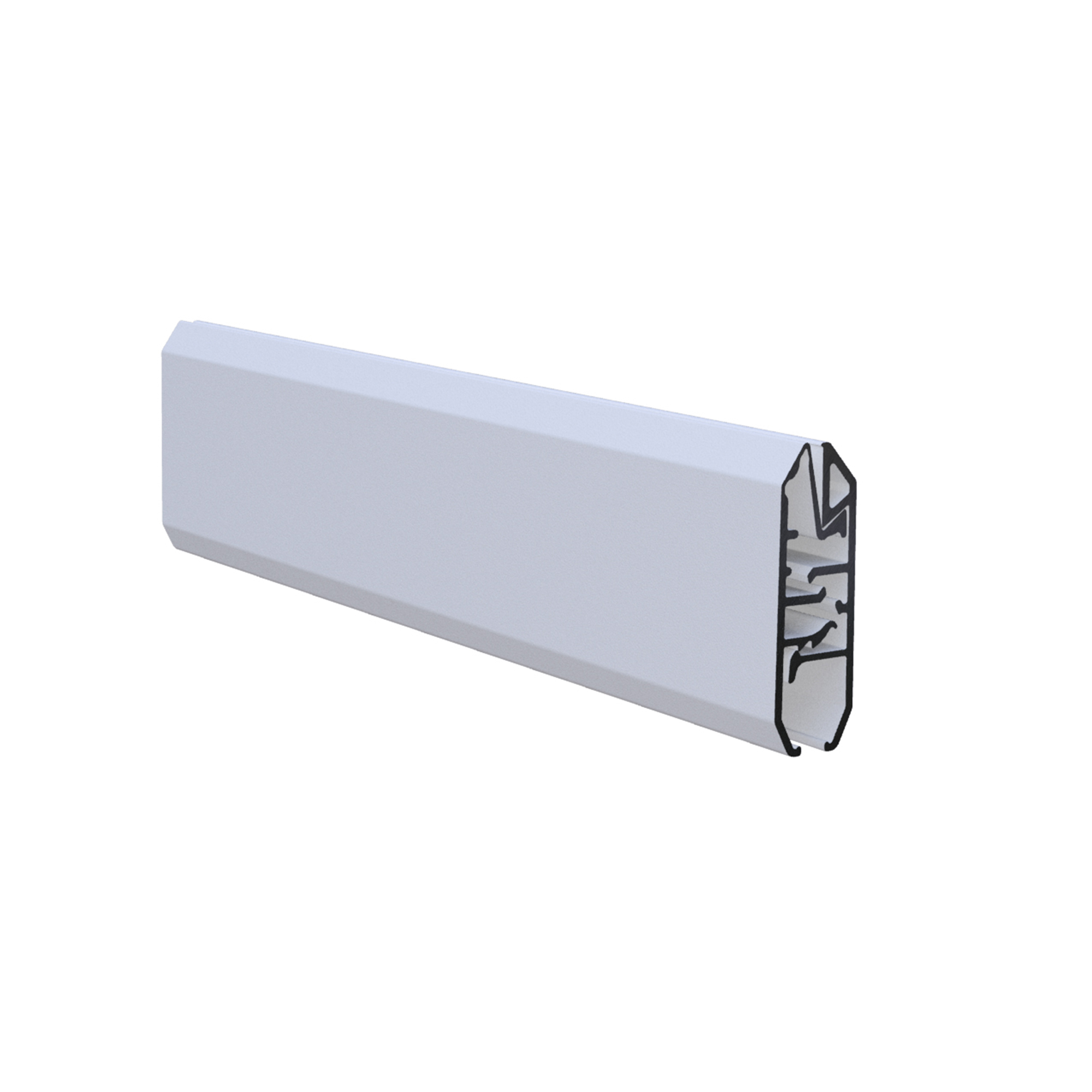
The existing blinds had lightweight, hollow plastic bottom bars.
At Barlow Blinds, we use aluminium Smart bottom rails, which are considerably heavier.
Why does that matter?
Because the additional weight helps keep the fabric under tension.
That can encourage the blind to hang more evenly and may help it roll more consistently.
Now, I wouldn't suggest that fitting a heavier bottom rail automatically cures every fabric tracking problem.
It doesn't.
There can be other factors involved, including how the fabric has been cut, how the blind has been installed and whether everything is properly aligned.
But in this particular situation, it's a sensible improvement worth considering.
There's also something else to remember.
Adding weight to the bottom of a blind means the operating mechanism has more weight to control.
Which brings me to the second problem.
Why Do Roller Blinds Unroll by Themselves?
This was the issue I found particularly interesting.
The existing blinds had 32mm diameter roller tubes.
Now, if you told me you had a roller blind less than a metre wide, a 32mm tube wouldn't immediately sound unreasonable.
For plenty of ordinary blinds, it can be perfectly suitable.
But these weren't ordinary blinds.
They had four metres of fabric hanging from them.
And that's where things change.
The longer the drop, the more fabric there is.
More fabric means more weight.
And that weight has to be controlled by the mechanism inside the roller blind.
In this case, the existing mechanisms weren't providing enough resistance to keep some of the blinds securely in position.
So when the blinds were lowered to around halfway, they could start unrolling under their own weight.
You can imagine how frustrating that would be.
You lower a blind to where you want it, only to find it doesn't stay there.
That's not how a properly specified roller blind should behave.
Will a Larger Roller Blind Tube Stop a Blind Unrolling?
My recommendation would be to consider replacing the existing 32mm tubes with 45mm tubes and the corresponding heavier-duty mechanisms.
There are two reasons for this.
Firstly, a larger diameter tube needs fewer revolutions to raise or lower the blind.
With a four-metre drop, that can make a difference to how the blind operates.
Secondly, the 45mm mechanism we use has a stronger spring designed to handle heavier blinds.
That additional resistance should help prevent the blinds from unrolling under their own weight, provided the complete system is correctly matched to the blind.
Of course, before manufacturing any replacements, we'd need to check the overall fabric weight, the bottom rail and the suitability of the mechanism.
It's important to get that right.
Simply fitting a bigger tube doesn't automatically solve every problem.
The components need to work together.
What's the Difference Between a 32mm and 45mm Roller Blind Tube?
The most obvious difference is the diameter, but that isn't the only consideration.
Feature |
32mm Roller Tube |
45mm Roller Tube |
Tube diameter |
32mm |
45mm |
Revolutions needed for the same fabric travel |
More |
Fewer |
Operating mechanisms |
Chain Operation |
Chain and Motorised Operation |
Suitability for longer blinds |
Less than 2 metres |
Any depth |
Best application |
Smaller Blinds and Lighter Fabrics |
Large Blinds and Heavier Fabric |
In the De Montfort University example, the important difference wasn't simply that the proposed replacement tube was larger.
It was that the 45mm system we use has a stronger spring mechanism designed for heavier blinds.
That's why I'd consider it a more suitable option, subject to checking the complete specification.
Could These Problems Have Been Avoided With Different Components?
Possibly.
But I can't answer that with certainty.
The blinds were supplied by a company that didn't manufacture its own roller blinds.
I don't know what information was given to the manufacturer, what specifications were agreed or why those particular components were selected.
So it wouldn't be fair to suggest that I know exactly what went wrong.
What I can say is this.
A roller blind can be the correct width and still have components that aren't suitable for the job.
A 32mm tube might be absolutely fine for a blind that's 900mm wide with a normal drop.
But increase that drop to four metres and you're dealing with a different set of requirements.
The fabric weight changes.
The demands on the mechanism change.
And the components need to be selected accordingly.
It's why we don't just look at the width of a blind when deciding how to manufacture it.
We look at the whole blind.
How Do We Choose the Right Roller Blind Tube at Barlow Blinds?
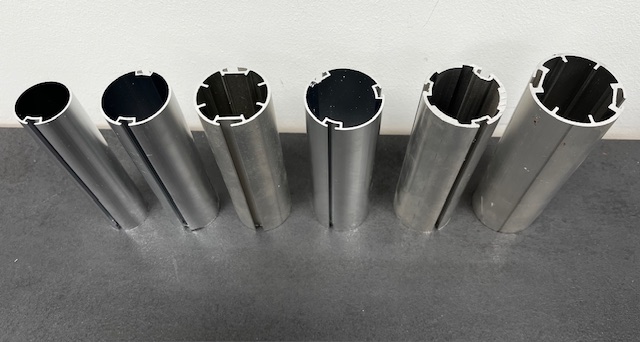
At our factory in Leicester, we have six different roller tube diameters available, ranging from 32mm to 65mm.
We also have different operating mechanisms and motors to suit different applications.
That doesn't mean we automatically use the biggest tube available.
Far from it.
Sometimes a 32mm tube is exactly the right choice.
There's no point fitting a larger, more expensive component if the smaller one is perfectly suitable.
But equally, there's no sense using a smaller tube simply because the blind happens to be narrow.
We consider the width, drop, fabric weight and operating requirements before deciding which components to use.
Sometimes that means choosing a larger tube or a heavier-duty mechanism, even though the customer might never notice the difference.
Because once the blind is installed, most of those components are hidden.
You don't see the spring inside the mechanism.
You probably don't know the diameter of the roller tube.
And you might never give the bottom rail a second thought.
Until something goes wrong.
Does Roller Blind Tube Size Matter for Home Windows?
You might be reading this thinking:
"That's all very interesting, but I'm not buying four-metre roller blinds for a university."
Fair enough.
Most homeowners aren't.
But the same principles apply to the blinds you buy for your bedroom, kitchen or living room.
Imagine you're comparing two roller blinds.
They're the same size.
They're made from similar-looking fabric.
One is cheaper than the other.
When they're first installed, they might look almost identical.
So why would you pay more for one?
Well, sometimes there isn't a good reason.
A cheaper blind can be perfectly suitable for what you need.
But sometimes the difference is in the components you can't see.
The diameter and strength of the roller tube.
The mechanism used to raise and lower the blind.
The weight and design of the bottom rail.
The way the fabric has been cut and assembled.
All these things can affect how a blind operates.
And they're decisions made long before the finished blind reaches your window.
That's why I believe it's worth asking a few questions before buying.
Three Questions Worth Asking Before Buying Roller Blinds
You don't need to become an expert in roller blind manufacturing.
That's what your supplier is there for.
But there are three questions I'd suggest asking, particularly if you're buying blinds for large or unusually shaped windows.
1. What Size Roller Tube Will You Use, and Why?
A smaller roller tube isn't necessarily a bad thing.
In fact, for many windows, it's exactly what I'd recommend.
But the tube should be selected to suit the size and weight of the blind, not simply because it's the cheapest option.
A knowledgeable supplier should be able to explain why a particular tube is suitable.
2. Is the Operating Mechanism Suitable for the Weight of the Blind?
This is particularly important for longer or heavier roller blinds.
The mechanism needs to control the weight of the fabric and bottom rail.
If it isn't suitable, you could end up with a blind that's difficult to operate or doesn't stay where you want it.
It's worth checking before the blind is made.
We even have 3 different mechanisms for our 32mm tubes.
3. What Type of Bottom Rail Will Be Fitted?
This might sound like a minor detail.
But as the university example shows, the bottom rail can play an important part in how the blind behaves.
A heavier bottom rail can help maintain fabric tension.
However, it also adds to the weight the mechanism needs to handle.
So again, it's about choosing components that work properly together.
We will only every use the heavier aluminium bottom bar as it makes all roller blinds hang better..
Are More Expensive Roller Blinds Better Quality?
Not necessarily.
And I think that's important to say.
Spending more money doesn't automatically mean you're getting a better roller blind.
You can pay more for a particular fabric, colour, finish or brand without necessarily getting a stronger operating mechanism.
Equally, a well-made blind using relatively inexpensive components can perform perfectly well if those components are suitable for the job.
What matters is whether the blind has been manufactured correctly for its intended use.
A small roller blind for a kitchen window doesn't necessarily need the same components as a large blind covering a full-height glazed door.
And you shouldn't have to pay for components you don't need.
But you also don't want to discover, after installation, that the components fitted weren't quite up to the job.
That's why understanding how your blinds are made can be just as important as choosing what they look like.
Frequently Asked Questions About Roller Blind Tube Sizes
What Is the Difference Between a 32mm and 45mm Roller Blind Tube?
The main difference is the diameter. A 45mm tube has a larger circumference, so it needs fewer revolutions to raise or lower the same blind. The two sizes may also use different operating mechanisms. Suitability depends on the complete blind specification.
Can the Wrong Roller Tube Cause a Blind to Unroll by Itself?
An unsuitable tube and operating mechanism combination can contribute to a roller blind failing to stay in position. The mechanism must provide sufficient holding resistance for the weight of the fabric and bottom rail.
Do Larger Roller Blinds Always Need Larger Tubes?
Not necessarily. Tube selection depends on the blind's width, drop, fabric weight, operating system and manufacturer's specifications. A smaller tube may be perfectly suitable for some blinds, while others require a larger or stronger system.
Can a Heavier Bottom Rail Stop a Roller Blind Rolling Up Crooked?
A heavier bottom rail can help maintain tension in the fabric and may improve how evenly a blind hangs and rolls. However, it won't necessarily solve tracking problems caused by poor alignment, fabric cutting or installation issues.
Making Roller Blinds Is About More Than Cutting Fabric
We've been manufacturing blinds in Leicester since 1887.
And over those years, one thing we've learnt is that the smallest details can make a big difference.
A few millimetres in the wrong place.
A mechanism that isn't quite strong enough.
A bottom rail that's too light for the application.
Individually, these things might not seem particularly important.
But they can make the difference between a blind that works reliably and one that becomes frustrating to use.
The visit to De Montfort University was a good reminder of that.
Six relatively narrow roller blinds.
Nothing particularly unusual about their width.
But because of their four-metre drops, the components needed to do a very different job from those in an ordinary blind.
And that's why the right specification matters.
The Bottom Line: The Right Components Matter More Than the Biggest Components
If you're buying roller blinds, don't assume that two blinds that look the same have been made the same way.
And don't assume that a larger tube or a more expensive mechanism is automatically better either.
The important thing is that someone has taken the time to select the right components for your particular window.
At Barlow Blinds, that's part of what we do when we manufacture blinds in our Leicester factory.
We want to make the best blinds we can, not the most..
Because when you buy a roller blind, you shouldn't have to think about the diameter of the tube or the strength of the mechanism.
You should simply be able to pull it down, leave it where you want it and expect it to stay there.
Not just on the day it's fitted.
But for years afterwards.

About Phil Coleman
Phil Coleman is the fifth generation of his family to run Barlow Blinds, a Leicester business that has been making blinds since 1887. With over 30 years of hands-on experience, Phil has played a leading role in shaping industry standards including being part of the team that wrote the only NVQ qualification for blind and shutter installers. He also serves on the Management Committee of the British Blind & Shutter Association (BBSA), helping to set best practice across the trade. Under his leadership, Barlow Blinds has remained true to its founding principle: “It’s not our job to find customers for our blinds, it’s our job to find the right blinds for our customers.”
Article Review & Accuracy
Reviewed by: Phil Coleman, Managing Director, Barlow Blinds
Last reviewed: November 2026
Our promise
If new evidence, products or British Standards change our advice, we'll update this article. If we make a mistake, we'll correct it.
This article forms part of the Barlow Blinds Knowledge Centre and is written or personally reviewed by Phil Coleman, drawing on more than 35 years' experience, guidance from the British Blind & Shutter Association (BBSA), British Standards where applicable, manufacturer technical information and real customer feedback.
Major updates to this article are shown at the top or bottom of the page.