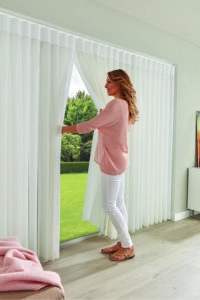
Are Blinds Better Than Curtains?
An Honest Answer From a Leicester Blind Manufacturer
There’s a question we get asked constantly when visiting homes across Leicester:
“Are blinds better than curtains?”
Now, I need to tread carefully.
We manufacture and fit blinds.
We don’t sell curtains.
But we’ve walked into thousands of homes over the years. We see what works beautifully… and what quietly causes frustration five years later.
So this isn’t a sales pitch.
It’s a practical breakdown.
Because the real answer isn’t “blinds are better.”
The real answer is: better for what?
What Curtains Do Brilliantly
Curtains have been around for centuries for a reason.
A well-made pair can completely transform a room.
They:
- Add softness and warmth
- Bring texture (velvet, linen, heavy weave fabrics)
- Deliver excellent blackout when properly lined
- Reduce draughts when fitted correctly
- Add theatre and presence to large windows
If you want a room to feel dressed and layered curtains do that effortlessly.
In bedrooms especially, blackout-lined curtains often outperform standard blinds for deep darkness. Fewer light gaps. Heavier coverage.
No question.
Where Curtains Can Become Frustrating
Here’s the part that rarely gets discussed before ordering:
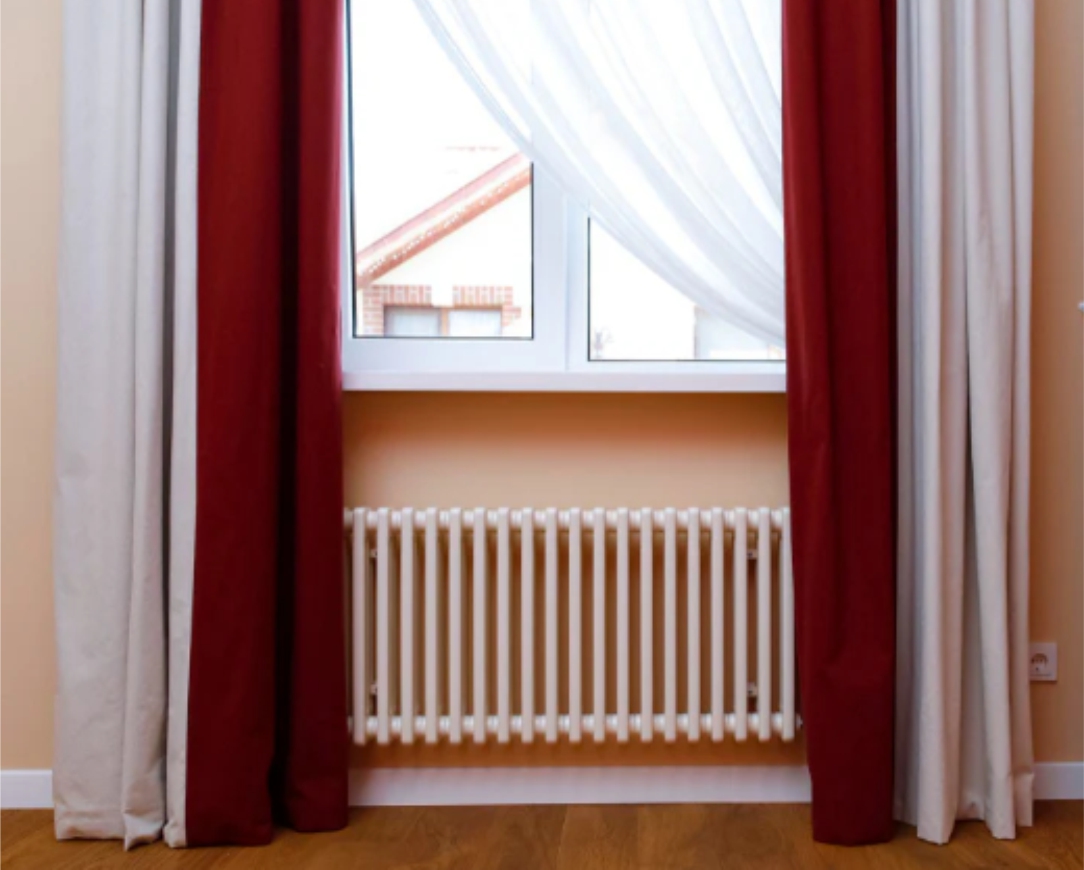
- They often cover radiators pushing heat straight up the glass
- In kitchens and bathrooms, moisture can lead to mould
- Fabric can stain, fade or suffer moth damage
- They’re either open or closed limited light control
- Made-to-measure curtains often cost more than blinds
We once visited a home in Oadby where the homeowner closed thick curtains every evening “to keep the heat in.”
The issue?
They sat directly over the radiator.
The warmth never entered the room properly. It travelled up the window instead.
It looked cosy.
But it wasn’t efficient.
What Blinds Do Better
Blinds weren’t designed for theatre.
They were designed for control.
Light control.
Privacy control.
Heat control.
Space control.
Modern blinds:
- Fit neatly within the window recess
- Allow filtered light — not just open or closed
- Avoid covering radiators
- Work in kitchens and bathrooms
- Are easier to clean
- Often cost less than bespoke curtains
- Provide a cleaner, more minimal finish
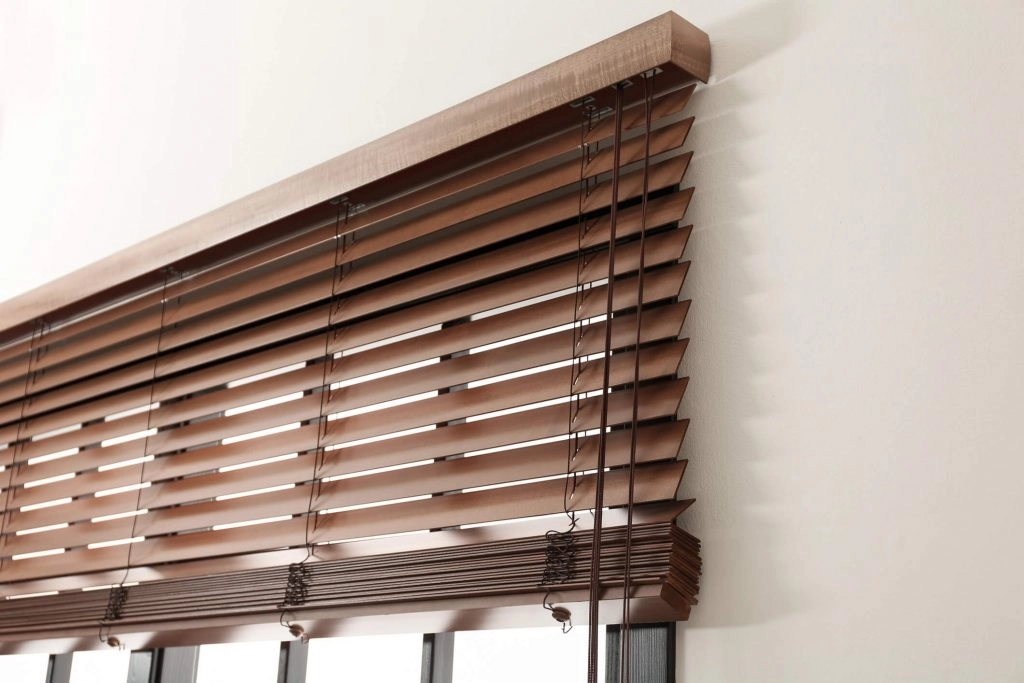
Venetian blinds tilt to soften glare without losing privacy.
Roller blinds sit compactly against the glass.
Vertical blinds rotate to control viewing angles.
Cellular blinds trap air inside honeycomb pockets, creating a thermal barrier that improves insulation.
They’re practical.
They work quietly.
And when made properly they last.
The Honest Limitations of Blinds
Blinds aren’t perfect.
They don’t naturally create deep texture or theatrical drama.
Cheaper blinds can look cheap quickly.
Slatted blinds alone are not the strongest insulators.
And true blackout performance requires correct measurement and specification otherwise light bleed will happen.
If someone tells you blinds win every time, they’re oversimplifying.
Blinds vs Curtains: Quick Comparison
Curtains – Best For:
- Visual impact
- Softness and warmth
- Heavy blackout
- Traditional interiors
- Large statement windows
Blinds – Best For:
- Precise light control
- Kitchens and bathrooms
- Smaller rooms
- Radiator efficiency
- Easy maintenance
- Modern interiors
Can You Combine Blinds and Curtains?
Increasingly, yes.
Many Leicester homes now use:
- Blinds for everyday control
- Curtains purely for framing and style
The blind does the work.
The curtains finish the look.
There are also hybrid options:
- Roman blinds (curtain fabric, blind function)
- Day & Night blinds (layered light control)
- Allusion blinds (soft fabric movement with practicality)
The conversation isn’t always blinds versus curtains anymore.
It’s about layering intelligently.
So… Are Blinds Better Than Curtains?
Not universally.
But they are often:
- More practical
- More adaptable
- More moisture resistant
- More efficient when fitted correctly
In kitchens, bathrooms, and tighter modern homes blinds usually make more sense.
In living rooms and bedrooms?
Sometimes the best answer is both.
The Question That Actually Matters
Instead of asking:
“Are blinds better than curtains?”
Ask:
What do I need this window to do?
- Block light?
- Retain heat?
- Protect privacy?
- Prevent mould?
- Be easy to clean?
- Create drama?
Once you answer that honestly, the decision becomes much clearer.
And if you’re unsure?
We’ll give you the pros and cons in your home not in a showroom.
Because the right blinds or curtains aren’t about winning an argument.
They’re about making your home work better.
FAQ
Are blinds cheaper than curtains?
In most cases, made-to-measure blinds cost less than bespoke curtains, though prices vary depending on fabric and size.
Do blinds keep heat in better than curtains?
Cellular blinds can improve insulation, while lined curtains reduce draughts. Performance depends on fitting and specification.
Are blinds good for bathrooms?
Yes. Blinds made from moisture-resistant materials perform better than fabric curtains in bathrooms.

About Phil Coleman
Phil Coleman is the fifth generation of his family to run Barlow Blinds, a Leicester business that has been making blinds since 1887. With over 30 years of hands-on experience, Phil has played a leading role in shaping industry standards including being part of the team that wrote the only NVQ qualification for blind and shutter installers. He also serves on the Management Committee of the British Blind & Shutter Association (BBSA), helping to set best practice across the trade. Under his leadership, Barlow Blinds has remained true to its founding principle: “It’s not our job to find customers for our blinds, it’s our job to find the right blinds for our customers.”
Why trust this article?
✓ Written or reviewed by Phil Coleman (35+ years' experience)
✓ Based on practical installation knowledge and independent research
✓ Updated when standards, products or evidence change