Why Some Roller Blinds Curl at the Edges
(And Why We Refuse to Make Them That Way)
We were recently asked to look at a roller blind fitted by another company.
It had been installed for less than two months.
The fabric was already curling inwards at the sides.
Not subtly.
You could see daylight around the edges.
On a ground-floor back door.
Privacy compromised.
Finish ruined.
Money already spent.
The homeowner thought the fabric was faulty.
It wasn’t.
It was made that way.
The Part No One Explains to You
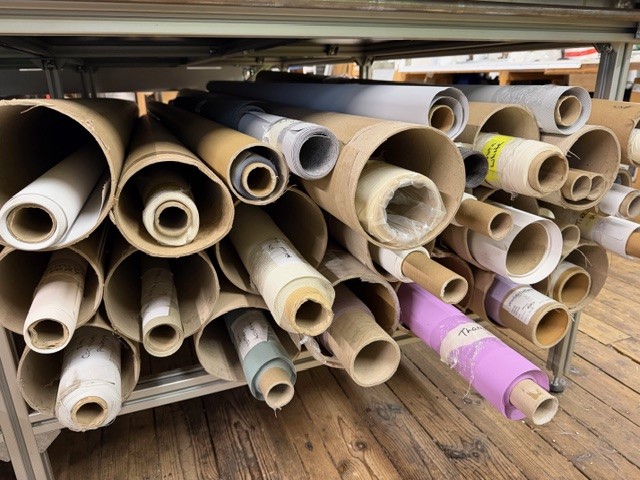
Roller blind fabric arrives tightly wound on a roll.
And fabric has memory.
If something has been wrapped tightly for weeks or months, it naturally wants to return to that shape.
That isn’t a defect.
It’s basic material behaviour.
The real question isn’t “Why is it curling?”
The real question is:
“Was it manufactured properly in the first place?”
The Shortcut Most Companies Take
Here’s what happens behind the scenes.
Most roller blind fabric rolls are around 2 metres wide.
If a manufacturer needs to make a 600mm-wide door blind, the fastest way to do it is:
• Slice 600mm off the width
• Use that strip
• Move on to the next order
Minimal waste.
Maximum yield.
Lowest cost.
It’s efficient.
It’s profitable.
And it almost guarantees side curl.
Because when you cut it this way, the fabric’s natural curl now runs sideways across the blind.
So the edges slowly pull inwards.
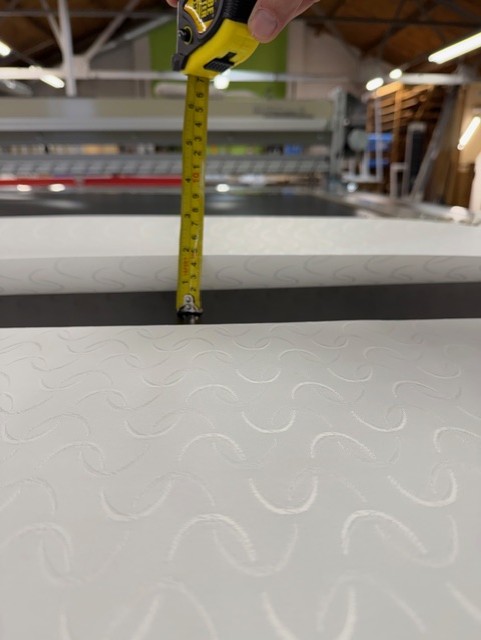
The image above shows how badly a fabric can curl. The flat fabric in the foreground is sitting perfectly flat with the fabric in the background curling by nearly 50mm.
#Especially on:
• Sunny patio doors
• Warm kitchens
• South-facing rooms
And once that curl sets in?
You can’t “adjust” it out.
You can add weights.
You can tug at it.
You can pretend it’s normal.
But it won’t hang properly.
The Way It Should Be Made
There is a correct way.
You cut the blind for the drop.
That means:
• The top comes from one side of the roll
• The bottom comes from the other
• The natural fabric curl wraps around the barrel
So instead of fighting the fabric…
You work with it.
The blind hangs flat.
The edges stay straight.
The privacy stays intact.
The finish looks sharp for years.
It’s not complicated.
It’s just less profitable.
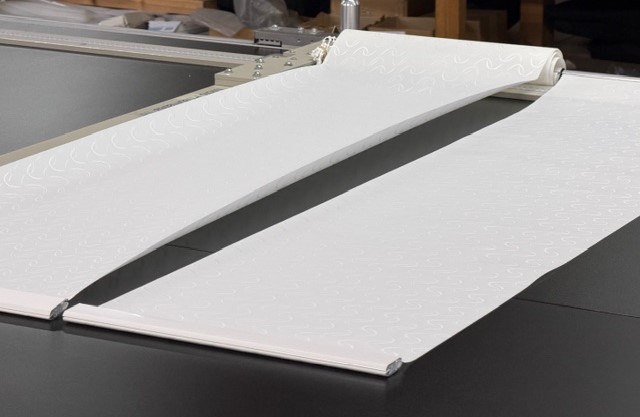
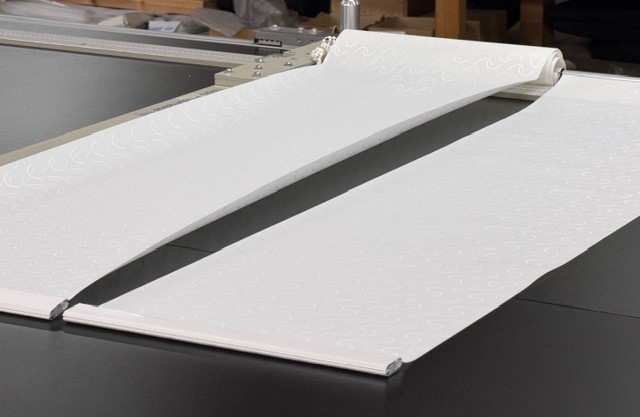
The image above is our experiment. The 2 blinds are made from exactly the fabric. The left blind is cut the 'wrong' way, and the blind on the right is cut the correct way.
Why Most Companies Don’t Do It
Because it wastes material.
If a roll is 2 metres wide and your blind width is 1.2 metres, cutting properly can mean discarding a large section of fabric.
That increases manufacturing cost.
Which makes it harder to be the cheapest quote.
And if your entire business model is built around:
“Lowest price wins.”
Then quality shortcuts become tempting.
That’s the uncomfortable truth.
Why Ours Cost More
We manufacture our roller blinds in our Leicester factory.
And we cut 97% of the blinds we make for the drop.
The only exceptions are things like flowery patterns that would look silly with the pattern running sideways across the blind.
Not because it sounds good in marketing.
Because we don’t believe in installing something we know will curl.
Yes, this method costs more.
Yes, you can probably find a cheaper blind elsewhere.
But here’s what cheaper sometimes means:
• Higher waste tolerance in quality
• Faster production
• Lower material cost
• Greater chance of side curl
We would rather lose a job than fit a blind that starts failing within months.
That’s the difference.
The Question That Changes Everything
If you’re comparing quotes, ask this:
“How do you cut your roller blinds from the fabric roll?”
Not “Are they good quality?”
Not “What fabric is it?”
Ask how they cut them.
If they can’t explain it clearly…
You now understand why.
FAQs
Why do roller blinds curl at the sides?
Because fabric has memory. If the blind is cut across the roll width instead of for the drop, the natural curl runs sideways pulling the edges inward over time.
Can curling blinds be fixed?
Minor curling can sometimes be disguised with added weight. But if the blind was cut incorrectly, it usually cannot be permanently corrected without remaking it.
Is curling a fabric fault?
Almost never with a plain or textured fabric. It’s typically a manufacturing shortcut.
Do properly made roller blinds curl?
No. When cut correctly so the fabric curl wraps around the roller barrel, blinds hang flat and stay that way.
Written by Ady Mumford – Factory Manager
Ady has spent over 25 years in the Barlow Blinds factory and understands blinds manufacturing down to the smallest detail. As Factory Manager, he leads the team that makes many of our blinds right here in Leicester, ensuring every product leaving the factory meets the standards we’ve built our reputation on.