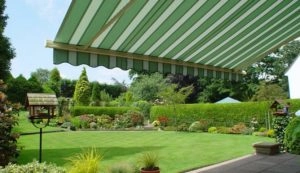
What the BBSA Openings Magazine Discussion Reveals About the Future of External Shading
External shading is becoming one of the most important conversations in the blinds and shading industry.
Not because it’s trendy.
Not because pergolas and awnings photograph well on Instagram.
But because modern homes across the UK are overheating and homeowners are starting to feel it firsthand.
In May 2026 we have just experienced the hottest May Bank Holiday ever recorded, and breaking heat records seems to be coming the norm.
Anyone who has sat inside a south-facing kitchen extension during a summer heatwave knows the experience. By late afternoon, the room becomes uncomfortable, blinds are closed, doors are open, and the space that once felt bright and open suddenly feels more like a greenhouse.
And increasingly, homeowners are realising something important:
Once heat has already passed through the glass, there’s only so much internal blinds or curtains can do.
That’s why external shading is receiving more attention than ever before.
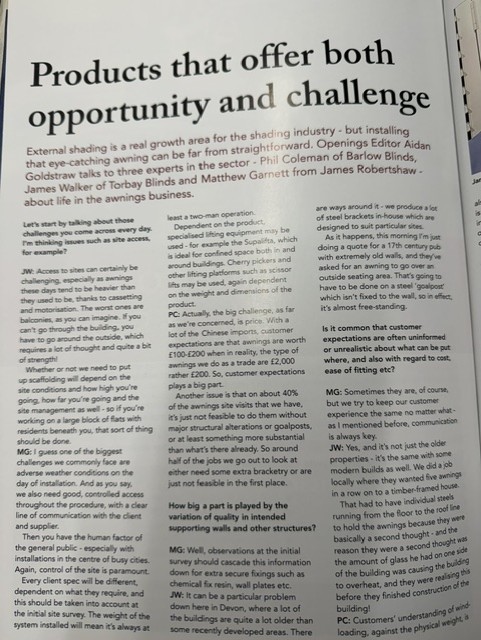
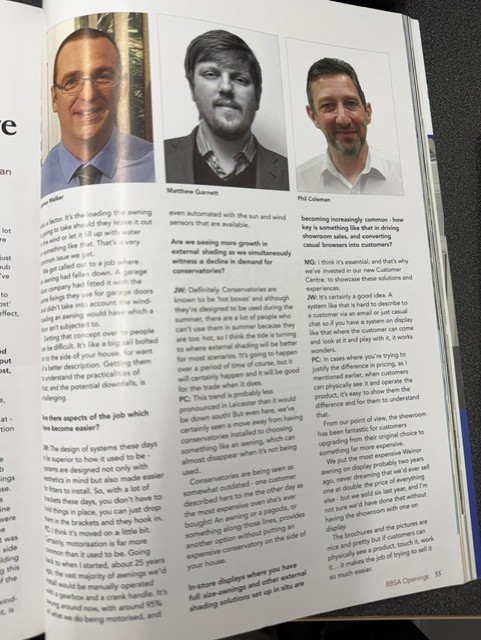
In Spring 2018 the British Blind & Shutter Association’s Openings magazine featured a discussion between three professionals working directly within the external shading sector:
- Phil Coleman of Barlow Blinds
- James Walker of Torbay Blinds
- Matthew Garnett of James Robertshaw
The discussion focused on the real-world opportunities and challenges surrounding external shading in the UK market.
And one thing became very clear throughout the conversation:
External shading can dramatically improve comfort, usability, and heat control in modern homes…
…but only when the advice, surveying, and installation are handled properly.
Why External Shading Is Growing So Quickly
For years, most conversations around blinds focused on:
- privacy
- glare reduction
- decoration
- blackout for bedrooms
Now the conversation is changing.
Modern homes are being designed with larger areas of glass than ever before:
- bifold doors
- roof lanterns
- glazed extensions
- open-plan kitchen diners
- floor-to-ceiling windows
They look fantastic.
But many of them also trap enormous amounts of heat.
As temperatures rise during warmer months, more homeowners are discovering that some of these beautiful spaces become difficult to comfortably use for large parts of the day.
That’s where external shading enters the conversation.
Because stopping solar heat before it reaches the glass is often far more effective than trying to manage it afterwards from inside the room.
Products such as:
- external blinds
- awnings
- pergolas
- external shutters
- solar shading systems
are increasingly being viewed not simply as decorative additions, but as part of how a home actually functions.
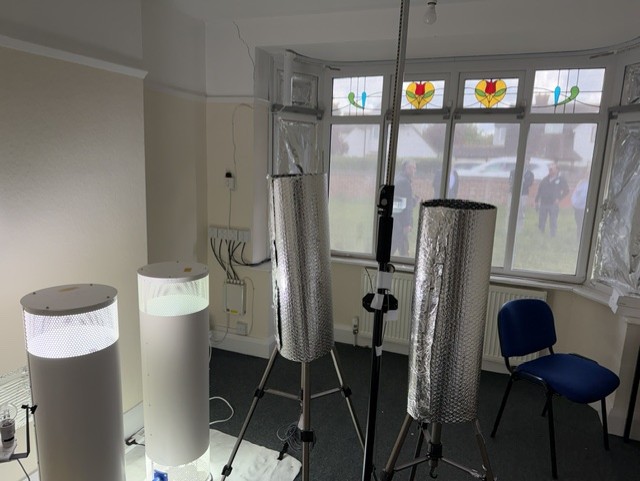
The BBSA is currently supporting live research with Loughborough University into overheating and shading performance, and early indications already show how significant properly designed shading can be in real residential environments.
The Part Most Homeowners Never See
From a distance, an awning can look relatively straightforward.
A cassette.
Some fabric.
A motor.
But the reality behind a safe, long-lasting installation is far more complicated.
And this is where many homeowners are often surprised.
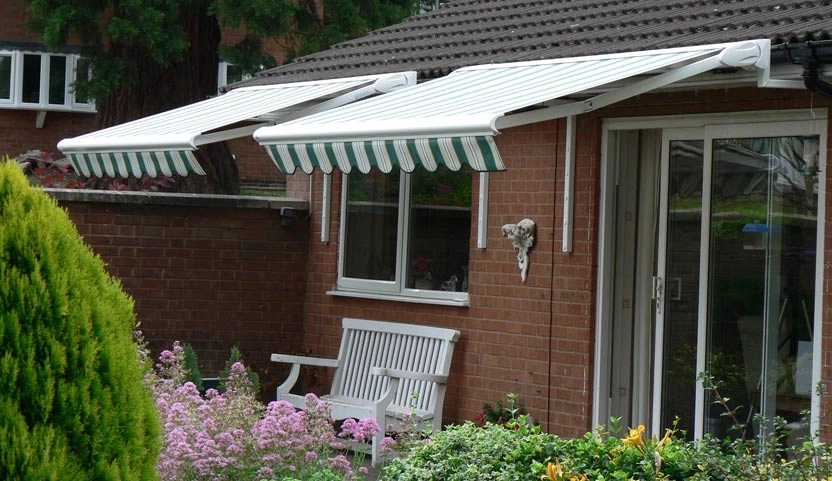
An awning is not simply attached to a wall like a lightweight accessory.
It becomes a structural product connected directly to the building itself.
That means things like:
- wind loading
- fixing strength
- wall construction
- cavity type
- brick condition
- projection size
all matter enormously.
We regularly visit homes where customers have seen products online and understandably assume installation is relatively simple only for a proper survey to reveal serious limitations with the wall structure or proposed projection.
Sometimes reinforcement work is needed.
Sometimes expectations need adjusting.
And sometimes the honest answer is that the proposed product simply is not suitable for the property.
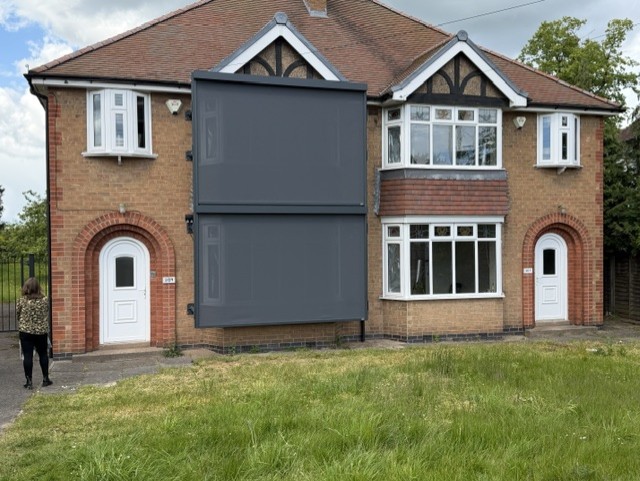
The movement of the sun is another reason awnings may not be the best option for some homes.
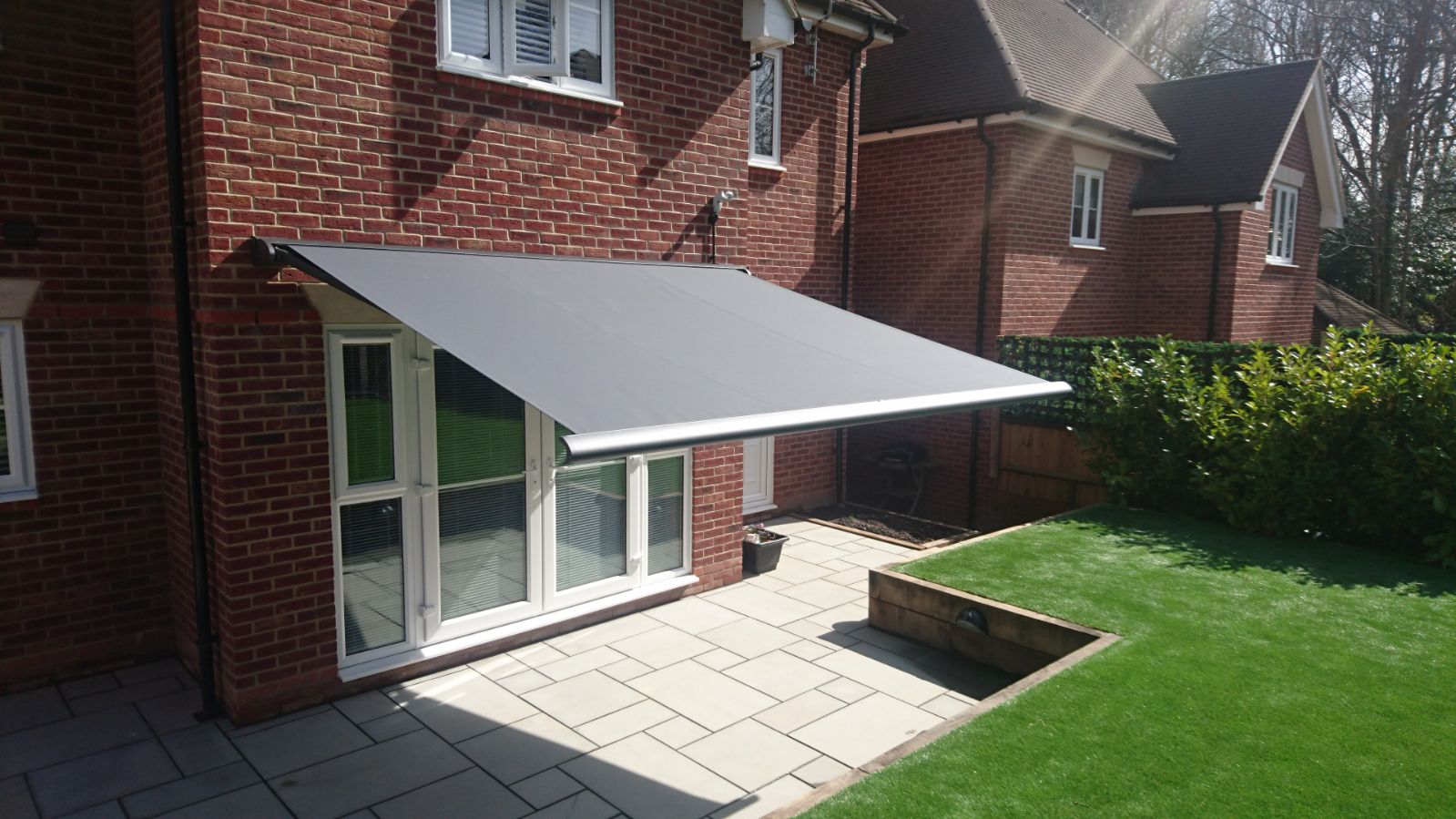
The picture above shows that in this case that the awning provides no shading at all for the lounge for a large part of the day.
That honesty matters.
Because external shading products can involve significant investment, and the wrong advice can become an expensive mistake very quickly.
Why Advice Matters More Than Ever
One of the most important points raised during the Openings discussion was customer expectation.
Naturally, most homeowners initially focus on:
- size
- appearance
- colour
- price
But the real conversation often needs to go much deeper.
Proper external shading advice should also include:
- structural suitability
- sun direction
- wind exposure
- realistic heat reduction expectations
- neighbouring obstructions
- long-term usability
- safety considerations
And this is where experience becomes incredibly important.
We occasionally visit homes where homeowners have already been quoted online without anyone properly discussing whether:
- the wall is suitable
- the desired projection is realistic
- the space actually receives enough sun exposure
- neighbouring buildings affect performance
- or whether another solution may work better altogether
In some cases, the right answer is not an awning at all.
And good companies should be comfortable saying that.
External Shading Is About More Than Products
One of the biggest shifts happening within the industry is the move away from seeing blinds and shading as purely decorative purchases.
Increasingly, shading is becoming part of home comfort, energy performance, and everyday usability.
That includes:
- reducing overheating
- improving comfort
- controlling glare
- supporting better sleep
- making outdoor spaces more usable
- reducing reliance on cooling systems
This is one reason external shading is attracting attention not only from homeowners, but also from:
- researchers
- architects
- developers
- building professionals
- industry bodies
Because homes are changing.
And shading now plays a much bigger role than many people realise.
Why Being Featured in BBSA Openings Matters
The Openings magazine is the official publication of the British Blind & Shutter Association.
Being invited to contribute to discussions like this matters because it reflects active involvement in the wider future of the shading industry not simply selling products locally.
As a BBSA Management Committee member, I am directly involved in ongoing conversations surrounding:
- overheating
- consumer education
- installation quality
- product standards
- and the future role of shading in UK homes
That matters for homeowners because the advice being given is based on current industry discussions and real-world experience — not simply sales trends or generic product marketing.
The Future of External Shading in the UK
External shading is still relatively young in the UK compared to many parts of Europe, where awnings and external blinds have long been considered normal parts of residential design.
The UK is catching up quickly.
But as demand grows, so does the importance of proper advice, surveying, and installation.
Because the right shading solution can genuinely transform how a home feels during summer months.
But the wrong product or the wrong installation can lead to disappointment, poor performance, or expensive corrective work later.
And that’s why honest guidance matters more than ever.
About Phil Coleman
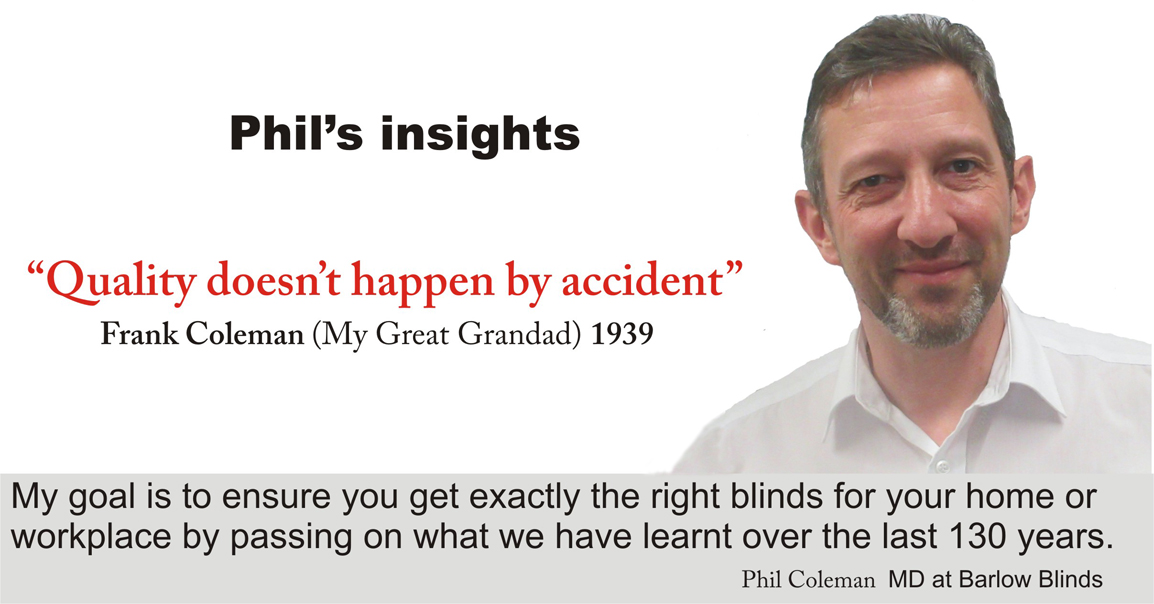
Phil Coleman is the fifth generation of his family to run Barlow Blinds, a Leicester business that has been making blinds since 1887. With over 30 years of hands-on experience, Phil has played a leading role in shaping industry standards including being part of the team that wrote the only NVQ qualification for blind and shutter installers. He also serves on the Management Committee of the British Blind & Shutter Association (BBSA), helping to set best practice across the trade. Under his leadership, Barlow Blinds has remained true to its founding principle: “It’s not our job to find customers for our blinds, it’s our job to find the right blinds for our customers.”
FAQs
Do external blinds really reduce heat?
Yes. External shading helps stop solar heat before it passes through the glass, making it one of the most effective ways to reduce overheating in heavily glazed rooms.
Are awnings suitable for every home?
No. Wall construction, fixing strength, wind exposure, and sun direction all need assessing properly before installation.
Are external blinds better than internal blinds?
They solve different problems. Internal blinds help with privacy, glare, and some heat reduction. External shading is generally far more effective at reducing solar heat gain before it enters the room.
Why is surveying external shading so important?
Because these products place structural loads onto buildings. Proper surveying ensures safe fixing, long-term reliability, and suitable performance expectations.
What is the BBSA?
The British Blind & Shutter Association is the UK trade association for the blinds and shading industry, promoting standards, safety, and consumer confidence.