We received some lovely news recently.
Barlow Blinds won the BBSA Excellence Award for Best impact on Business Sustainability.
Now, awards are nice. They’re good for morale. They’re good for our ego.
With the BBSA (British Blind and Shutter Association) being the UK’s Authority on Shading this award means a great deal to us. It’s the Oscars for the blind trade.
images/blog/best_impact_on_sustainability_-_barlow_blinds (540p).mp4
But the real question is this:
What does that actually mean for someone choosing blinds for their home?
Because if it doesn’t make your blinds better or your home better it doesn’t really matter.
So here’s the honest answer.
Sustainability Isn’t Just About “Eco Fabrics”
When people hear sustainable blinds, they often think of fabrics made from recycled materials.
And yes those exist.
Some of the roller fabrics we offer are made using yarn created from consumer-used plastic bottles. Around 4,600 bottles are recycled for every 20 metres of fabric, with some sourced from ocean-bound plastic.
When customers choose these fabrics, we send a small certificate explaining the environmental impact.
Not as a marketing gimmick.
Just because people often like knowing the choices they make for their home have a positive effect somewhere else.
What Are the Most Sustainable Types of Window Blinds?
If sustainability is important to you, there are a few options that tend to stand out.
Bamboo Venetian blinds
Bamboo grows incredibly quickly compared to hardwood trees and requires far fewer resources to produce. That makes it one of the most renewable natural materials used in blinds today.
Recycled fabric roller blinds and vertical blinds
These fabrics give plastic bottles a second life instead of sending them to landfill or the ocean.
Recovering existing blinds
In many cases, the most sustainable blind is actually the one you already have.
Which leads to something that surprises a lot of people.
Sometimes the Most Sustainable Blind Is the One You Already Own
One of the most sustainable things we do as a company is…
not sell a new blind.
If a blind’s mechanism is still working well but the fabric has faded or worn out, we’ll often recover the blind rather than replace it completely.
Most blind companies wouldn’t suggest that because they don’t actually make the blinds themselves.
So it’s quicker and more profitable to simply sell a new blind.
But recovering an existing blind means:
- Less waste
- Lower cost for the homeowner
- Perfectly good components staying out of landfill
Sometimes sustainability is about repairing what still works, not replacing it.
Do Sustainable Blinds Cost More?
This is a question customers ask us quite a lot.
The honest answer is: not usually by much.
Recycled roller fabrics are often priced very similarly to standard fabrics.
Bamboo Venetian blinds typically sit around 10% higher in price to hardwood blinds.
So choosing a more sustainable option doesn’t normally mean a huge difference in cost.
Often it simply comes down to choosing the right material for the space.
Are There Any Downsides to Sustainable Blinds?
It’s only fair to talk about this as well.
Sustainable materials have improved dramatically over the last few years, but there can still be small differences depending on the product.
For example:
- Some recycled fabrics have a slightly softer weave
- Bamboo is lighter than hardwood, so it may not suit extremely wide windows
These aren’t major drawbacks, but they’re things we always discuss with customers so they choose the right blind for their home.
To find out more about our recycled fabrics click here
Sustainability should still come with practical performance.
Sustainability Also Happens Behind the Scenes
Sustainability isn’t only about the blinds themselves.
It also comes from the way a company operates day-to-day.
Over the past year we’ve made several small changes across the business:
• Moving from single-use plastic packaging to reusable transit materials
• Switching from disposable overshoes to machine-washable reusable overshoes
• Consolidating supplier orders to a single weekly delivery, reducing delivery vehicle movements by over 40%
None of these things are dramatic.
But small operational improvements add up over time.
Why the BBSA Recognition Matters
The British Blind and Shutter Association represents the professional side of our industry.
Their awards aren’t based on flashy marketing campaigns. They look at the real changes businesses make in how they operate.
Winning their sustainability award tells us something important.
It tells us we’re moving in the right direction.
To find out more about the BBSA who are the UK's Authority on Shading click here
But The Goal Was Never the Award
The goal is much simpler.
To make blinds that last longer.
To waste less wherever we can.
And to help customers feel good about the choices they make for their homes.
If we can do that consistently, the awards are just a bonus.
Because sustainability isn’t really a destination.
It’s a habit.
Frequently Asked Questions About Sustainable Window Blinds
Are sustainable blinds actually better for the environment?
Yes but it depends on the material and how the blind is produced. Some blinds use recycled fabrics made from plastic bottles, while others use fast-growing materials like bamboo. In many cases, the most sustainable option is simply repairing or recovering an existing blind rather than replacing it completely.
What are the most eco-friendly types of window blinds?
Some of the most sustainable options include:
- Bamboo Venetian blinds – bamboo grows quickly and is renewable
- Recycled fabric roller blinds – made using recycled plastic bottles
- Recovered blinds – replacing the fabric but keeping the mechanism
Choosing durable blinds that last longer is also one of the best ways to reduce waste.
Are bamboo blinds more sustainable than wooden blinds?
In many cases, yes. Bamboo grows much faster than traditional hardwood trees and requires fewer resources to produce. Because it regenerates quickly, bamboo is considered a renewable material, which makes bamboo Venetian blinds a popular sustainable alternative to hardwood blinds.
Do sustainable blinds cost more?
Not necessarily. Many recycled roller fabrics are priced similarly to standard fabrics. Bamboo Venetian blinds are around 10% dearer than hardwood blinds depending on the finish and size. In most cases, choosing a sustainable option doesn’t dramatically increase the cost of your blinds.
Can existing blinds be repaired instead of replaced?
Yes. If the mechanism is still working, the fabric on many blinds can be replaced without installing a completely new blind. This process is often called recovering the blind. It reduces waste, costs less than full replacement, and keeps working components out of landfill.
Are recycled fabric blinds durable?
Modern recycled fabrics are designed to perform just like standard blind fabrics. Many are made using recycled polyester yarn created from plastic bottles but still provide the same durability, light control, and lifespan as traditional roller blind materials.
Do sustainable blinds help reduce household energy use?
In some cases they can. Certain fabrics and blind types help regulate light and heat entering a room. This can reduce glare, improve insulation, and help maintain indoor temperatures more efficiently, which may reduce energy use for heating or cooling.
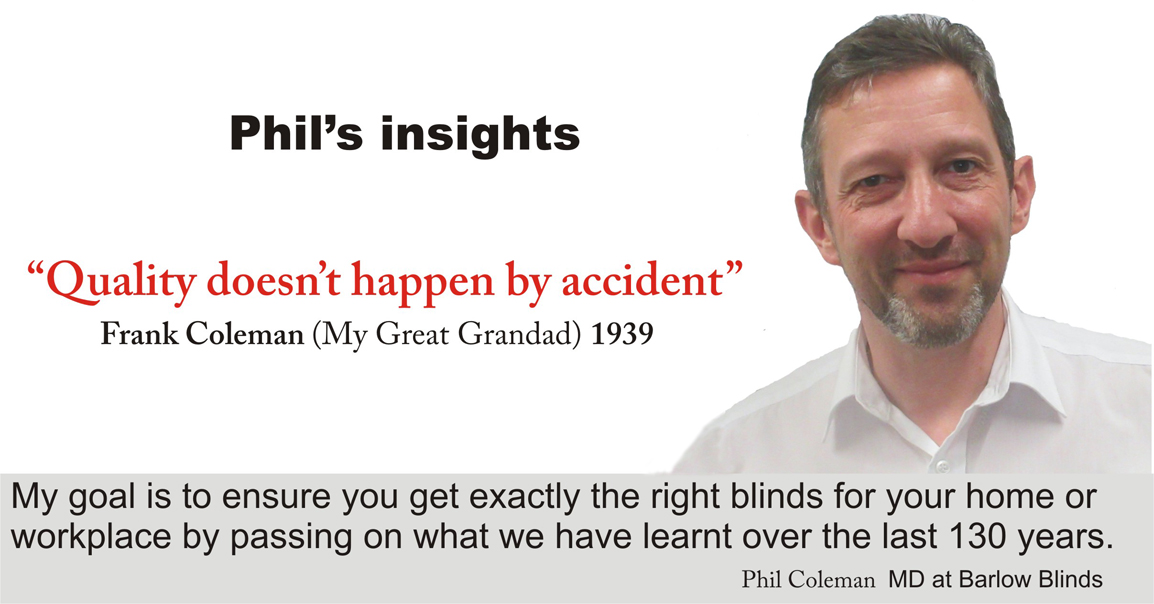
About Phil Coleman
Phil Coleman is the fifth generation of his family to run Barlow Blinds, a Leicester business that has been making blinds since 1887. With over 30 years of hands-on experience, Phil has played a leading role in shaping industry standards including being part of the team that wrote the only NVQ qualification for blind and shutter installers. He also serves on the Management Committee of the British Blind & Shutter Association (BBSA), helping to set best practice across the trade. Under his leadership, Barlow Blinds has remained true to its founding principle: “It’s not our job to find customers for our blinds, it’s our job to find the right blinds for our customers.”