Wooden and Faux Wood Venetian Blinds: The Difference Most Companies Never Tell You
Most wooden and faux wood Venetian blinds installed in the UK are not made to measure from scratch. Instead, they are manufactured overseas and trimmed to fit individual window sizes. While this helps reduce costs, it can affect cord positioning, blind balance and overall appearance. Understanding the difference can help homeowners make a more informed purchasing decision.
If you’re looking at wooden or faux wood Venetian blinds, it all feels pretty simple.
Pick a colour.
Choose a slat size.
Get them measured and fitted.
Done.
That’s how most people think about it.
And to be fair…
That’s how most companies present it including us.
But there’s a part of the process that almost nobody explains.
Not because it’s complicated.
But because once you understand it…
👉 You start seeing things you weren’t supposed to notice.
The Question That Changed This for Us
A customer asked us something a while back that most people wouldn’t think to ask.
She had three blinds in a bay window.
Two smaller blinds at the sides.
One larger blind in the middle.
And something didn’t sit right.
The cords didn’t match.
The two side blinds looked similar.
But the centre blind looked… off.
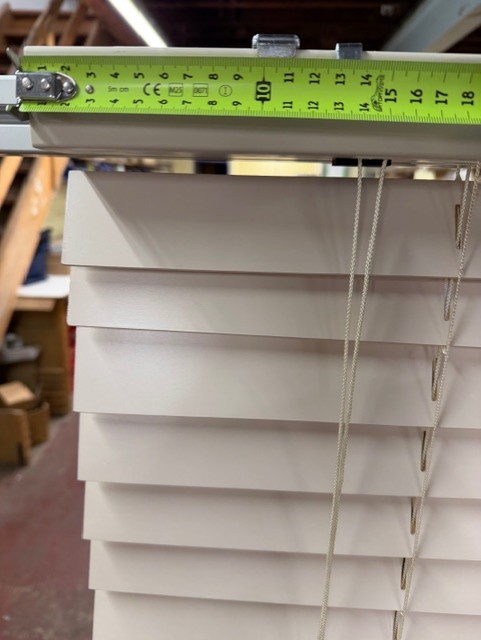
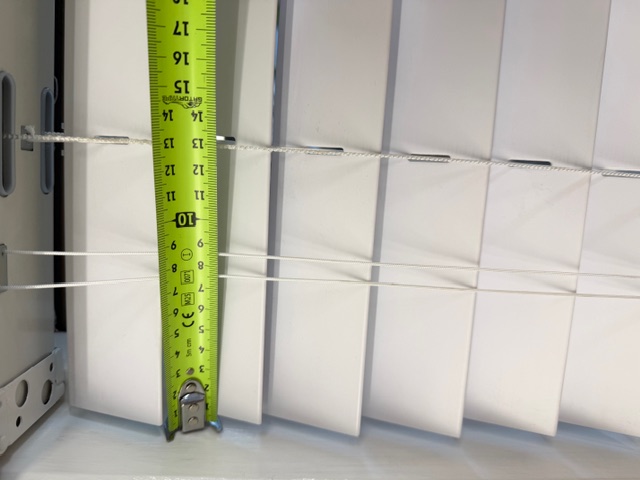
The pictures above are fauxwood blinds to be fitted in the same house. As you can see the cord positions are very different.
Her question was simple:
“Is there a version where they all line up properly?”
And here’s the honest answer we had to give at the time:
No.
Not because it didn’t exist.
But because we didn’t offer it.
Because like most of the industry…
We were selling what everyone else was selling.
The Part You’re Not Told
Here’s what we explained to her and what most companies never explain unless you ask.
There are two completely different ways wooden and faux wood Venetian blinds are made.
1. Built from scratch (made to measure)
Designed specifically for your window from the very beginning.
Everything spacing, proportions, positioning is set correctly from the start.
2. Trim-to-fit
Made overseas in standard sizes.
Then cut down to fit your window.
That’s it.
That’s the difference.
But here’s the part that matters:
👉 Around 97% of wood and fauxwood blinds installed in the UK are trim-to-fit
And most customers have no idea.
Why That Bay Window Didn’t Look Right
In her case, all three blinds were trim-to-fit.
But each one had been cut down from a different starting size.
So although they looked similar…
They weren’t built the same.
And that shows up in the details.
👉 Especially things like tilt cord positioning
Which is why the centre blind didn’t line up with the others.
It’s not a fault.
It’s not “bad quality”.
It’s just how that type of blind is made.
But if nobody tells you that beforehand…
You assume they’ll all match.
Here’s Where Most People Get Caught Out
When you’re buying blinds, you’re usually shown samples.
You’re told about colours, finishes, and slat sizes.
But you’re almost never told how the blind is actually made.
And that’s the part that affects how it looks once it’s installed.
Not in a dramatic way.
But in a “something feels slightly off” way.
And those are the details people tend to notice after it’s too late.
Does It Actually Matter?
This is where most companies will try to push you one way or the other.
We won’t.
Because the truth is:
👉 It only matters if it matters to you
Some customers are perfectly happy with trim-to-fit.
It’s more affordable.
It’s quicker.
It’s what most homes already have.
Others want everything perfectly aligned especially across bay windows or larger rooms.
That’s where made-to-measure (from scratch) comes in.
More precise.
More consistent.
But more expensive.
Neither is wrong.
But they are not the same product.
Why This Conversation Rarely Happens
Because most companies only offer one option.
So they never need to explain the difference.
And for a long time…
We were exactly the same.
That customer’s question forced us to look at it properly.
Not from our side.
But from theirs.
And once we did…
It was obvious something was missing.
Why We Now Offer Both
We didn’t change this because one option is “better”.
We changed it because customers deserve to know what they’re choosing.
So now we offer both:
👉 Trim-to-fit if budget and speed are the priority
👉 Made-to-measure from scratch if consistency and finish matter more
No pressure.
No pushing.
Just a clear explanation before you decide.
The Way We See It
Most problems in this industry aren’t caused by bad products.
They’re caused by gaps in information.
This is one of them.
And once you understand it…
You don’t buy blinds the same way again.
FAQs
Are most wooden and faux wood blinds trim-to-fit?
Yes. The vast majority around 97% of wooden and faux wood Venetian blinds installed in the UK are trim-to-fit. This is mainly because they’re more cost-effective and quicker to supply.
What does “trim-to-fit” actually mean?
Trim-to-fit blinds are made in standard sizes (imported from overseas) and then cut down to fit your window during the ordering or fitting process. They’re not originally built for your exact window size.
What are made-to-measure blinds (from scratch)?
Made-to-measure blinds are built specifically for your window from the very beginning. Everything from slat spacing to cord positioning is set based on your exact measurements, rather than being adjusted later.
Why don’t the cords line up on my blinds?
This is usually because they’re trim-to-fit. If each blind has been cut down by a different amount, internal elements like tilt cords won’t always sit in the same position especially across bay windows or multiple blinds.
How can I tell if my blinds are trim-to-fit or made to measure?
Measure from the wall to the tilt cords on each blind.
- If the measurements vary slightly → they’re likely trim-to-fit
- If they’re identical → they’re likely made to measure from scratch
Are made-to-measure wooden blinds better than trim-to-fit?
Not necessarily better just different.
Made-to-measure blinds offer a more consistent and precise finish, especially across multiple windows.
Trim-to-fit blinds are more affordable and quicker delivery times. The right choice depends on your priorities.
Why don’t most companies explain this difference?
In many cases, companies only offer one type usually trim-to-fit so the comparison never comes up. Also, many customers don’t know to ask, so it’s often left unexplained.
Do I need made-to-measure blinds for a bay window?
Not always but if you want all blinds to align consistently (especially cords and spacing), made-to-measure from scratch is usually the better option.
About Phil Coleman
Phil Coleman is the fifth generation of his family to run Barlow Blinds, a Leicester business that has been making blinds since 1887. With over 30 years of hands-on experience, Phil has played a leading role in shaping industry standards including being part of the team that wrote the only NVQ qualification for blind and shutter installers. He also serves on the Management Committee of the British Blind & Shutter Association (BBSA), helping to set best practice across the trade. Under his leadership, Barlow Blinds has remained true to its founding principle: “It’s not our job to find customers for our blinds, it’s our job to find the right blinds for our customers.”