The Hidden Dangers of Diversification in the Blinds Industry from the BBSA Openings Magazine archives
Not Every Product Should Be Installed by Everybody
Here’s something customers rarely see until it’s too late:
Not every blinds company should be fitting every product they sell.
An awning is not just a bigger blind.
A motorised roof blind is not just another add-on.
External shading is not something you “figure out on the job.”
And when the wrong product is installed the wrong way, the danger often sits hidden inside the wall for months sometimes years before anybody realises there’s a problem.
That’s something I spoke about years ago in Openings Magazine, the official publication of the British Blind and Shutter Association (BBSA) who are The Authority on UK Shading, after seeing more and more examples of poorly installed awnings and external shading systems across the industry.
Unfortunately, the problem hasn’t gone away.
If anything, it has become bigger.
This Isn’t a New Problem
For years, companies in the blinds industry have expanded into new product categories as demand changes.
On paper, that sounds like smart business.
But there’s a huge difference between:
selling a product and understanding how to install it safely
Especially when external systems are involved.
An awning is exposed to forces most customers never think about:
- wind loading
- wall construction
- fixing strength
- tension systems
- movement and weight distribution
Get those wrong, and the consequences can be serious.
The worrying part is that poor installations often look perfectly fine on day one.
The problem usually appears later.
Sometimes it’s sagging.
Sometimes movement.
Sometimes water ingress.
Sometimes fixings slowly pulling away from the structure itself.
And by then, the original installer may be long gone.
Why This Matters Even More Today
Social media has changed the industry massively.
Now, a company can see a product trending online and decide to start offering it almost overnight.
But products like:
- awnings
- shutters
- roof lantern blinds
- external shading
- motorised systems
all require completely different technical knowledge.
The installation requirements are different.
The fixing methods are different.
The structural considerations are different.
A beautiful product installed badly is still a bad installation.
Customers often don’t realise that until months or years later.
The Part Nobody Sees Matters Most
One of the biggest misunderstandings in our industry is that the product itself is the most important thing.
Very often, it isn’t.
The fixing is.
Different properties behave completely differently.
For example:
- brickwork
- cavity walls
- rendered surfaces
- timber frame construction
- steel lintels
all require different approaches.
A fixing method that works perfectly in one house may be completely unsuitable in another.
That’s why experience matters so much.
We’ve visited homes where the blind itself was perfectly good quality — but the installation method was completely wrong for the structure behind it.
Customers rarely see that part of the job.
But it’s often the part that matters most.
Product Knowledge Matters Too
The same issue exists inside the home as well.
Offering lots of products does not automatically mean understanding where those products should — or shouldn’t — be used.
Things like:
- heat control
- blackout performance
- moisture resistance
- blind weight
- battery systems
- operating systems
all affect long-term performance.
We regularly visit homes where the original blind was technically fitted correctly — but was entirely wrong for the room itself.
That’s still a knowledge problem.
I’ve seen wooden blinds fitted in high-moisture bathrooms that warped within months.
I’ve seen customers promised “blackout” in rooms where true blackout was never realistically possible.
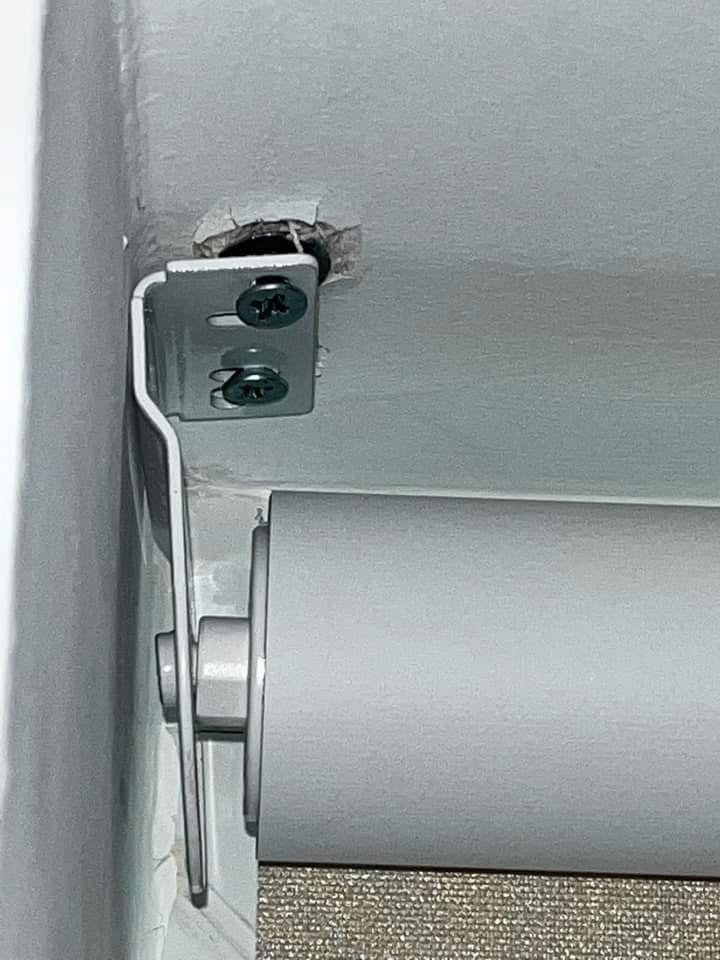
I’ve seen heavy systems installed onto weak fixing points simply because somebody wanted the sale.
Those situations are avoidable when honest advice comes first.
Sometimes the Best Advice Is “No”
One of the hardest things in business is telling a customer:
“That product isn’t the right solution for your home.”
But sometimes that’s exactly what good companies should do.
Over the years, we’ve advised against:
- wooden blinds in certain bathrooms
- shutters in unsuitable spaces
- unrealistic blackout expectations
- heavy blinds on weak structures
- Perfect Fit systems on some bifold doors
because long-term performance matters more than a quick sale.
Customers may not always expect that honesty.
But they remember it.
Why BBSA Standards Matter
This is one of the reasons we continue to support the British Blind and Shutter Association.
Because standards matter.
Training matters.
Proper installation matters.
The industry has changed enormously over the years.
Products are now:
- larger
- heavier
- more technical
- more automated
- more structurally demanding
And that means the margin for error is smaller than ever.

Final Thoughts
The blinds industry is full of fantastic products.
But no product is better than the advice and installation behind it.
Sometimes the biggest risk isn’t the product itself.
It’s assuming every product can be fitted safely by anyone.
That was true when I discussed it in Openings Magazine years ago.
And it’s still true today.
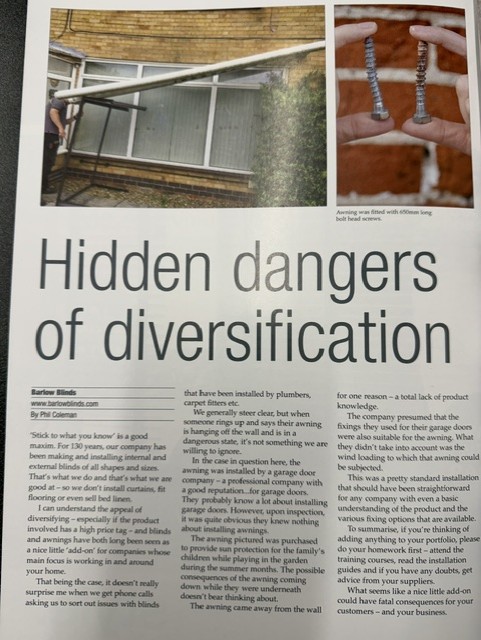
The full BBSA Openings Article from Spring 2017
Hidden Dangers of Diversification
By Phil Coleman – Barlow Blinds
“Stick to what you know” is a good maxim.
For 130 years, our company has been making and installing internal and external blinds of all shapes and sizes. That’s what we do and that’s what we are good at — so we don’t install curtains, fit flooring or even sell bed linen.
I can understand the appeal of diversifying especially if the product involved has a high price tag — and blinds and awnings have both long been seen as a nice little “add-on” for companies who main focus is working in and around your home.
That being the case, it doesn’t really surprise me when we get phone calls asking us to sort out issues with blinds that have been installed by plumbers, carpet fitters etc.
We generally steer clear, but when someone rings up and says their awning is hanging off the wall and is in a dangerous state, it’s not something we are willing to ignore.
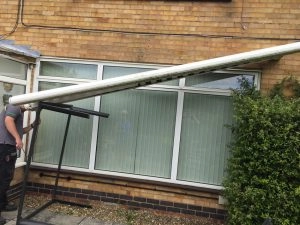
In the case in question here, the awning was installed by a garage door company — a professional company with a good reputation… for garage doors.
They probably know a lot about installing garage doors. However upon inspection, it was quite obvious they knew nothing about installing awnings.
The awning pictured was purchased to provide sun protection for the family’s children while playing in the garden during the summer months. The possible consequences of the awning coming down while they were underneath it aren’t worth thinking about.
The awning came away from the wall for one reason a total lack of product knowledge.
The company presumed that the fixings they used for their garage doors were also suitable for the awning. What they didn’t take into account was the wind loading to which that awning could be subjected.
This was a pretty standard installation that should have been straightforward for any company with even a basic understanding of the product and the various fixing options that are available.
To summarise, if you’re thinking of adding anything to your portfolio, please do your homework first attend the training courses, read the installation guides and if you have any doubts, get advice from your suppliers.
What seems like a nice little add-on could have fatal consequences for your customers — and your business.
(Image caption: “Awning was fitted with 65mm long bolt head screws.”)
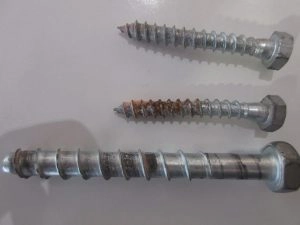
The image above compares the fixing used (top 2) and the fixing we would use (bottom)
FAQs
Why are awnings more difficult to install than blinds?
Awnings are external structural products exposed to wind loading, movement and significant weight forces. The wall structure and fixing method are critical to long-term safety.
Why does specialist product knowledge matter with blinds?
Different products solve different problems. Heat control, blackout performance, moisture resistance and operating systems all affect whether a blind is suitable for a specific room.
Can poorly installed blinds become dangerous?
Yes. Heavy blinds, motorised systems and external shading products can become safety risks if incorrect fixings or unsuitable installation methods are used.
Why do some companies diversify into multiple shading products?
Customer demand changes over time, but every product category requires proper training, technical understanding and installation experience.
Why is honest advice important when choosing blinds?
The wrong product can create poor performance, frustration and unnecessary future costs. Honest advice helps homeowners choose solutions that genuinely suit their property and lifestyle.
About Phil Coleman
Phil Coleman is the fifth generation of his family to run Barlow Blinds, a Leicester business that has been making blinds since 1887. With over 30 years of hands-on experience, Phil has played a leading role in shaping industry standards including being part of the team that wrote the only NVQ qualification for blind and shutter installers. He also serves on the Management Committee of the British Blind & Shutter Association (BBSA), helping to set best practice across the trade. Under his leadership, Barlow Blinds has remained true to its founding principle: “It’s not our job to find customers for our blinds, it’s our job to find the right blinds for our customers.”