A visit to a home in Thurnby this week started with a line I won’t forget:
“The morning sun is waking my 6-year-old son up at 5am… and it’s costing me a fortune.”
I assumed she meant energy bills.
She didn’t.
“I’m paying him £1 a day if he stays in bed until 7am.”
That’s £30 a month…
And if you’re a parent reading this, you already know
This isn’t really about £30.
It’s about broken sleep.
Early mornings you didn’t choose.
And a house that’s awake before it needs to be.
☀️ The Real Problem Wasn’t the Blind
So what’s actually the best blackout solution for a bedroom?
In simple terms:
The best blackout blind depends on how dark you need the room to be.
Fully framed blackout systems block light completely, while blackout cellular blinds offer a strong balance between darkness and appearance.
Now, it would’ve been easy at this point to say:
“Right, you need a blackout roller blind job done.”
That’s what most companies would do.
But that’s also where most people get it wrong.
Because the real question isn’t:
“Do you want blackout?”
It’s:
“How dark does this room actually need to be… at 5am in June?”
Because there’s a big difference between dark at night…
and dark when the sun is already up and pushing through every gap it can find.
🌙 The 3 Levels of Blackout (In Real Life)
So instead of guessing, we looked at three options — side by side, in their actual window.
Not in a showroom.
Not in a brochure.
In the exact light that was causing the problem.
1. Good — Roller Blind with Blackout Fabric
This is what most people already have.
✔ Affordable
✔ Simple
✔ Looks clean
And at night?
Works absolutely fine.
But here’s the bit most people don’t realise until it’s too late…
At 5am in summer…
That “blackout” blind?
It’s not blackout.
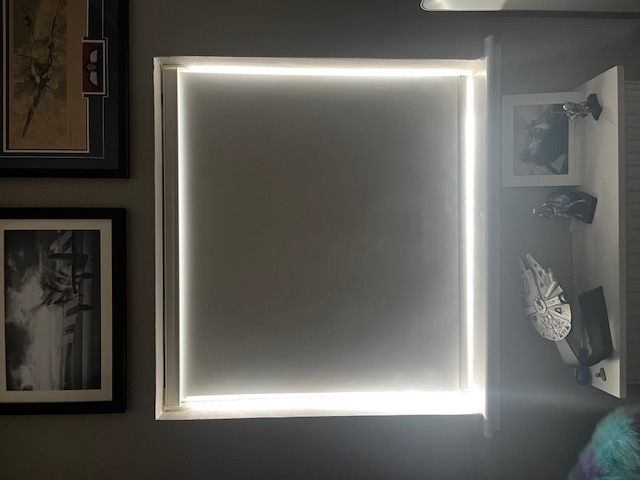
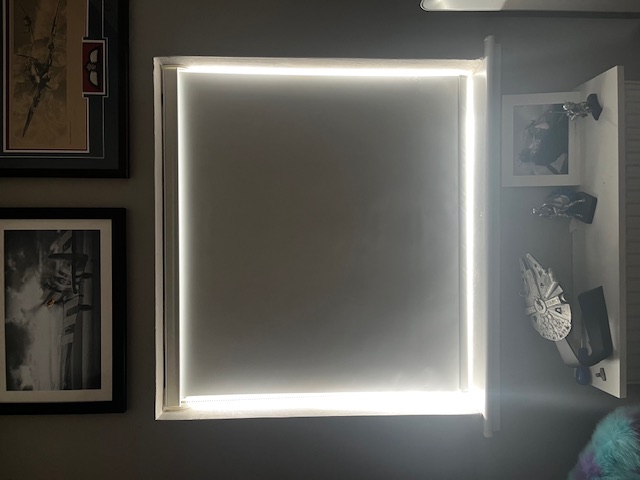
Light creeps in around the edges.
Top, sides… sometimes underneath.
Not enough to flood the room.
But enough to wake a 6-year-old who definitely doesn’t need to be awake yet.
Best for:
Rooms where “darker” is good enough but not critical.
2. Better — Cordless Cellular Blind (Blackout Fabric)
This is where things start to change.
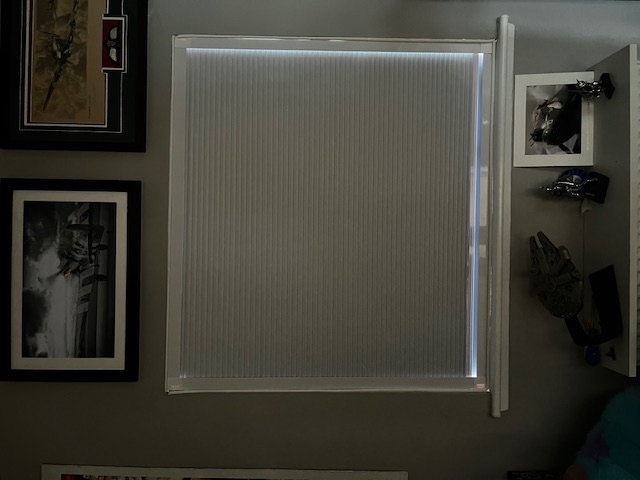
✔ Noticeably less light leakage
✔ Much better insulation
✔ No cords so cleaner and safer
✔ Softer, calmer feel to the room
And most importantly…
That harsh early morning glow?
Massively reduced.
Now, is it 100% blackout?
No.
But it’s close enough that, for most families, it changes everything.
Best for:
Homes that want better sleep without turning the window into something heavy or overly technical.
3. Best — Fully Framed Blackout Cellular Blind
This is the one that solves the problem completely.
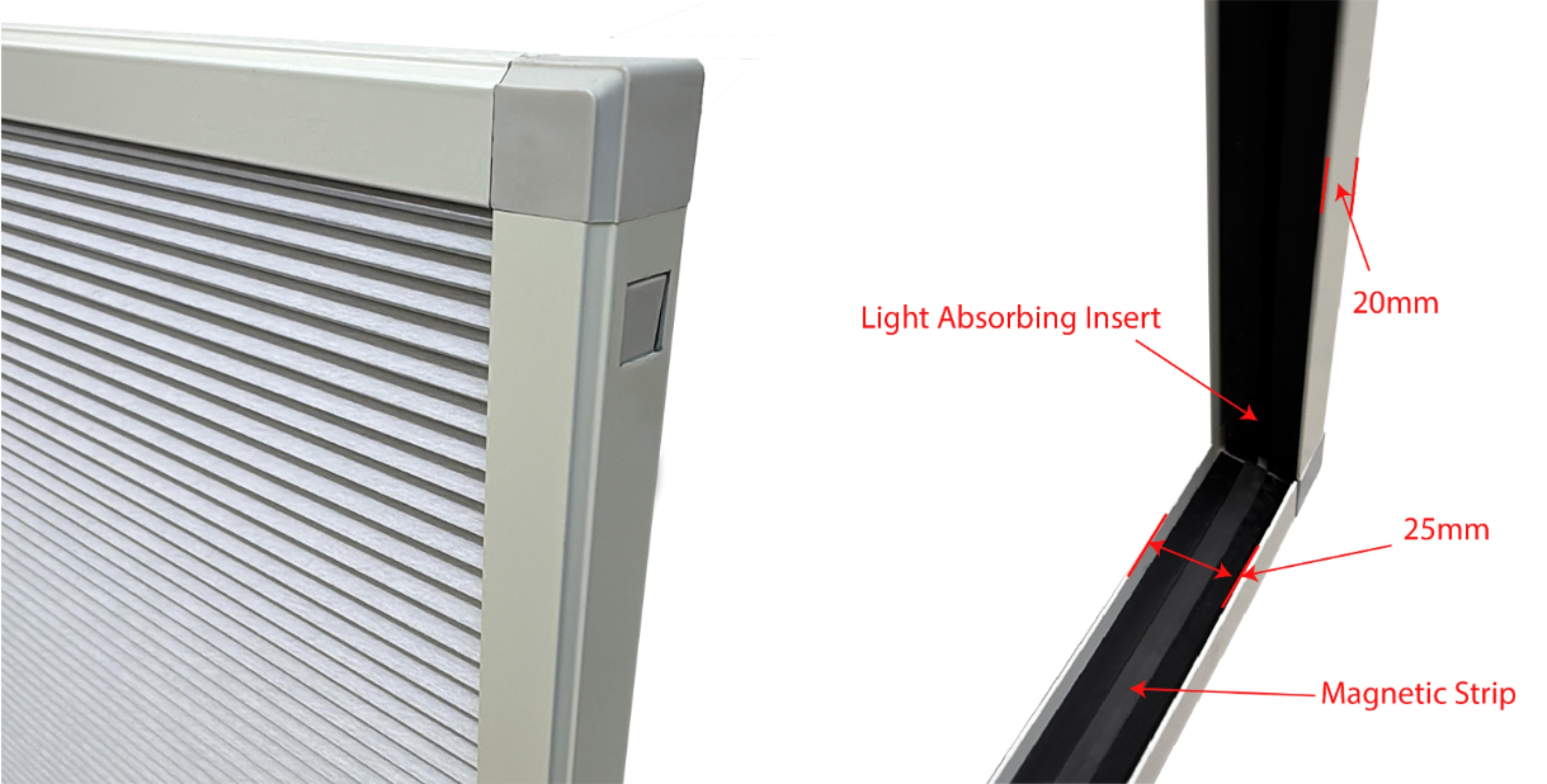
✔ No light gaps
✔ No glow
✔ No early wake-ups caused by sunlight
This is proper blackout.
The kind shift workers need.
Or very light-sensitive sleepers.
But…
There’s a trade-off.
There’s a visible frame around the window.
And here’s the truth most companies won’t say:
You will notice that frame. Every day.
Some people don’t mind it.
Others see it once… and can’t unsee it.
Best for:
When darkness is non-negotiable and looks come second.
CLICK HERE to see the 3 best blackout optioned explained
🤔 So What Did They Choose?
After seeing all three options working in their own room…
The answer became pretty clear.
Yes , full blackout would have solved the problem completely.
But they didn’t love how it looked.
So instead, they chose:
👉 Cordless blackout cellular blinds
Not perfect blackout.
But a huge shift from where they were.
The kind of difference that moves you from:
5am wake-ups…
to something much closer to a normal morning.
And importantly without changing the feel of the room.
🏡 What “Home Harmony” Actually Means
Most companies will push you towards the “best” option.
The most expensive.
The most complete.
The most “perfect.”
But real homes don’t work like that.
Because the best product on paper…
isn’t always the right product for the room.
Sometimes the right decision is in the middle.
Sometimes it means accepting slightly less performance
to get a space that actually feels right to live in.
That balance?
That’s what we call Home Harmony.
🛡️ Why This Advice Matters
Not every company will walk you through this properly.
Some will skip straight to the sale.
Some won’t show you the differences in real light.
Some won’t mention the downsides at all.
That’s exactly why we’re proud members of the
British Blind and Shutter Association
They exist to make sure customers get:
✔ Honest advice
✔ Safe, compliant products
✔ Proper guidance — not guesswork
And honestly… that matters more than most people realise.
🏁 Final Thought
If the morning light is waking you up…
The answer isn’t always:
“Blackout everything.”
It’s understanding:
- how light actually behaves in your room
- what level of darkness you really need
- and what you’re willing to see (or not see) every day
Because once you get that balance right
Everything changes.
✅ Need Help Choosing?
We’ll bring all three options to your home
so you can see the difference for yourself — in your own light.
No pressure.
No commission.
Just honest advice.
FAQs about Blackout Blinds
What is the best blind to stop early morning sunlight?
A fully framed blackout cellular blind offers the highest level of darkness by removing light gaps from the sides, top and bottom. However, many people choose blackout cellular blinds without the frame as a balance between performance and appearance.
Do blackout roller blinds completely block light?
No. While the fabric itself blocks light, gaps around the edges allow sunlight to enter, especially in the early morning.
What is the difference between blackout and total blackout blinds?
Blackout blinds use light-blocking fabric but may still allow light around the edges. Total blackout systems use frames or side channels to eliminate these gaps completely.
Are cellular blinds good for bedrooms?
Yes. Cellular (honeycomb) blinds are excellent for bedrooms because they reduce light, improve insulation, and create a softer, more comfortable environment.
Can blinds help children sleep longer?
Yes. Reducing early morning light can help regulate sleep patterns, especially in summer when the sun rises early.
What is the best blackout option without visible frames?
Cordless blackout cellular blinds are often the best compromise. They significantly reduce light while maintaining a clean, minimal look.
About Phil Coleman
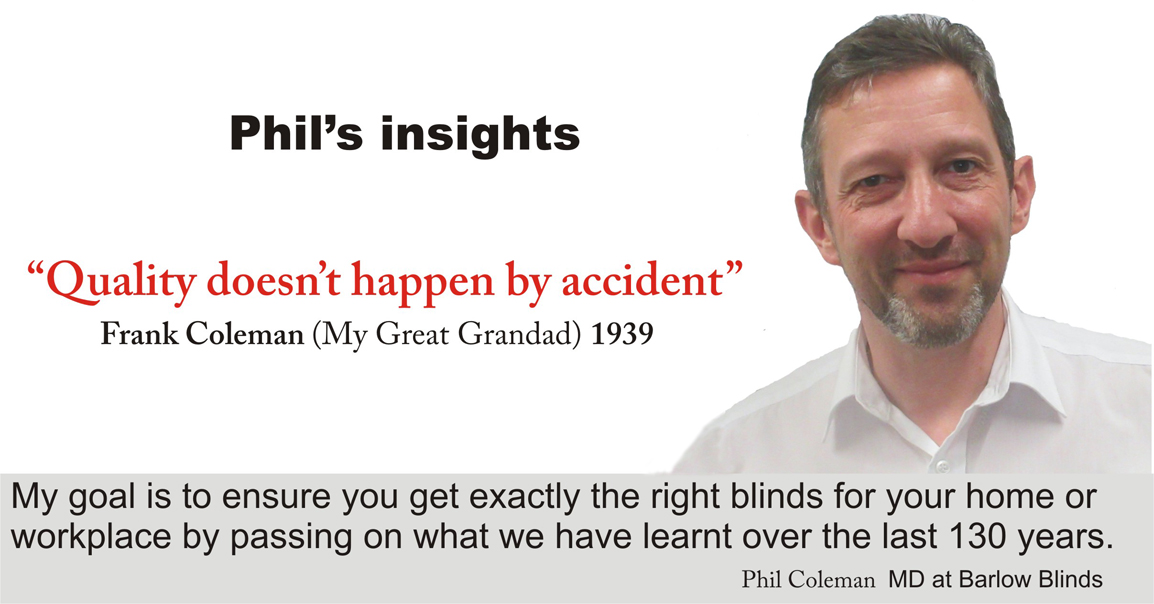
Phil Coleman is the fifth generation of his family to run Barlow Blinds, a Leicester business that has been making blinds since 1887. With over 30 years of hands-on experience, Phil has played a leading role in shaping industry standards including being part of the team that wrote the only NVQ qualification for blind and shutter installers. He also serves on the Management Committee of the British Blind & Shutter Association (BBSA), helping to set best practice across the trade. Under his leadership, Barlow Blinds has remained true to its founding principle: “It’s not our job to find customers for our blinds, it’s our job to find the right blinds for our customers.”