
How Blackout Can You Really Get? (The Honest Answer Most Won’t Tell You)
“How blackout can we actually get?”
That’s a question we got on a home visit in Oadby this week.
And the truth is…
👉 You can get 100% blackout.
But most people don’t realise what it actually takes to get there.
First, let’s be honest
When people ask for “blackout,” what they usually mean is:
“I want the room as dark as possible.”
But there are levels to this.
And each one comes with a trade-off.
The real comparison (same window: 1500mm x 1200mm)
• Blackout Roller Blind
👉 £148.00 inc VAT installed
• 100% Blackout Cellular Blind (with frame)
👉 £278.00 inc VAT installed
So yes there’s a clear jump in price.
But the real difference isn’t just cost.
It’s how the light is controlled.
Why roller blinds aren’t truly blackout
Even when you choose blackout fabric, roller blinds still have a limitation most people don’t expect.
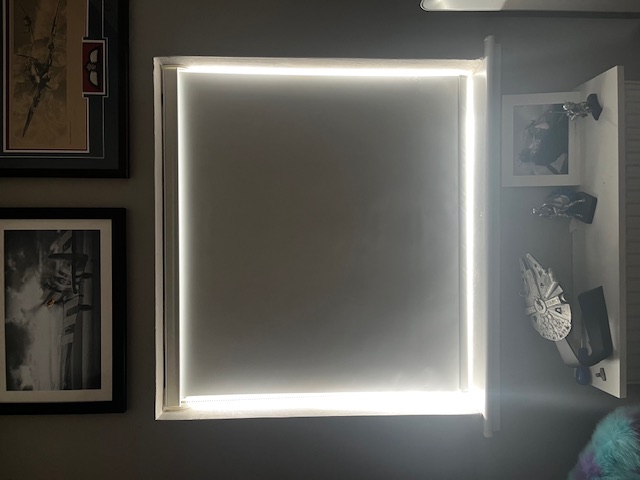
Light doesn’t come through the fabric…
👉 It comes around it.
You’ll still get:
- Light creeping in down the sides
- Gaps around the window frame
- That “glow” around the edges on bright mornings
They’re good.
But they’re not perfect.
How we achieve true blackout
If you want a room that’s genuinely dark no glow, no leaks, no early morning light this is how it’s done.
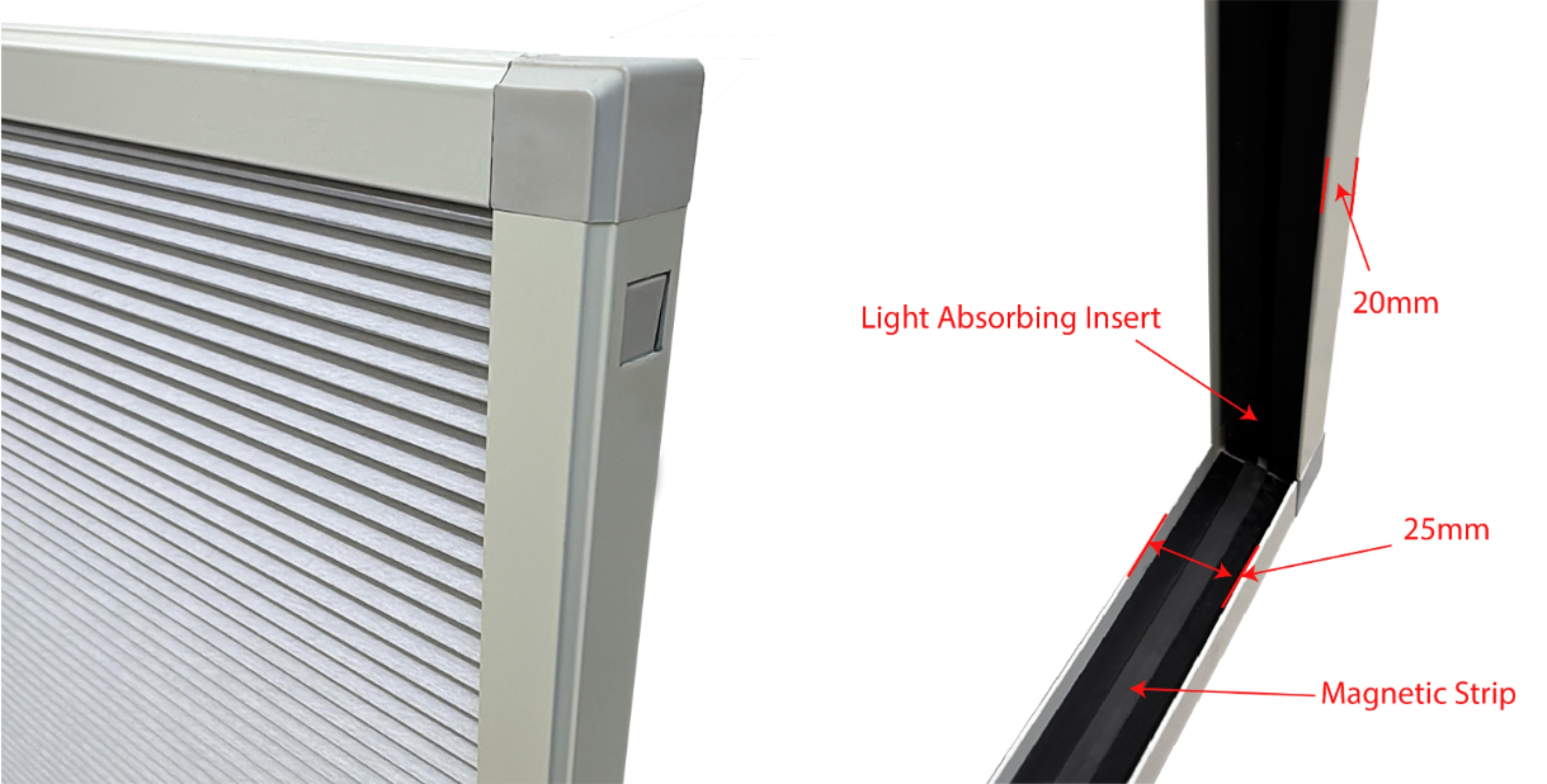
The blind sits inside a 4-sided frame fitted directly to the window.
That frame:
- Seals the edges completely
- Stops light leaking in
- Creates a fully enclosed system
👉 That’s how you get to 100% blackout.
But here’s the trade-off nobody talks about
That frame has to sit on the window.
It’s not bulky.
But it is visible.
And it will run across your window sill.
For some people, that’s absolutely fine.
For others…
👉 It’s a deal breaker.
Because now it’s not just about light.
It’s about how your window looks every single day.
Most of the day the blind isn’t being used, but the frame still sits there in view.
The middle ground (most people don’t know this exists)
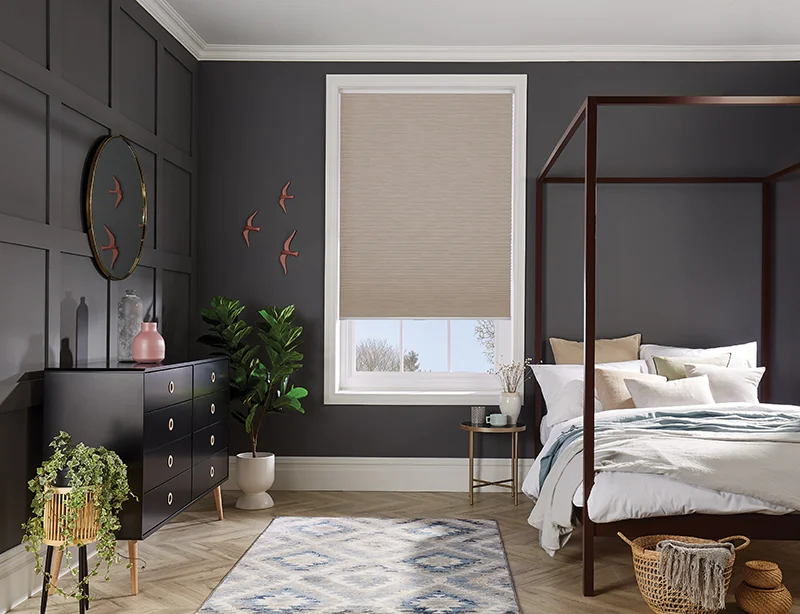
You can choose the same cellular blind without the frame.
• Same price: £278.00
• Cleaner, more minimal look
• Nothing sitting on the sill
But:
👉 It won’t be 100% blackout
👉 You’ll still get a small light gap at the sides
It’s a big improvement over a roller blind.
Just not completely sealed.
What happened in Oadby
This one was easy.
They’d already tried everything.
Thicker curtains.
Blackout linings.
Even trying to block the edges themselves.
And still…
Every morning, the room lit up.
Their baby woke up.
And that was that.
By the time we arrived, this wasn’t about price anymore.
It wasn’t even about how the window would look.
It was about one thing:
👉 Sleep.
So when we showed them the framed blackout system, the decision was instant.
Total blackout.
No compromises.
Want to find out why sleep is Steven Barlett's one non negotiable click here
The takeaway
If you’re thinking about blackout blinds, here’s the simplest way to look at it:
- Good blackout → Roller blind
- Very good blackout → Cellular (no frame)
- True blackout → Cellular with frame
There’s no “perfect” option.
Only the one that fits what matters most to you.
CLICK HERE to see the 3 best blackout blinds explained
FAQs
Can you get 100% blackout blinds?
Yes. True blackout is achieved using a framed blind system that seals all edges and prevents any light leakage.
Are blackout roller blinds really blackout?
No. They significantly reduce light, but light will still enter around the sides and edges of the window.
What is the best blind for a baby’s room?
A framed blackout cellular blind is the best option if complete darkness is needed to support better sleep.
Do blackout blinds need a frame?
For 100% blackout yes. Without a frame, small gaps will always allow some light in.
Are cellular blinds better than roller blinds for blackout?
Yes. Cellular blinds provide much better light control, especially when installed with a frame.
About Phil Coleman
Phil Coleman is the fifth generation of his family to run Barlow Blinds, a Leicester business that has been making blinds since 1887. With over 30 years of hands-on experience, Phil has played a leading role in shaping industry standards including being part of the team that wrote the only NVQ qualification for blind and shutter installers. He also serves on the Management Committee of the British Blind & Shutter Association (BBSA), helping to set best practice across the trade. Under his leadership, Barlow Blinds has remained true to its founding principle: “It’s not our job to find customers for our blinds, it’s our job to find the right blinds for our customers.”