What a Factory Quality Check Taught Us About Feature Windows
After a while, most blinds blur together.
White. Cream. Light grey.
We see hundreds a week. We make them, We inspect them. We move on.
That’s not a complaint.
It’s a sign of consistency. Of getting the basics right.
But every now and then, something breaks the rhythm.
And last week, it made me stop walking.
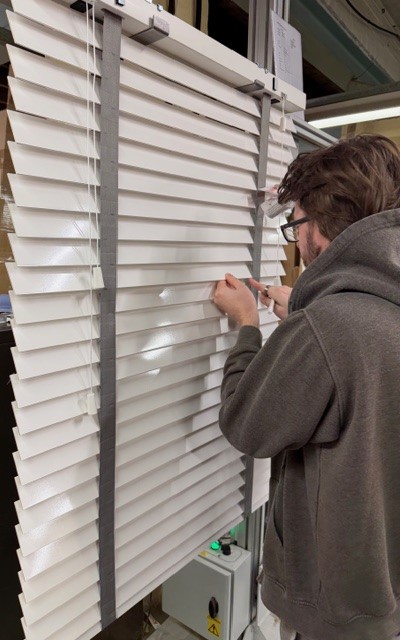
It was hanging on the inspection hoist.
The Moment That Made Me Pause
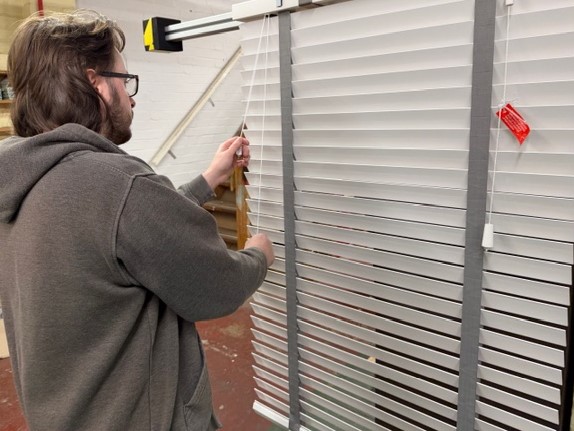
Brad was doing a final check on a set of wooden Venetians.
White gloss finish with tapes.
Nothing out of the ordinary until you looked twice.
The tapes weren’t white like 99% of the white wooden venetian blinds we install.
They were grey.
That one shift changed everything.
The blind didn’t just blend anymore.
It will frame the window.
And standing there, watching it hang under those factory lights, it hit me:
This is how feature windows are really made.
It Didn’t Happen in a Design Meeting
This wasn’t a showroom test or a style experiment.
It was real product for a real home, mid-check.
Just another job passing through the line.
But when you’ve inspected thousands of blinds, your eye develops a second instinct—
you start seeing the window, not just the product.
Those grey tapes added depth without noise.
They defined the shape of the window without stealing the attention.
They made the blind feel finished not just functional.
It wasn’t trendy.
It was timeless.
And it didn’t come from a mood board.
It came from experience. From someone noticing. On the hoist.
Feature Windows Aren’t Always Loud
Most people think feature windows have to pop.
Big contrast. Bold colour.
And yes sometimes that works beautifully.
But just as often, it’s about form over flash.
It’s the style, not the shade.
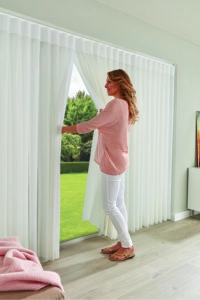
Think Allusion blinds
They move differently. They play with light. They change the energy of a space without raising their voice.
Or shutters
Even in classic white, they add rhythm, structure, and weight to a room.
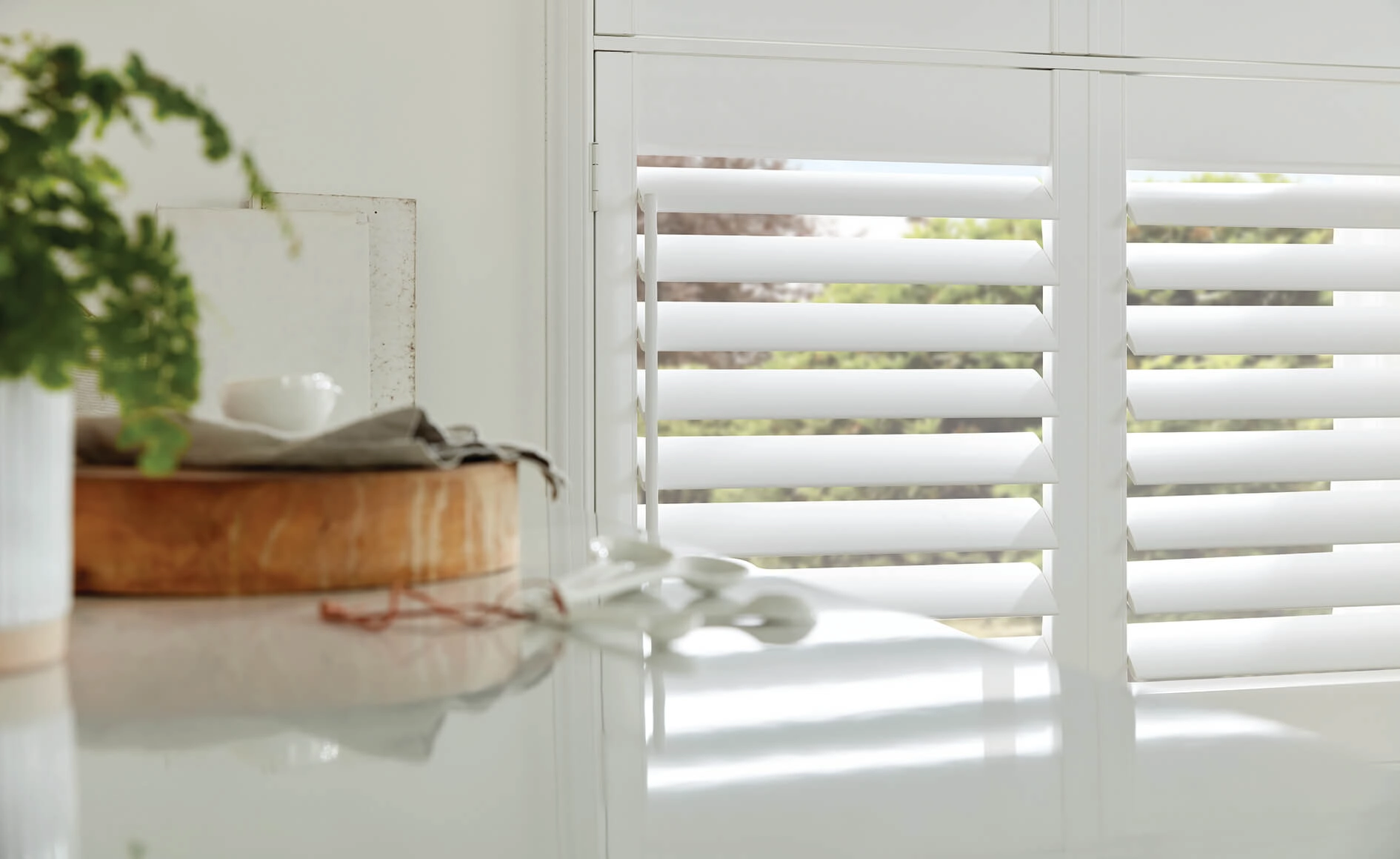
They don’t shout.
They anchor.
Different tools. Same result:
A window that feels deliberate.
Where It Really Happens
Most people assume standout windows are created at the design stage.
But more often than not, they’re born much earlier.
In a factory.
On an inspection hoist.
When someone spots a detail and knows that’s going to change the room.
That’s the difference between choosing a blind…
and choosing the right blind.
Why It Stuck With Us
Most blinds do their job quietly and that’s a good thing.
But once in a while, one reminds us why the little things matter.
Sometimes it’s colour.
Sometimes it’s movement.
Sometimes it’s just the tapes.
And every time, it’s someone on the floor who sees it first.
Not by accident.
But because they’ve looked at enough blinds to know when something’s different.
And when something’s right.
FAQ
What’s a “feature window”?
A feature window is a window that draws the eye not just because of size or placement, but because of the way it’s styled. It feels intentional. Balanced. Finished. That might come from colour contrast, blind structure, or how light moves through it.
Can a neutral blind still create a feature window?
Absolutely. Feature windows aren’t always about colour. Even white or grey blinds can add structure, depth, and presence when the right product and detail choices are made like the tapes we spotted in the story.
What are “tapes” on Venetian blinds?
Tapes are the fabric strips that run vertically on some Venetian blinds, covering the ladder cords. They’re often colour-matched, but when chosen in contrast (like grey on white), they can completely change the look of the blind.
I want a window that feels more “designed.” Where do I start?
Ask us. Show us the space. Whether it’s Allusion, Venetians with tapes, or shutters we’ll help you style the window, not just cover it.
About Phil Coleman
Phil Coleman is the fifth generation of his family to run Barlow Blinds, a Leicester business that has been making blinds since 1887. With over 30 years of hands-on experience, Phil has played a leading role in shaping industry standards including being part of the team that wrote the only NVQ qualification for blind and shutter installers. He also serves on the Management Committee of the British Blind & Shutter Association (BBSA), helping to set best practice across the trade. Under his leadership, Barlow Blinds has remained true to its founding principle: “It’s not our job to find customers for our blinds, it’s our job to find the right blinds for our customers.”