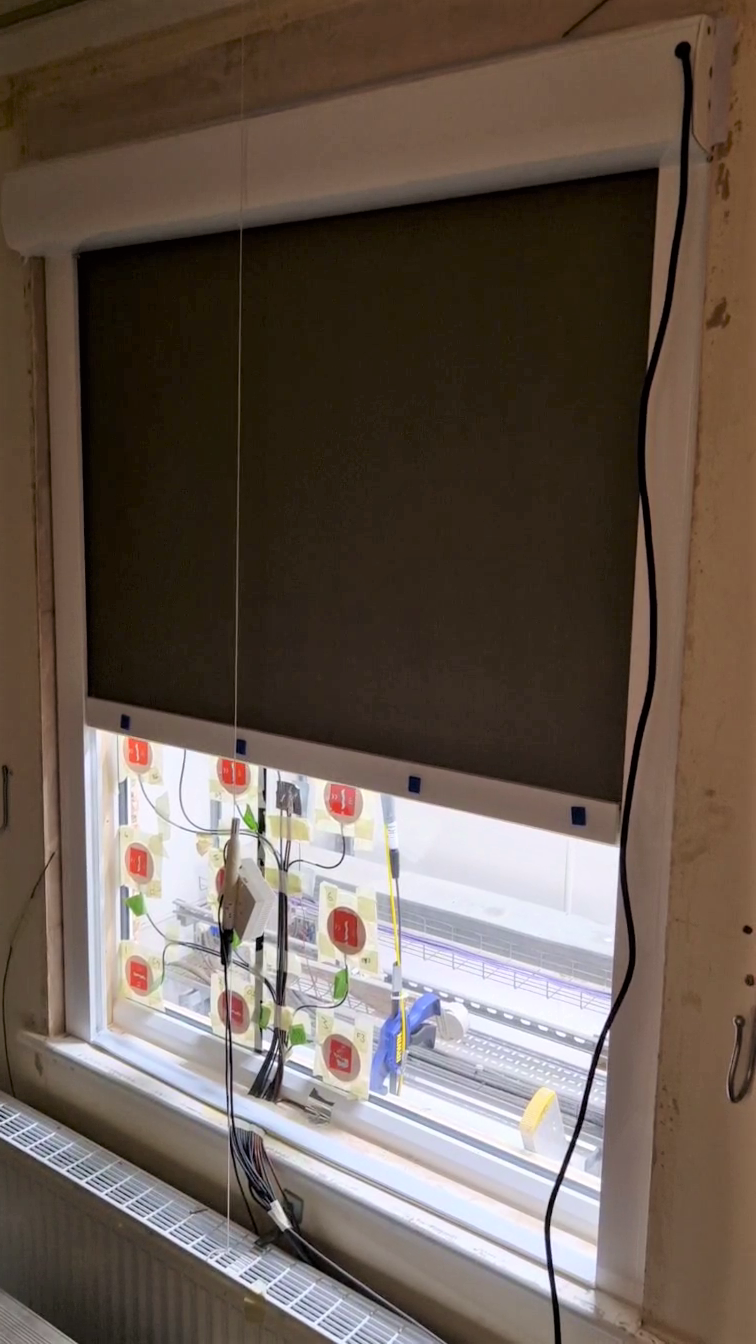
Do Blinds Reduce Heat Loss?
Independent testing carried out at the University of Salford's Energy House has demonstrated that certain types of blinds can help reduce heat loss through windows during winter. The level of improvement depends on the blind type, installation method and window construction, but the results provide real-world evidence that blinds can contribute to improved energy efficiency.
What Research at the University of Salford’s Energy House Found
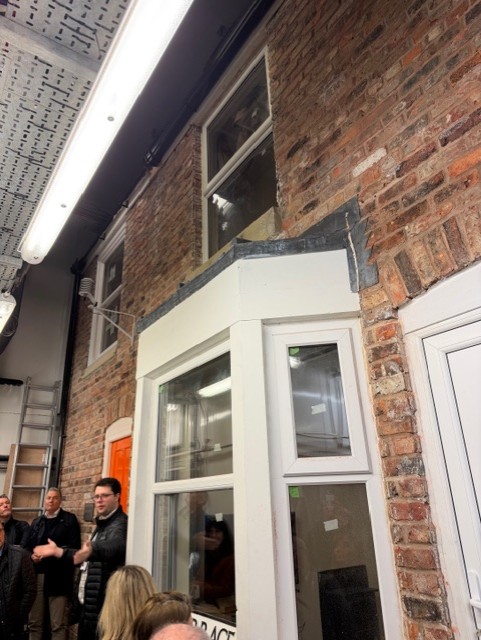
Last week I had the opportunity to visit something genuinely fascinating.
The Energy House at the University of Salford.
This isn’t a showroom or a small laboratory experiment.
It’s a full-sized houses built inside a huge climate chamber where researchers can recreate real weather conditions to test how homes perform.
Inside this facility, researchers have worked with the British Blind and Shutter Association (BBSA) to answer a question homeowners ask all the time:
Do blinds actually reduce heat loss in winter?
Because in the blinds industry, you often hear statistics about energy efficiency.
But seeing how those claims are actually tested gives a much clearer understanding of where the numbers come from.
Key Takeaways: Do Blinds Reduce Heat Loss?
Research carried out at the University of Salford’s Energy House confirms that blinds can help reduce heat loss through windows.
The key findings include:
- Well-fitted blinds reduce heat loss compared to uncovered windows.
- Cellular (honeycomb) blinds perform particularly well because their air pockets create insulation.
- Roller blinds with reflective backings can help reduce heat escaping through glass.
- Fit matters, blinds installed close to the window frame perform better by limiting air movement.
- Blinds won’t replace insulation or double glazing, but they can improve the efficiency of existing windows.
Why This Research Matters
When people hear that blinds can help keep heat inside a room, the reaction is often sceptical.
"It’s only a piece of fabric. How much difference can it really make?"
It’s a fair question.
And it’s exactly the kind of question that deserves proper testing rather than marketing claims.
That’s why the Energy House is so interesting.
Instead of relying on small-scale experiments, researchers can test products inside a real house under controlled weather conditions, including:
- external temperature changes
- heating systems operating normally
- air movement inside the home
- heat loss through windows
- insulation performance
In other words, they can simulate what actually happens in a typical home during winter.
That makes the results far more meaningful than simple laboratory tests.
What the Tests Found
The testing carried out at the Energy House confirmed something many homeowners already notice in everyday life.
Well-fitted blinds can significantly reduce heat loss through windows.
Windows are one of the biggest sources of heat loss in most homes.
Even modern glazing doesn’t insulate as effectively as a solid wall.
When warm air inside a room meets a cold window surface, heat naturally moves through the glass.
Lowering a blind creates an extra barrier between the warm room air and the cold glass, slowing down the rate at which heat escapes.
The exact performance varies depending on the type of blind, but the testing showed several clear trends.
For example:
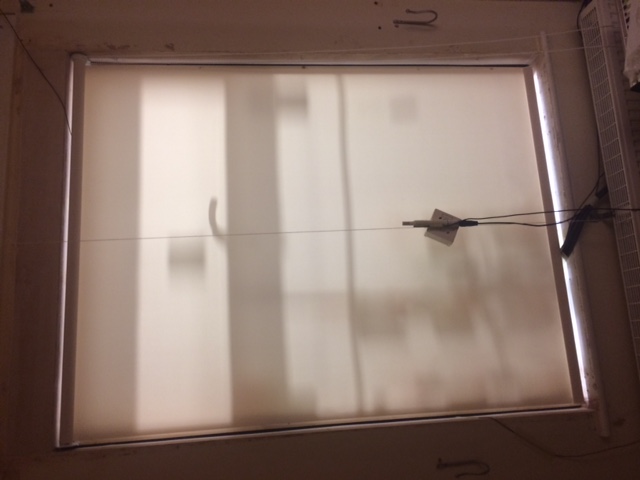
Cellular (honeycomb) blinds performed particularly well because their structure traps air pockets, which act as insulation.
Roller blinds with reflective backings helped reduce heat escaping through the glass.
And well-fitted blinds in general performed better than uncovered windows when it came to limiting heat loss.
In some cases, the improvement was significant enough to influence room temperature and heating demand.
To see the BBSA and University of Salford full report click here
The Part People Don’t Talk About Enough: Fit Matters
One of the most interesting takeaways from the research is something we see regularly when visiting customers’ homes.
The way a blind fits makes a big difference.
A blind with large gaps around the edges will still provide some benefit.
But blinds fitted close to the window frame tend to perform much better because they reduce the movement of cold air around the window.
Systems such as:
- Perfect Fit blinds
- cellular blinds
- well-measured recess blinds
often perform better because they minimise gaps where air can circulate.
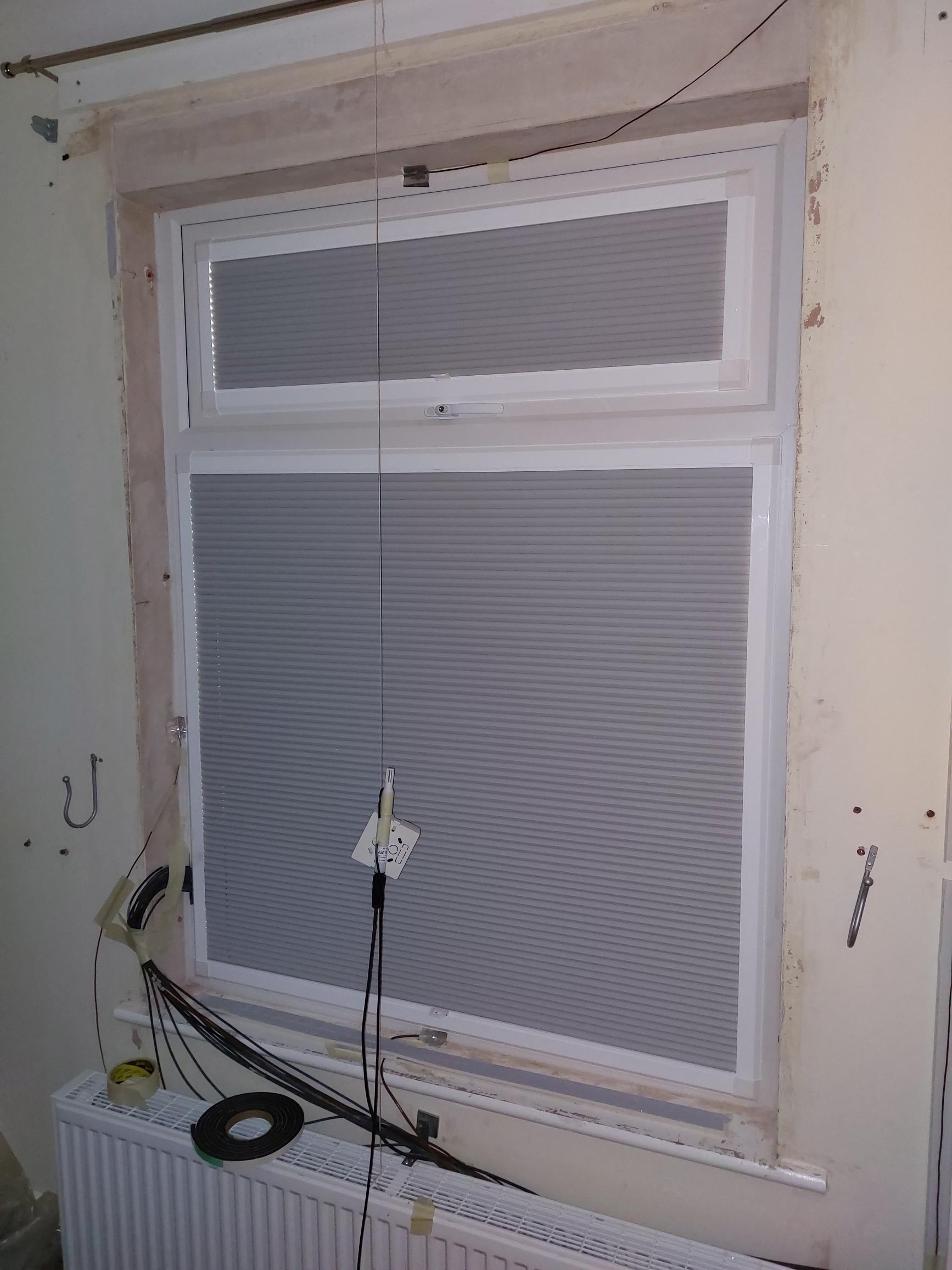
This is one reason why accurate measuring and proper installation matter more than many people realise.
What It Was Like Inside the Energy House
Walking into the Energy House is a slightly surreal experience.
You’re standing inside what feels like a normal house.
But surrounding that house is a huge environmental chamber capable of simulating outdoor weather conditions.
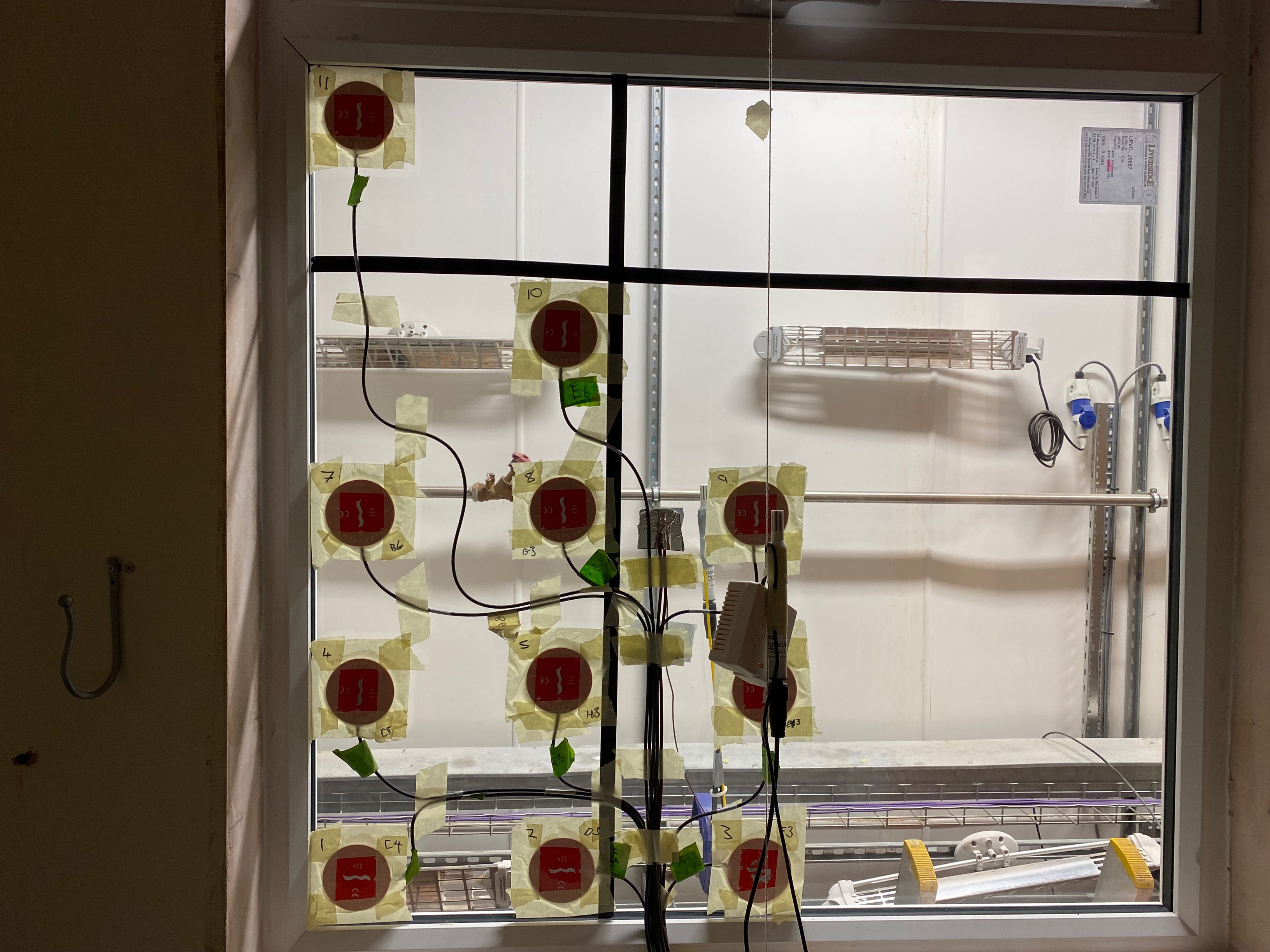
Inside the house itself, sensors and monitoring equipment measure everything from:
- heat flow through walls and windows
- air movement inside the room
- temperature changes
- energy use
Seeing it in person makes one thing clear.
Energy efficiency in a home rarely comes down to one single solution.
It’s usually the result of many smaller improvements working together, including:
- insulation
- glazing
- heating controls
- and window coverings.
Blinds won’t replace insulation or double glazing.
But they can absolutely improve the performance of the windows you already have.
When Blinds Make the Biggest Difference
Blinds can help reduce heat loss in many homes, but their impact tends to be greatest in certain situations.
During winter nights
Closing blinds after sunset helps slow heat escaping through cold glass.
Homes with older windows
Older double glazing or single glazing loses heat faster, so insulating window coverings can make a bigger difference.
Rooms with large windows
The larger the glass surface, the greater the potential heat loss.
When blinds fit closely to the frame
Blinds installed close to the window frame reduce air movement and improve insulation performance.
The Real Benefit Most People Notice
Interestingly, the thing customers mention most isn’t a statistic.
It’s a feeling.
We hear the same comment quite often after certain blinds are installed.
Someone lowers the blind in the evening and says something like:
"You can actually feel the cold coming off the window stop."
What they’re noticing is the change in air movement and heat transfer around the glass.
And the testing at the Energy House helps explain exactly why that happens.
About the Energy House Research
The testing referenced in this article was carried out at the Energy House laboratories at the University of Salford, a facility designed to evaluate the energy performance of real homes under controlled environmental conditions.
The research was conducted in collaboration with the British Blind and Shutter Association (BBSA) to investigate how different types of window coverings influence heat loss through windows.
Because the facility allows researchers to simulate real weather conditions while monitoring energy use and temperature changes, it provides valuable insight into how products perform in realistic home environments.
The Bottom Line
Blinds won’t turn a poorly insulated home into a zero-energy building.
But the research shows they can still play an important role.
Well-fitted blinds can:
- reduce heat loss through windows
- improve comfort in a room
- help heating systems work more efficiently
Sometimes the simplest improvements in a home can make a bigger difference than people expect.
FAQs
Do blinds really reduce heat loss?
Yes. Research carried out at the University of Salford’s Energy House with the British Blind and Shutter Association (BBSA) found that well-fitted blinds can reduce heat loss through windows by creating an insulating barrier between warm indoor air and cold glass.
Which blinds are best for keeping heat in?
Cellular (honeycomb) blinds are often considered among the most effective because their design traps insulating air pockets. However, well-fitted roller blinds and other window coverings can also help reduce heat loss.
Why do windows lose so much heat?
Glass is a much poorer insulator than walls. Heat naturally moves from warm areas to cold areas, so warmth inside your home escapes through windows unless something slows that transfer.
Do blinds help reduce energy bills?
By reducing heat loss through windows, blinds may help reduce heating demand and improve the overall energy efficiency of a home.
Do blinds need to fit properly to work well?
Yes. Blinds that fit close to the window frame perform better because they reduce air movement around the edges of the window.
About Phil Coleman
Phil Coleman is the fifth generation of his family to run Barlow Blinds, a Leicester business that has been making blinds since 1887. With over 30 years of hands-on experience, Phil has played a leading role in shaping industry standards including being part of the team that wrote the only NVQ qualification for blind and shutter installers. He also serves on the Management Committee of the British Blind & Shutter Association (BBSA), helping to set best practice across the trade. Under his leadership, Barlow Blinds has remained true to its founding principle: “It’s not our job to find customers for our blinds, it’s our job to find the right blinds for our customers.”