
What Are the Best Blinds for Bedrooms?
Ever woken up at 5:43 AM because a sliver of sunlight snuck through your blinds?
Yeah — we’ve been there too.
Bedrooms aren’t like any other room in the house. They’re not about showing off. They’re about winding down. They’re about sleep, comfort, privacy and for many people, serious darkness.
Take my wife, for example. She’s a light-sensitive sleeper. If there’s even a hint of morning sun or streetlight glow, she’s wide awake. But she also cares about how the room looks clean lines, soft finishes, nothing bulky or clunky.
That’s why we landed on cellular blinds. They checked both boxes: they made the room dark enough for deep sleep, but still looked refined and modern.
And that’s the real point here: choosing the best bedroom blinds isn’t just about blocking light. It’s about finding the right balance for how you sleep, what your windows are like, and where you’re willing to compromise.
This guide breaks down your best options what works, where each blind type shines (and where it doesn’t), and how to pick the one that’ll help you finally sleep like a human again.
Why Darkness Matters More Than We Think
Sleep quality is closely linked to light exposure.
Research from Cardiff University has shown that even low levels of light during sleep can interfere with melatonin production the hormone responsible for regulating sleep cycles.
In simple terms:
the darker the room, the better the conditions for deep, restorative sleep.
That doesn’t mean every bedroom needs to be pitch black but it does explain why some people struggle to sleep well in rooms that others find perfectly fine.
I was lucky enough to spend some time with Entrepreneur and podcast host Steven Bartlett and spoke openly about sleep being his one non-negotiable something he protects above routines, productivity hacks, or technology.
If it works for Steven then I’m in!
Your bedroom environment matters more than most people realise.
First, an Important Truth About “Blackout”
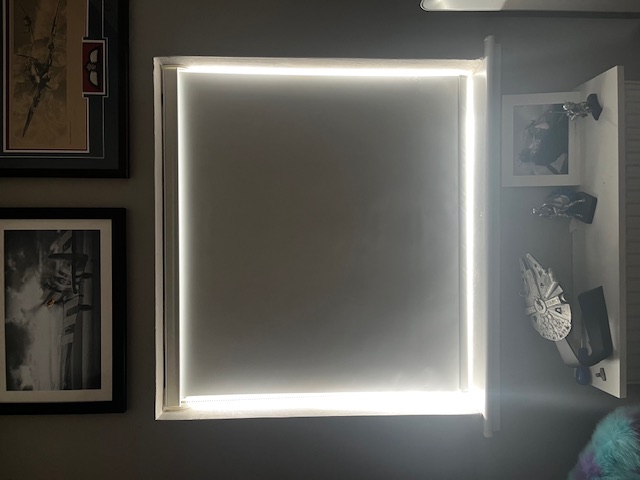
No blind can guarantee 100% darkness unless it seals the window completely.
Most “blackout” blinds refer to the fabric, not the finished result.
Light almost always enters through:
- the sides of the blind
- the top where the blind rolls or stacks
- gaps between the blind and the window frame
Understanding this upfront avoids disappointment later.
Roller & Vertical Blinds with Blackout Fabric
Best for: cost-effective light reduction
Roller and vertical blinds fitted with blackout fabric are among the most popular bedroom choices and for good reason.
Pros
- Cost-effective
- Simple, tidy appearance
- Blackout fabric blocks light through the material
Limitations
- Light can still creep in around the edges
- Not ideal if you need near-total darkness
These are a good solution if:
- you want the room noticeably darker
- but don’t need pitch-black conditions
- and want to keep costs sensible
For many bedrooms, this is more than enough.
Roman Blinds
Better coverage where light gaps matter
Roman blinds are often a better option where light leakage is more noticeable.
Because the fabric covers the full width of the blind, there are:
- no vertical gaps
- only small light gaps at either side
Pros
- Improved light control compared to rollers or verticals
- Softer, more furnished appearance
- Well suited to bedrooms where aesthetics matter
Limitations
- Still not total blackout
- Fabric stacks at the top can allow some light in
A strong middle ground for many homes.
Cellular (Honeycomb) Blinds
Excellent balance of darkness, comfort, and insulation
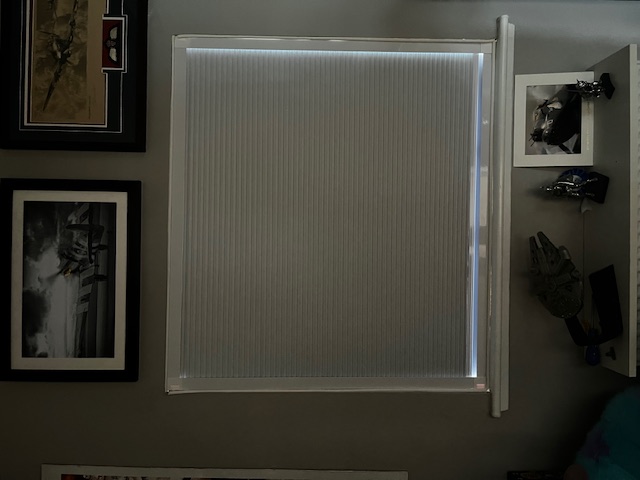
Cellular blinds are one of the best all-round bedroom solutions, especially for people who are sensitive to light.
Their honeycomb structure:
- traps air
- improves insulation
- softens incoming light
We use them at home ourselves because when sleep matters, the details matter.
Pros
- Very good light reduction
- Improved thermal comfort
- Clean, modern appearance
Limitations
- Not absolute blackout unless fully sealed
- Higher cost than standard roller blinds
For many people, this is the sweet spot.#
The Best Option for Total Blackout: Blackout Slider Blinds
When darkness really matters
If you need the darkest possible bedroom, the most effective solution is a blackout slider blind system.
This system:
- fits within a four-sided frame
- includes light-reducing internal baffles
- uses magnetic strips to ensure the blind closes fully
The result is exceptional light control.
Pros
- As close to total blackout as it’s possible to achieve
- Ideal for shift workers, light-sensitive sleepers, or children’s rooms
Downsides (and it’s important to be honest)
- Higher cost
- The four-sided frame is visible
- The frame runs across the window sill, which isn’t to everyone’s taste
It’s the best performing option — but not the most discreet.
So… Which Bedroom Blind Is Best?
There isn’t one “best” blind only the best choice for you.
A simple way to decide:
- Budget-led & practical: Roller or vertical blackout blinds
- Better coverage & softer look: Roman blinds
- Comfort-focused & darker rooms: Cellular blinds
- Maximum darkness above all else: Blackout slider system
The right answer balances sleep quality, appearance, and compromise.
Final Thought
Bedrooms deserve more thought than most rooms.
The right blinds don’t just make a room darker they help create the conditions for better sleep.
And when sleep improves, everything else tends to follow.
About Phil Coleman
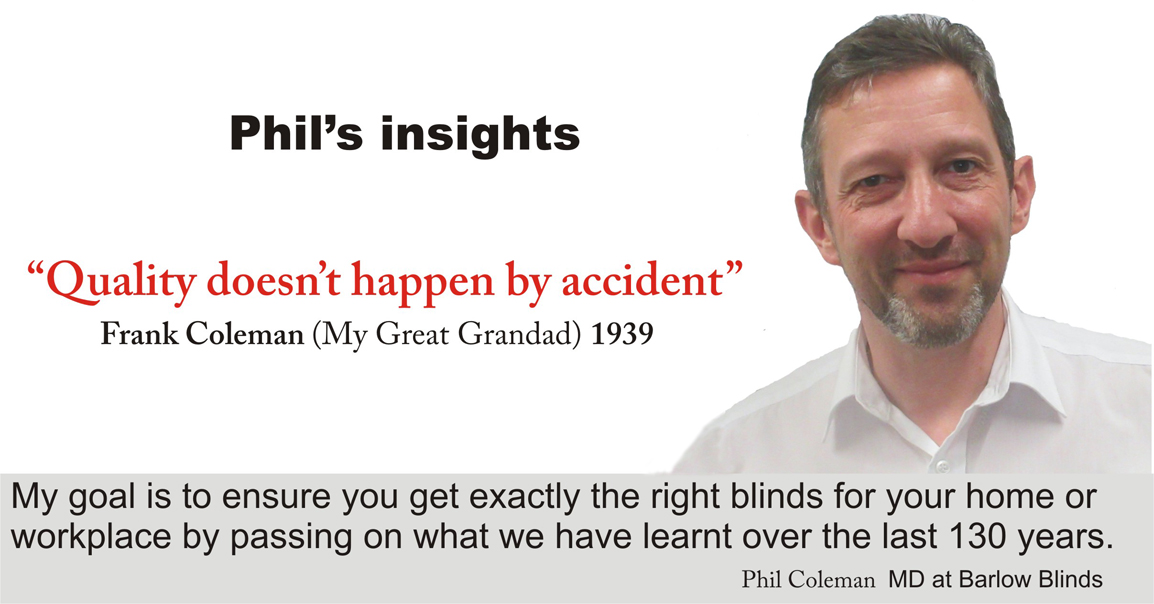
Phil Coleman is the fifth generation of his family to run Barlow Blinds, a Leicester business that has been making blinds since 1887. With over 30 years of hands-on experience, Phil has played a leading role in shaping industry standards including being part of the team that wrote the only NVQ qualification for blind and shutter installers. He also serves on the Management Committee of the British Blind & Shutter Association (BBSA), helping to set best practice across the trade. Under his leadership, Barlow Blinds has remained true to its founding principle: “It’s not our job to find customers for our blinds, it’s our job to find the right blinds for our customers.”