
The Blind Cord Safety Law (Explained Simply)
In February 2014, the window blind industry changed in a big way.
New child-safety legislation came into force across Europe permanently changing how blinds are designed, manufactured, and installed.
The goal was simple:
To prevent accidents involving blind cords and chains.
Before these changes, many blinds used long looped cords or chains to operate. In some tragic cases, young children became entangled in them.
The new regulations were introduced to reduce that risk.
Today, every professional blind company must supply and install blinds that are designed with built-in safety measures.
But here’s the surprising part.
Many homeowners still don’t know these rules exist.
Which is why people are often confused when:
- their new blinds work differently
- cords sit higher than expected
- chains are fixed to the wall with clips
So let’s explain exactly what changed.
Are Blind Cords Illegal in the UK?
No, blind cords are not illegal.
However, they must follow strict safety rules introduced in 2014.
Modern blinds must either:
1️⃣ Be cordless by design
or
2️⃣ Use cords or chains fitted with safety devices
These regulations apply to all blinds supplied by professional blind companies across the UK and Europe.
Why Blind Safety Rules Were Introduced
Before 2014, many blinds used long operating cords that hung freely.
For families with young children, this could present a serious risk.
To reduce that risk, new European safety standards were introduced requiring:
• Shorter cord lengths
• Secured chains
• Safer operating systems
As a result, modern blinds are now designed very differently from older blinds.
The Two Types of Modern Blinds
1. Cordless Blinds (The Safest Option)
Cordless blinds remove operating cords completely.
There are no loose cords or chains hanging down, which makes them naturally safer in homes with children.
Common cordless options include:
• Wand-operated vertical blinds
• Perfect Fit blinds
• INTU blinds
• Motorised blinds
• Cordless cellular blinds
• Window shutters
• Wand-operated Allusion blinds
These systems are increasingly popular because they offer:
✔ improved safety
✔ a cleaner appearance
✔ easier operation
2. Corded Blinds (With Safety Devices)
Some blinds still require cords or chains to operate.
Examples include:
• Wooden Venetian blinds
• Faux wood Venetians
• Roman blinds
• Day & Night blinds
• Chain-operated roller blinds
• Corded vertical blinds
These are perfectly safe when installed correctly, but they must follow strict safety rules.
The Two Key Blind Safety Rules
Rule 1: Cords Must Be Positioned High
Operating cords must sit at least 1500mm above floor level.
This helps keep them out of reach of young children.
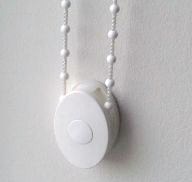
Rule 2: Chains Must Be Secured
Continuous chains must be fitted with a wall-mounted safety tension device.
This device holds the chain tight against the wall so it cannot form a loose loop.
The Trade-Off Most Homeowners Don’t Expect
Safety improvements sometimes change how blinds feel to use.
Because cords must sit higher, they can occasionally be harder to reach.
This can affect:
• shorter people
• elderly homeowners
• wheelchair users
• windows above worktops or furniture
In these situations, cordless or motorised blinds often become the better option.
A good blind company will always consider how the blind will actually be used, not just the window size.
Why Professional Installation Matters
Safety regulations only apply when blinds are supplied and installed correctly.
Older blinds or some DIY products may not include the same safeguards.
Professional installation ensures:
• correct safety devices are fitted
• chains are properly tensioned
• cord lengths follow regulations
• the blind suits the window location
These details are easy to overlook.
But they matter.
If Your Blinds Were Installed Before 2014
If your blinds are older, it may be worth checking whether safety devices are fitted.
Simple upgrades can often improve safety without replacing the entire blind.
Frequently Asked Questions About Blind Safety
Are window blind cords illegal in the UK?
No, blind cords are not illegal in the UK. However, since 2014 strict safety regulations require blinds to either be cordless or fitted with safety devices that keep cords and chains out of reach of young children.
What is the blind safety law introduced in 2014?
In February 2014, new European safety standards were introduced to reduce the risk of accidents involving blind cords.
These regulations require blinds to either:
- Be cordless by design, or
- Use cords and chains fitted with safety devices such as wall-mounted tension clips.
Professional blind companies must supply blinds that meet these safety requirements.
Why do modern blinds have clips on the wall?
The small wall-mounted clip is a safety tension device.
It holds the blind chain tight against the wall to prevent a loose loop forming. This helps reduce the risk of children becoming entangled in blind cords.
These devices became mandatory with the 2014 safety regulations.
Are cordless blinds safer?
Yes. Cordless blinds are generally considered the safest option for homes with young children because they remove cords and chains completely.
Many modern blind systems are now designed this way, including Perfect Fit blinds, INTU blinds, motorised blinds, and shutters.
Do roller blind chains have to be secured?
Yes. Chain-operated roller blinds must be fitted with a wall-mounted safety tension device that keeps the chain under tension and prevents a loop from hanging freely.
Why are some blind cords higher than expected?
Safety regulations require operating cords to be positioned at least 1500mm above floor level.
This helps keep cords out of reach of young children but can sometimes make them slightly harder to reach depending on the window location.
Do old blinds need to be replaced?
Not necessarily.
If your blinds were installed before 2014, you may simply need to add safety devices such as chain tensioners or cord cleats.
A professional blind company can usually advise whether a simple safety upgrade is possible.
What blinds are naturally cordless?
Many modern blind systems are designed without cords, including:
- Perfect Fit blinds
- INTU blinds
- Motorised roller blinds
- Cordless cellular blinds
- Window shutters
- Wand-operated vertical blinds
These options are often preferred in family homes because they remove cords completely.
The One Question Worth Asking
If you're choosing new blinds today, ask one simple question:
“Is this blind cordless or does it require safety controls?”
A good blind company will happily explain the difference.
For more information on window blind safety from the UK's Authority on Shading the BBSA click here

About Phil Coleman
Phil Coleman is the fifth generation of his family to run Barlow Blinds, a Leicester business that has been making blinds since 1887. With over 30 years of hands-on experience, Phil has played a leading role in shaping industry standards including being part of the team that wrote the only NVQ qualification for blind and shutter installers. He also serves on the Management Committee of the British Blind & Shutter Association (BBSA), helping to set best practice across the trade. Under his leadership, Barlow Blinds has remained true to its founding principle: “It’s not our job to find customers for our blinds, it’s our job to find the right blinds for our customers.”