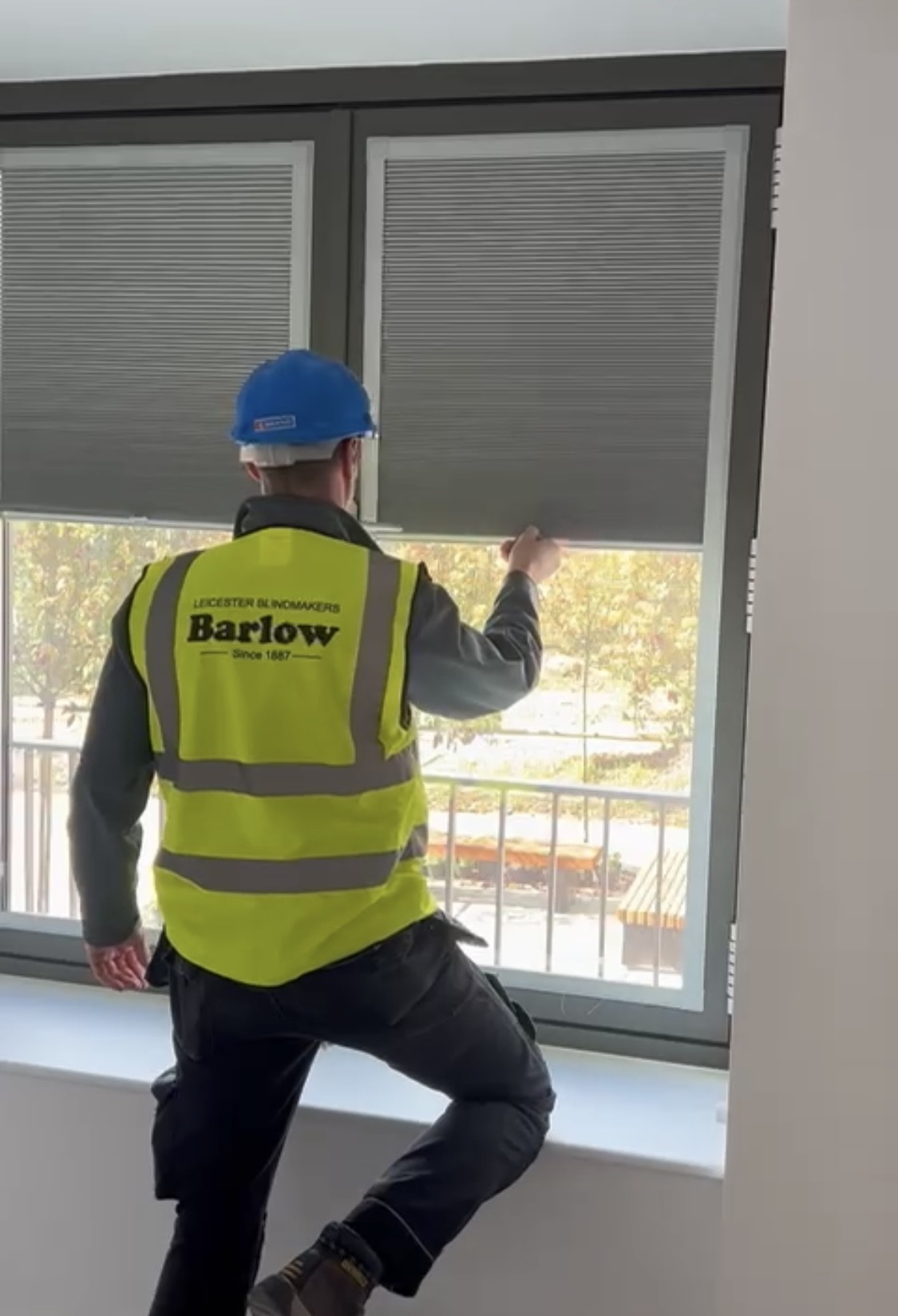
Best Blinds for Leicester Homes: A Practical Guide Based on Real Homes
The best blind for your home depends on the room, the direction the window faces, privacy requirements and how the space is used. Popular choices include roller blinds for simplicity, cellular blinds for energy efficiency, Venetian blinds for light control and shutters for long-term durability. Choosing the right blind involves matching the product to the problem you are trying to solve.
The best blinds for your home are not always the blinds you first ask for.
Every week across Leicester and Leicestershire, we visit homes where the starting question sounds simple:
“What blinds would you recommend?”
But once the conversation properly starts, the real problems usually appear.
A bedroom that becomes bright at 5am every summer.
A south-facing kitchen that turns uncomfortable by mid-afternoon.
Bi-fold doors that looked amazing in the showroom but are awkward to cover in real life.
A lounge that feels overlooked at night but gloomy during the day.
A new-build estate where the windows are huge, but privacy is limited.
That is why choosing blinds properly is rarely about simply picking a colour or style.
The best blinds are the ones that solve the problem you actually live with every day.
This guide explains the best blinds for different rooms, house types, and everyday frustrations we regularly see in Leicester homes — from Victorian bay windows to modern open-plan extensions.
Quick Comparison Guide
Blind Type |
Best For |
Main Benefits |
Things to Consider |
Roller Blinds |
Bedrooms, kitchens, modern spaces |
Affordable, neat, huge fabric range |
Light gaps at sides |
Cellular Blinds |
Bedrooms, hot rooms, bifolds |
Better insulation, softer appearance |
Higher cost than standard rollers |
Framed Blackout Cellular Blinds |
Light-sensitive bedrooms |
Excellent blackout performance |
Visible frame around window |
Fauxwood Venetian Blinds |
Kitchens, bathrooms |
Waterproof, durable, classic look |
Heavy on larger windows |
Wooden Venetian Blinds |
Living rooms, bay windows |
Natural warmth and texture |
Not suitable for damp rooms |
Vela Fabric Venetian Blinds |
Lounges, kitchens, bathrooms |
Privacy with softer filtered light |
Less widely known product |
Shutters |
Bay windows, street-facing homes |
Premium appearance, excellent privacy |
Permanent fitted appearance |
INTU Blinds |
Bi-folds and doors |
Move with the doors, very neat |
More limited product choice |
Allusion Blinds |
Large patio doors |
Soft fabric look, walk-through design |
Need stacking space |
Motorised Roller Blinds |
Large windows, modern homes |
Convenient, child safe, smart control |
Higher upfront cost |
Awnings |
South-facing gardens, extensions |
Stops heat before it reaches glass |
External installation required |
Best Blinds for Privacy
Quick Answer
If privacy is your biggest concern, the best options are usually:
- Venetian blinds
- Vela Fabric Venetian blinds
- Shutters
- Day and Night blinds
- Cellular blinds
- Vertical Blinds
But the right choice depends on one important thing:
Do you want privacy by blocking light… or privacy while still keeping the room bright?
That distinction changes everything.
The Problem Most People Are Actually Trying to Solve
Most people say:
“We need more privacy.”
But usually what they really mean is:
“We don’t want to feel exposed anymore.”
That could mean:
- neighbours overlooking the kitchen
- people walking past a bay window
- feeling visible at night when lights are on
- wanting daylight without feeling watched
The emotional side matters just as much as the practical side.
Venetian Blinds
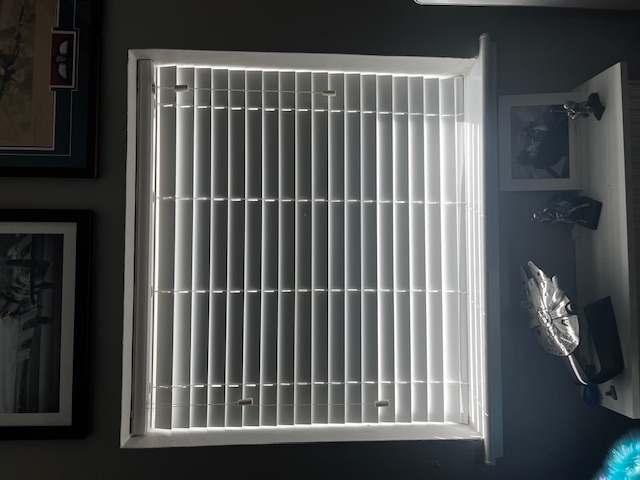
Wooden and fauxwood Venetian blinds remain one of the most popular choices in Leicester homes that we visit because they allow adjustable privacy throughout the day.
You can tilt the slats to reduce overlooking without completely losing natural light.
That flexibility is why they work so well in:
- bay windows
- street-facing lounges
- kitchens
- family rooms
The downside?
Once fully closed, they can make a room feel noticeably darker.
On very large windows, they can also become surprisingly heavy to operate over time.
Vela Fabric Venetian Blinds
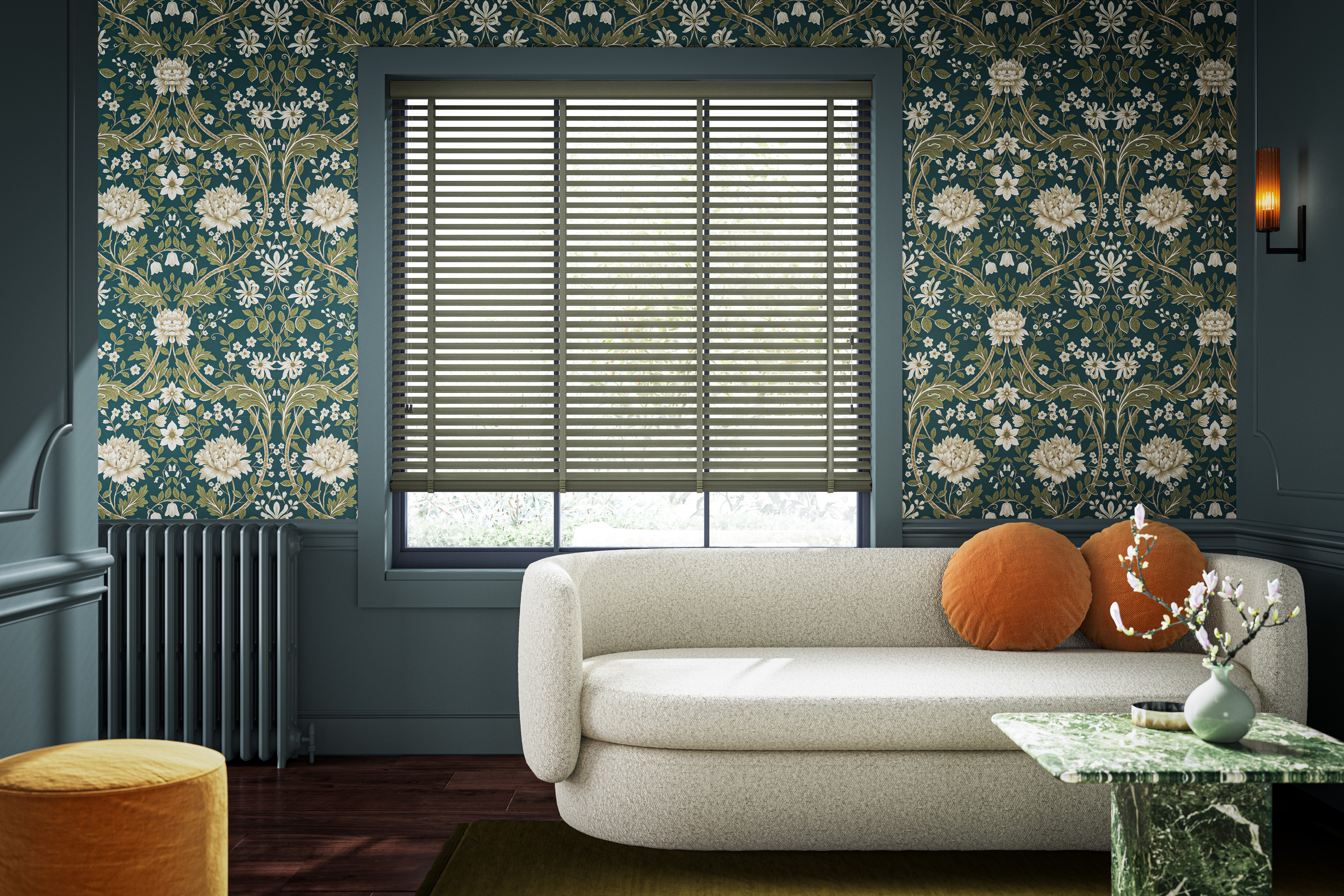
This is one of the newer products we now recommend regularly especially in modern homes where people want privacy without losing softness and light.
One Leicester customer described traditional Venetians perfectly:
“I love the look… I just hate how flat and dark the room feels once they’re shut.”
That is exactly the problem Vela Fabric Venetian blinds solve.
The fabric slats still provide privacy, but they allow softer natural light to filter through at the same time.
They are also:
- 100% waterproof
- anti-static
- much lighter to operate than wood or fauxwood
- ideal for kitchens and bathrooms
In many open-plan homes, they simply create a calmer, softer atmosphere than traditional hard slat blinds.
Shutters
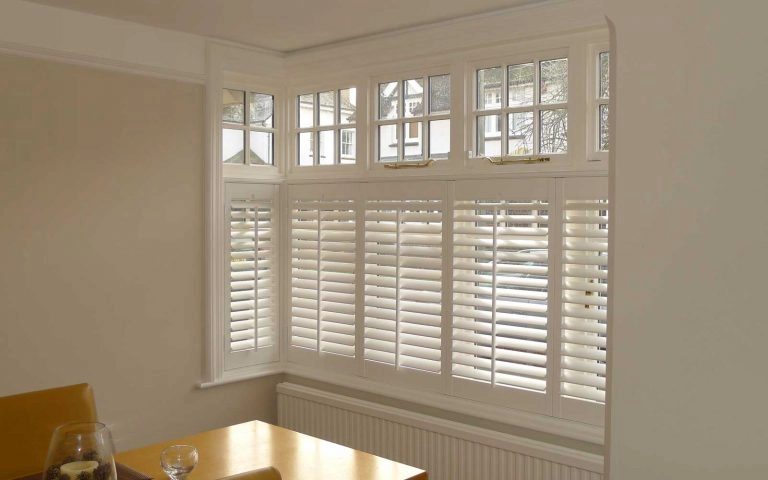
Shutters are excellent for privacy because they become part of the window itself.
They work particularly well in:
- Victorian bay windows
- street-facing homes
- bedrooms
- period properties
But shutters are not automatically the “best” solution.
Some people love them initially, then later realise they miss being able to fully clear the window for maximum daylight.
Other rooms simply need better blackout performance than shutters can provide.
And in some modern homes, customers prefer blinds that visually disappear when fully open.
That is why the right answer always depends on how you actually use the room.
Best Blinds for Bedrooms
Quick Answer
For bedrooms, the best options are usually:
- blackout roller blinds
- cordless cellular blinds
- fully framed blackout cellular blinds
The right option depends on how dark you genuinely need the room to be.
Bedroom Blind Comparison
Blind Type |
Light Control |
Insulation |
Appearance |
Best For |
Blackout Roller Blind |
Good |
Basic |
Minimal and neat |
General bedrooms |
Cordless Cellular Blind |
Very Good |
Excellent |
Soft modern look |
Family bedrooms |
Framed Blackout Cellular Blind |
Excellent |
Excellent |
More functional appearance |
Light-sensitive sleepers |
Shutters |
Moderate |
Good |
Premium |
Street-facing rooms |
Day and Night Blinds |
Moderate |
Basic |
Decorative |
Privacy with filtered light |
The Biggest Misunderstanding About “Blackout” Blinds
One of the most common frustrations we hear is:
“We already bought blackout blinds… but the room still isn’t dark.”
Usually, the issue is not the fabric.
It is the gaps around the edges.
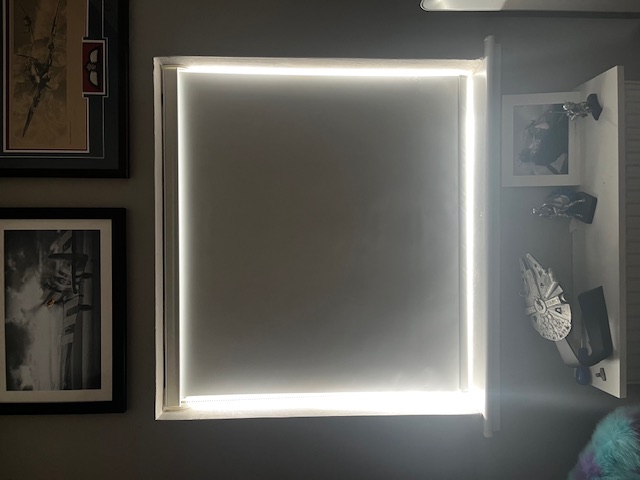
A blackout roller blind uses blackout material, but light can still escape around the sides of the blind especially during bright summer mornings in east-facing bedrooms.
For some people, that is completely fine.
For:
- shift workers
- young children
- light-sensitive sleepers
…it often is not enough.
Blackout Roller Blinds
These remain the most popular bedroom blind for a reason.
They are:
- affordable
- neat
- simple to operate
- available in huge fabric ranges
Most people are perfectly happy with them.
But it is important to understand what they can and cannot do.
If somebody expects hotel-style darkness in midsummer, a standard roller blind will usually fall short because of side light leakage.
That is not a fault.
It is simply how roller blinds work.
Cordless Cellular Blinds
This is where bedroom performance improves significantly.
Cellular blinds sit much closer to the window, reducing light leakage far more effectively than standard rollers.
They also help with:
- heat loss in winter
- overheating in summer
- glare reduction
- softer acoustics
And visually, they often create a softer, calmer feel in bedrooms compared with harder blind styles.
Cordless operation also makes them excellent for child safety.
Fully Framed Blackout Cellular Blinds
If somebody says:
“I want this room as dark as possible.”
This is usually the best solution.
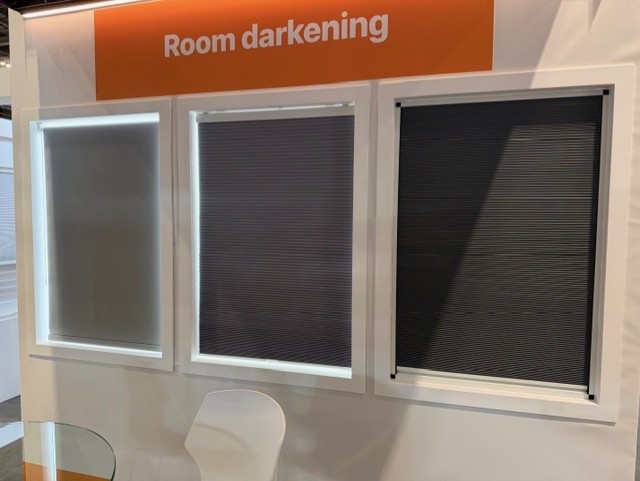
The blind sits inside a four-sided frame with side channels designed to block almost all light leakage.
Last summer we fitted these for a Leicester customer who worked permanent night shifts and had previously taped towels around the edges of their existing blinds trying to block the morning light.
The difference afterwards was dramatic.
The trade-offs?
- higher cost
- visible framing
- slightly more functional appearance
But for poor sleepers, the improvement can genuinely change how the room feels to live in.
Best Blinds for Hot Rooms
Quick Answer
The best blinds for reducing heat are usually:
- cellular blinds
- roof lantern blinds
- external blinds
- awnings
Especially in modern homes with large areas of glass.
Why Overheating Has Become Such a Big Problem
We now spend far more time discussing overheating than we did even five years ago.
Modern Leicester homes are brighter and more open than ever:
- bi-fold doors
- roof lanterns
- glazed extensions
- floor-to-ceiling windows
They look fantastic.
But glass creates heat.
And once that heat enters the room, internal blinds can only do so much.
Some south-facing extensions become uncomfortable by mid-afternoon during summer — even with standard blinds closed.
Cellular Blinds
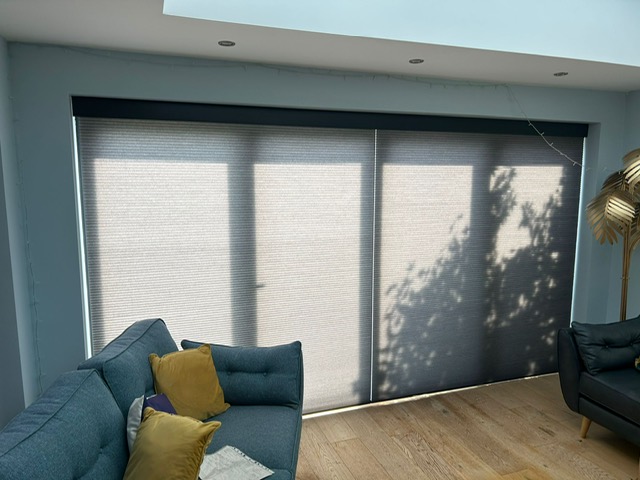
Cellular blinds help because their honeycomb structure traps air inside the blind itself.
That improves insulation in both summer and winter.
They are particularly effective for:
- bedrooms
- patio doors
- glazed extensions
- garden rooms
Many customers are surprised by how much softer the room feels afterwards not just visually, but temperature-wise too.
Roof Lantern Blinds
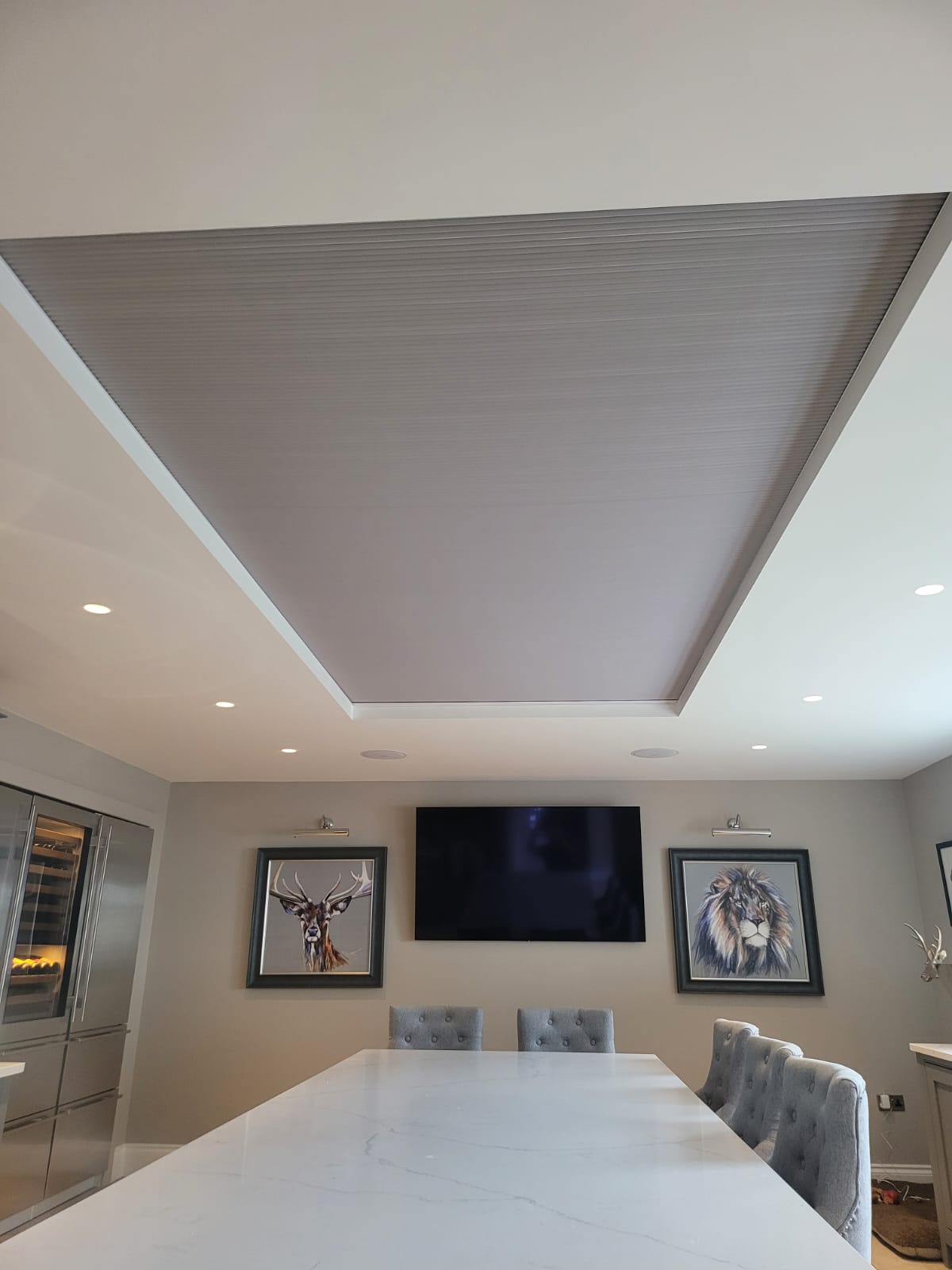
One of the biggest overheating issues we now see is roof lantern glazing.
The room feels incredible in winter.
Then July arrives.
Suddenly the room becomes too bright, too hot, and difficult to comfortably use during the middle of the day.
Roof lantern cellular blinds dramatically reduce:
- glare
- heat build-up
- UV exposure
while still allowing the room to feel bright and usable.
External Blinds and Awnings
If overheating is severe, external shading is often the most effective answer.
Why?
Because it stops heat before it reaches the glass.
Internal blinds can help manage heat.
External shading helps prevent it in the first place.
For south-facing gardens and glazed extensions, awnings can completely change how usable the space feels during summer afternoons.

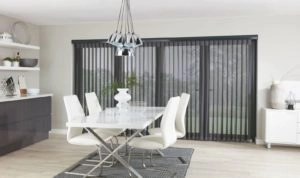
Best Blinds for Bi-fold Doors
Quick Answer
The best options are usually:
- cordless cellular blinds
- INTU blinds
- Allusion blinds
- motorised roller blinds
The right option depends entirely on:
- door clearance
- stacking space
- privacy needs
- how often the doors open
- whether children are involved
- how minimal you want the room to feel
Why Bi-fold Doors Are More Difficult Than People Expect
Traditional blinds were never really designed for modern bi-fold doors.
One customer told us:
“They looked brilliant in photos… then we realised the chains kept catching every time the doors folded back.”
That is why there is rarely one “perfect” solution.
The practical side matters just as much as appearance.
You need to think about:
- access
- operation
- glare
- child safety
- door movement
- how the blinds look when fully open
The best bi-fold blind is usually the one you stop noticing after a few weeks because it simply works properly with the doors.
Frequently Asked Questions
What are the best blinds for keeping heat out?
Cellular blinds, roof lantern blinds, external blinds, and awnings are usually the most effective options for reducing heat gain.
What are the best blinds for bedrooms?
Cordless cellular blinds and framed blackout cellular blinds usually provide the best room darkening performance.
Are blackout roller blinds fully blackout?
No. The fabric is blackout, but light can still escape around the edges.
What blinds are best for bi-fold doors?
Cordless cellular blinds, INTU blinds, and Allusion blinds are often the best choices depending on how the doors open and how much clearance is available.
Are fauxwood blinds waterproof?
Yes. Fauxwood blinds are moisture resistant and ideal for kitchens and bathrooms.
What blinds are best for privacy without making the room dark?
Vela Fabric Venetian blinds are excellent because they maintain privacy while still allowing softer light into the room.
Are cellular blinds worth the extra money?
For many homes, yes. They improve insulation, reduce glare, help control overheating, and often create a softer appearance than standard roller blinds.
Which blinds are easiest to clean?
Roller blinds, fauxwood Venetian blinds, and shutters are generally the easiest to maintain.
What are the best blinds for south-facing rooms?
Cellular blinds, solar reflective fabrics, external blinds, and awnings usually work best for controlling heat and glare.
Are shutters better than blinds?
Not always. Shutters are excellent for privacy and appearance, but blinds often provide better blackout performance and greater flexibility.
Which blinds are safest for children?
Cordless cellular blinds, motorised blinds, INTU blinds, and shutters are all excellent child-safe options because they avoid hanging cords and chains.
Are made-to-measure blinds worth it?
Usually yes. Better fit normally means:
- better light control
- smoother operation
- neater appearance
- improved longevity
About Phil Coleman
Phil Coleman is the fifth generation of his family to run Barlow Blinds, a Leicester business that has been making blinds since 1887. With over 30 years of hands-on experience, Phil has played a leading role in shaping industry standards including being part of the team that wrote the only NVQ qualification for blind and shutter installers. He also serves on the Management Committee of the British Blind & Shutter Association (BBSA), helping to set best practice across the trade. Under his leadership, Barlow Blinds has remained true to its founding principle: “It’s not our job to find customers for our blinds, it’s our job to find the right blinds for our customers.”