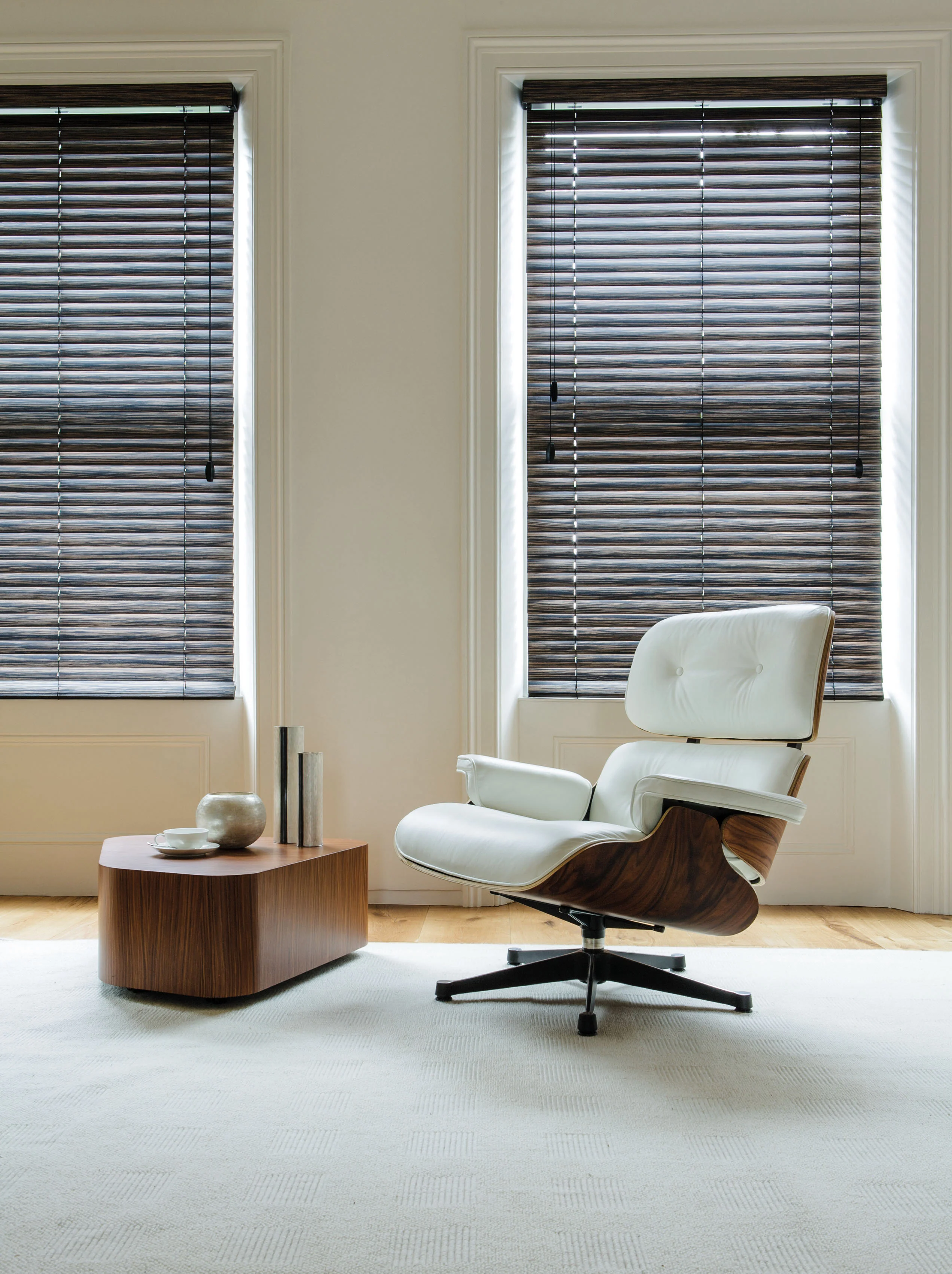
The 6 Most Common Problems With Wooden Venetian Blinds (And How To Avoid Them)
Wooden Venetian blinds remain one of the UK's most popular window coverings, but they are not suitable for every window. Common issues include heavy lifting weight, large stacking when raised, cord wear, dust collection, moisture damage and poor installation methods. Understanding these potential drawbacks before buying can help you choose the right product or identify a more suitable alternative. Wooden Venetian blinds remain one of the most popular window coverings in the UK.
And it's easy to see why.
They look fantastic, work in both traditional and modern homes, and can completely transform a room.
But after more than 35 years in the blinds industry, I've learned something important:
Most of the problems people experience with wooden Venetian blinds aren't actually caused by the blinds.
They're caused by poor specification, poor installation, or corners being cut before the blind ever reaches the window.
We've visited countless homes over the years where the customer thought the blind had failed, only to discover the real issue was how it had been chosen or fitted in the first place.
If you're considering wooden Venetian blinds, here are six common problems worth understanding before you buy.
1. Poor Installation and Incorrect Brackets
This is probably the most common issue we see.
Every wooden Venetian blind comes with standard end-fix brackets. For smaller blinds, these are usually perfectly adequate.
The problem starts when those same brackets are used on larger blinds.
Wooden Venetian blinds are one of the heaviest internal blind systems available. When all that weight is supported only at the ends, the headrail can flex over time, putting additional strain on the operating mechanism.
A few years ago, we were called out to inspect a large wooden blind that had a crack in the headrail. The blind was 6 months outside of the guarantee.
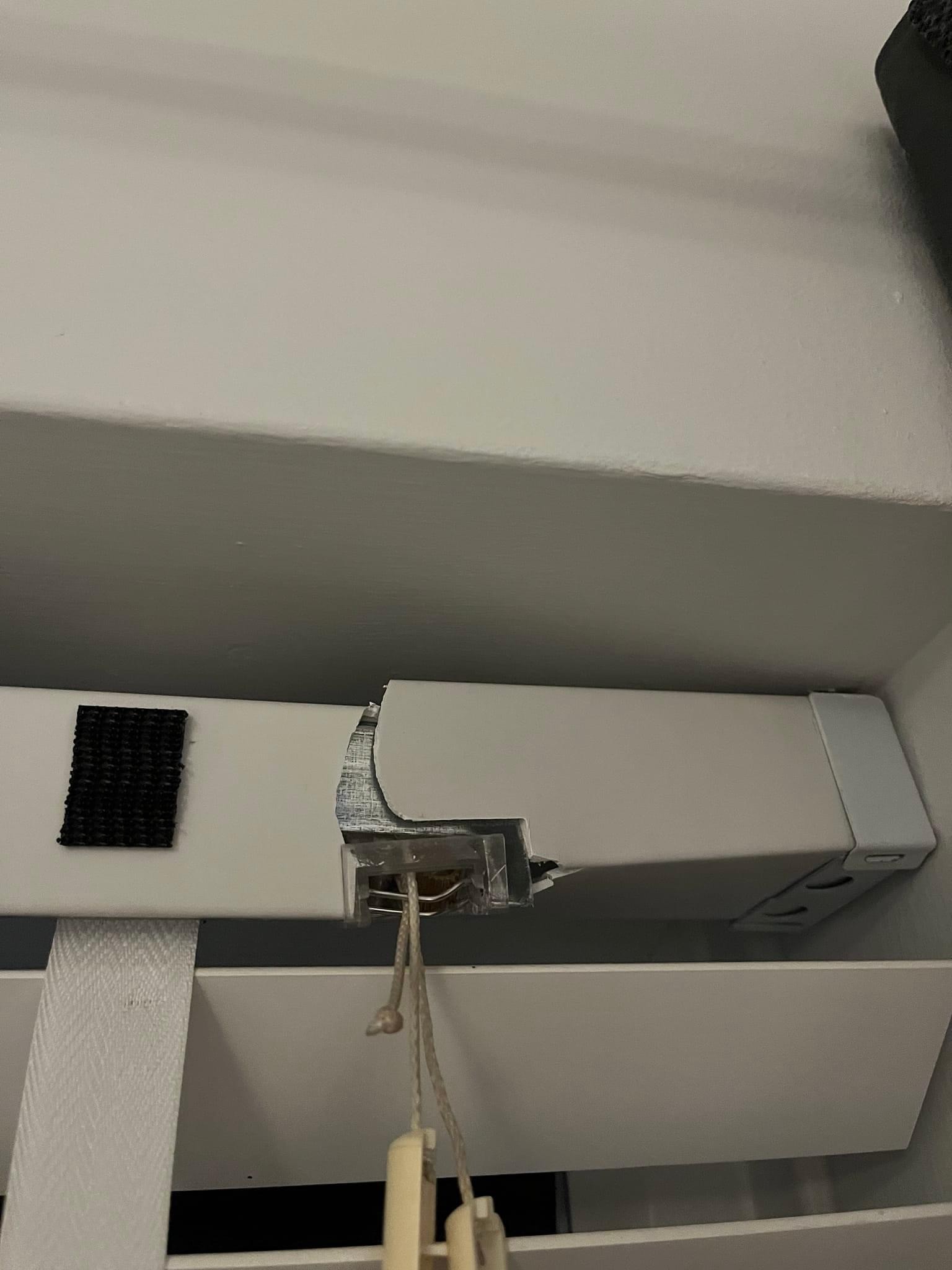
The reason.
The blind had simply been installed using end-fix brackets on a wide window, and 18 months of weight had caused unnecessary stress on the system.
The solution is straightforward.
Use multi-fix brackets.
These spread the weight evenly across the width of the blind, reducing strain and significantly improving long-term performance.
The downside?
They cost more and take longer to install.
Unfortunately, that's exactly why many installers avoid using them.
Before ordering, ask a simple question:
"How will my blind be fixed?"
The answer could have a huge impact on how long the blind lasts.
2. Wooden Venetian Blinds Can Be Surprisingly Heavy
One of the most common comments we hear after installation is:
"I didn't realise they'd be this heavy."
And honestly, it's understandable.
Most people see a small display blind in a showroom and assume a full-size blind will feel similar.
It won't.
The larger the blind, the heavier it becomes.
That's not a fault.
It's simply the reality of using real timber.
If you have a wide window and expect to raise and lower the blind regularly, the weight is something worth considering.
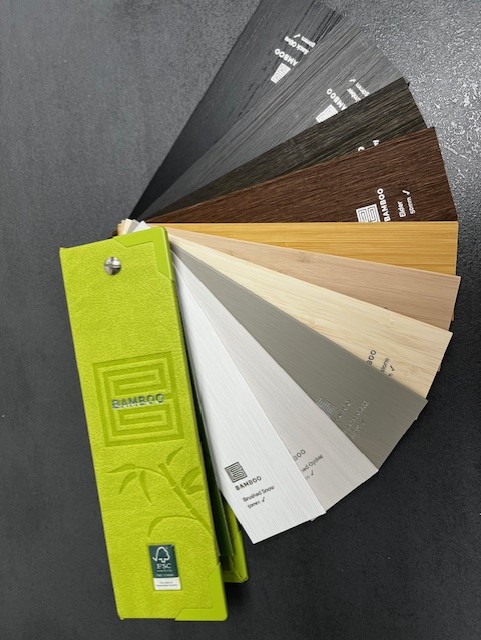
This is where bamboo Venetian blinds can be a great alternative.
Bamboo blinds are typically around 40% lighter than traditional wooden Venetians while offering a very similar appearance.
Benefits include:
- Easier operation
- Less strain on lift cords
- Reduced wear on mechanisms
- Better suitability for larger windows
For many homeowners, bamboo provides the best balance between appearance and practicality.
3. The Stack Height Is Often Bigger Than Expected
This is one of the least discussed issues before purchase.
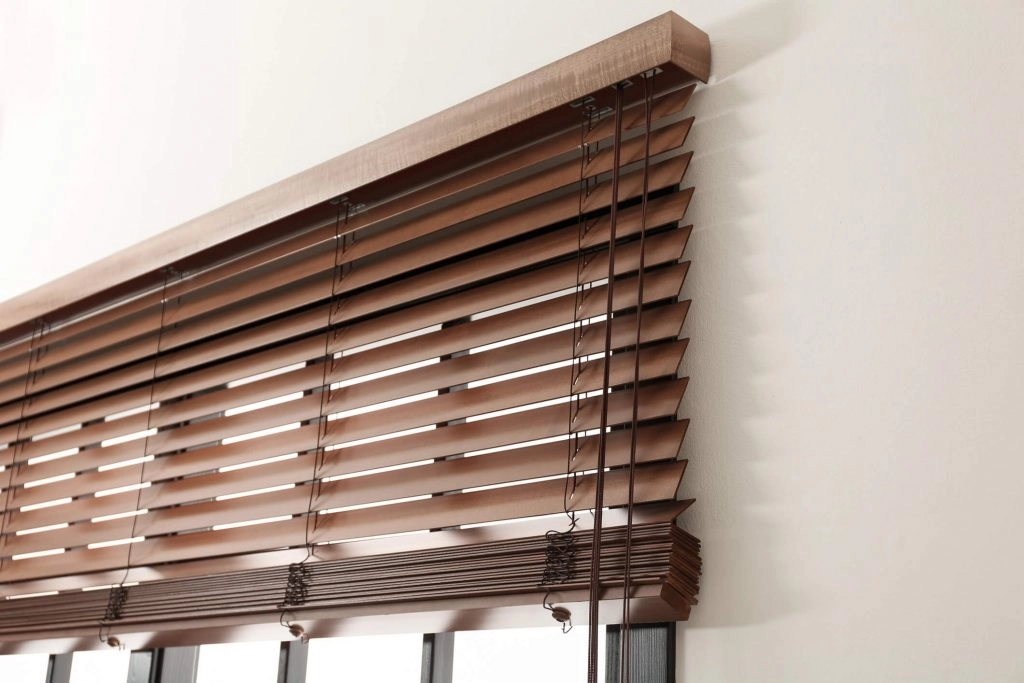
When a wooden Venetian blind is fully raised, every slat has to go somewhere.
The result is what's known as the stack height the bundle of slats sitting at the top of the window.
And sometimes it's much larger than people expect.
We've seen this catch homeowners out on:
- Patio doors
- French doors
- Bifold doors
- Low head-height openings
One customer called us shortly after installation by another local blind company because they felt something wasn't right.
The reason they called us in was that we had refused to quote for the blind once the customer had explained how they planned to use it. We gave ‘better’ options but the customer felt they weren’t right.
The blind was working perfectly.
The problem was that when fully raised, the stack hung low enough that family members had to duck underneath it every time they walked through the doorway.
Nobody had discussed stack height beforehand.
For doors and frequently used openings, alternatives such as roller blinds, cellular blinds or Allusion blinds are often more practical.
Always ask what the stack height will be before ordering.
It's a simple question that can prevent a frustrating surprise later.
6 Common Problems With Wooden Venetian Blinds (And How To Avoid Them)
4. Lift Cords Eventually Wear Out
Many homeowners assume wooden Venetian blinds are designed to be raised and lowered multiple times every day.
The reality is slightly different.
Wooden Venetian blinds are primarily designed for light control and privacy through tilting the slats.
Every time the blind is raised or lowered, the lift cords travel through multiple holes and mechanisms.
Because the blind is heavy, friction occurs.
And friction eventually causes wear.
For a reasonably sized wooden blind that is raised and lowered daily, it's common for lift cords to fail after around two to three years.
That isn't poor quality.
It's simply physics.
Heavy blinds and moving cords create wear.
If daily operation is important to you, it may be worth considering:
- Bamboo Venetian blinds
- Aluminium Venetian Blinds
- Vela Fabric Venetian Blinds
Sometimes the best blind isn't the one that looks best in a showroom.
It's the one that fits the way you actually live.
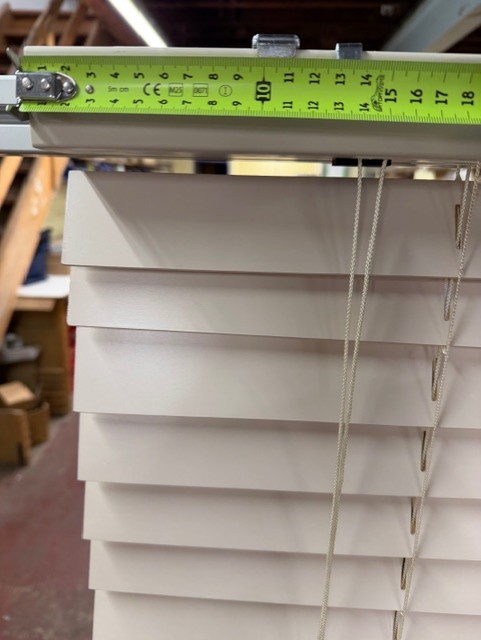
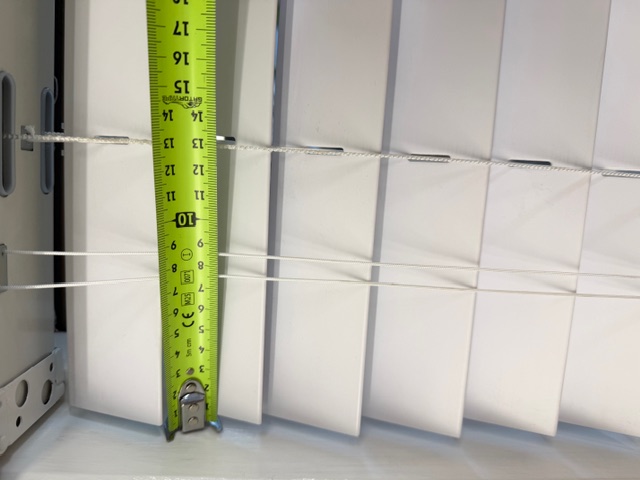
5. Why Are The Cords In Different Positions On Every Blind?
This is one of the easiest ways to identify how a wooden Venetian blind has been manufactured.
Around 92% of wooden Venetian blinds installed in the UK are trim-to-fit products.
These blinds are manufactured overseas in standard sizes before being cut down to suit individual windows.
The downside?
Every blind is trimmed differently.
That means the lift cords and ladder cords often end up in slightly different positions from one blind to another.
Most homeowners never notice.
But in rooms with multiple windows side by side, the differences can become obvious.
If consistency is important to you, a true made-to-measure blind is usually the better option.
Benefits include:
- Perfectly positioned cords
- Better visual consistency
- More precise manufacturing
- Higher overall quality
The trade-off is cost.
A genuine made-to-measure wooden Venetian blind can cost around 30% more and often requires a longer lead time.
Trim to fit wooden blinds are installed in 2 – 3 weeks, made to measure are 5 – 6 weeks.
For many homeowners, however, the improved finish is worth the wait.
6. Missing Pelmets Can Ruin The Finished Look
This might seem like a small detail.
But it can make a huge difference.
A pelmet is the matching wooden cover that hides the headrail and operating mechanism.
Without it, you're left looking at the workings of the blind.
And in our opinion, it rarely looks finished.
We've noticed more and more installations where pelmets are omitted altogether.
Usually for one simple reason.
The pelmet arrives oversized and needs cutting down on site.
That takes time.
It requires care.
And it isn't always included in the installation process.
Leaving it off is quicker.
But the result often looks incomplete.
Before ordering, ask:
"Is a matching pelmet included, and will it be fitted?"
You'll be glad you did.
Wooden Venetian Blind Buying Checklist
Before placing an order, ask these questions:
✓ Will multi-fix brackets be used?
✓ What will the stack height be when the blind is fully raised?
✓ Is bamboo a better option for this window?
✓ Is the blind trim-to-fit or genuinely made-to-measure?
✓ Is a matching pelmet included and fitted?
✓ How often do you expect the blind to be raised and lowered?
The answers will tell you a lot about whether you're choosing the right product.
The Bottom Line
Wooden Venetian blinds remain one of the most attractive window coverings available.
But they're not perfect.
Like any product, they have strengths, limitations and situations where they work better than others.
The biggest problems we see aren't usually caused by the blinds themselves.
They're caused by shortcuts.
Wrong brackets.
Missing pelmets.
Poor product selection.
Trim-to-fit manufacturing.
The more questions you ask before ordering, the more likely you are to end up with a blind you'll enjoy for years to come.
As my grandad used to say:
"It is not our job to find customers for our blinds. It is our job to find the right blinds for our customers."
After all these years, I still think that's the best advice in the industry.
Sometimes the right answer is a wooden Venetian blind.
And sometimes it isn't.
The important thing is making sure you know the difference before you buy.
Quick Comparison Table
| Common Problem | Why It Happens | Possible Solution |
|---|---|---|
| Blind feels unstable | End-fix brackets only support the ends | Use multi-fix brackets across the width |
| Blind is heavy to operate | Real wood slats are heavy | Consider bamboo Venetians (around 40% lighter) |
| Blind hangs too low when raised | Large stack of slats at the top | Check stack height before ordering or choose another product |
| Lift cords wear out | Weight and friction from daily operation | Use bamboo, motorisation, or avoid daily raising/lowering |
| Cords don't line up between windows | Trim-to-fit manufacturing | Choose true made-to-measure blinds |
| Headrail visible | Pelmet omitted during installation | Ensure matching pelmet is supplied and fitted |
Are wooden Venetian blinds difficult to lift?
Large wooden Venetian blinds can be heavy. Bamboo alternatives are typically around 40% lighter and easier to operate.
How long do lift cords last on wooden Venetian blinds?
If raised and lowered daily, lift cords commonly show wear after 2–3 years depending on blind size and usage.
What are multi-fix brackets?
Multi-fix brackets support the blind along its full width rather than just the ends, helping reduce strain on the headrail and mechanisms.
What is a trim-to-fit Venetian blind?
A trim-to-fit blind is manufactured in a standard size and then cut down to fit your window. This can result in cord positions varying between blinds.
Are wooden Venetian blinds suitable for patio doors?
Not always. The stack height can become quite large when raised, making them less practical for frequently used doors.
Should wooden Venetian blinds have a pelmet?
In our opinion, yes. A matching pelmet hides the headrail and creates a more finished appearance.
About Phil Coleman
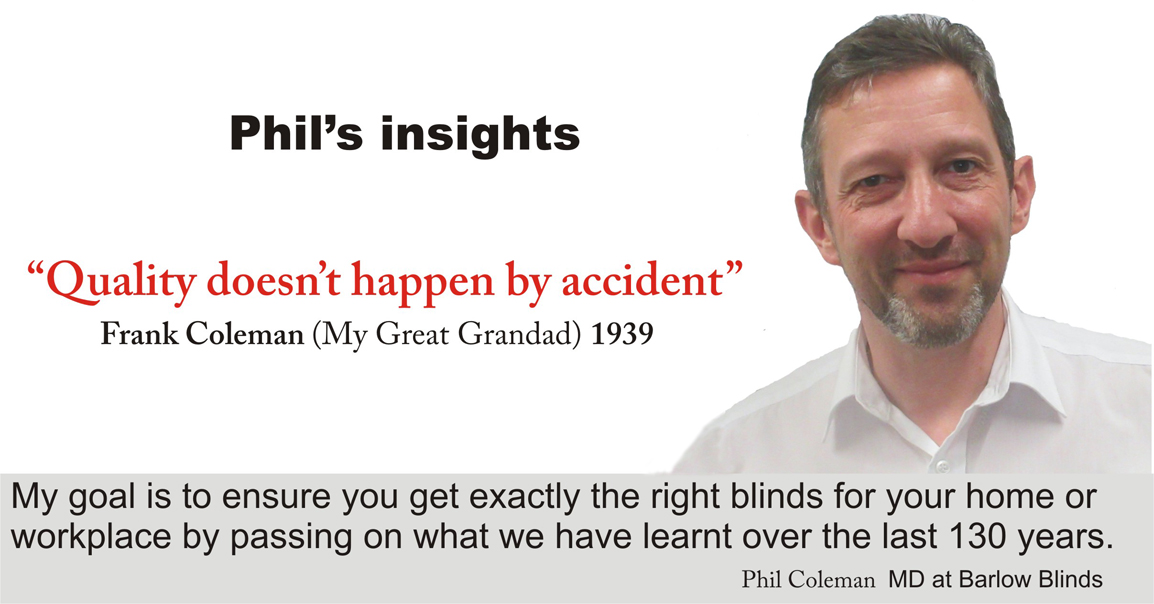
Phil Coleman is the fifth generation of his family to run Barlow Blinds, a Leicester business that has been making blinds since 1887. With over 30 years of hands-on experience, Phil has played a leading role in shaping industry standards including being part of the team that wrote the only NVQ qualification for blind and shutter installers. He also serves on the Management Committee of the British Blind & Shutter Association (BBSA), helping to set best practice across the trade. Under his leadership, Barlow Blinds has remained true to its founding principle: “It’s not our job to find customers for our blinds, it’s our job to find the right blinds for our customers.”
Why trust this article?
✓ Written or reviewed by Phil Coleman (35+ years' experience)
✓ Based on practical installation knowledge and independent research
✓ Updated when standards, products or evidence change